
Article by
Jonathan Bonnett
Australian Air Conditioning Specialist with extensive hands-on experience in AC servicing, deep cleaning, maintenance, and troubleshooting. Focused on high-quality workmanship, reliability, and professional service to UAE standards.
A persistent air conditioning odour is not a cleaning problem; it is a clinical symptom of mechanical or biological failure. You have likely experienced the frustration of recurring sewage or vinegar smells that return shortly after a standard service. These scents are often accompanied by headaches or concerns about hidden mould growth. It’s a common cycle in the UAE. Many property owners find that superficial fixes fail because they mask symptoms rather than treating the source. If you are seeking professional AC odour removal, you must prioritize diagnostic accuracy over temporary fragrances.
We understand that a healthy indoor environment is a technical requirement, not a luxury. This guide explains the scientific protocols used to identify and permanently eliminate AC odours. You will learn about non-invasive detection technology, the importance of adhering to building safety standards, and why specialized German-style cleaning is necessary for long-term resolution. At SMELLKILLERS.COM, we replace mystery with methodical certainty, moving from discomfort to a documented state of air quality excellence. Our focus remains on the root cause. Diagnosis precedes treatment. Results are permanent.
Key Takeaways
- Identify why persistent smells are clinical symptoms of biological or mechanical failure rather than simple cleaning issues.
- Differentiate between ‘vinegar’ and ‘sewage’ profiles to ensure your professional AC odour removal Dubai specialist addresses the specific chemical or structural origin.
- Discover the two-stage diagnostic protocol that combines clinical gas detection with a technical audit of the property’s drainage and ventilation infrastructure.
- Apply German-style cleaning standards to achieve deep disinfection of evaporator coils using non-corrosive, eco-friendly remediation agents.
- Establish long-term prevention strategies, such as maintaining hydrostatic seals in floor drains, to protect indoor air quality against recurring contaminants.
Understanding the Science of Professional AC Odour Removal
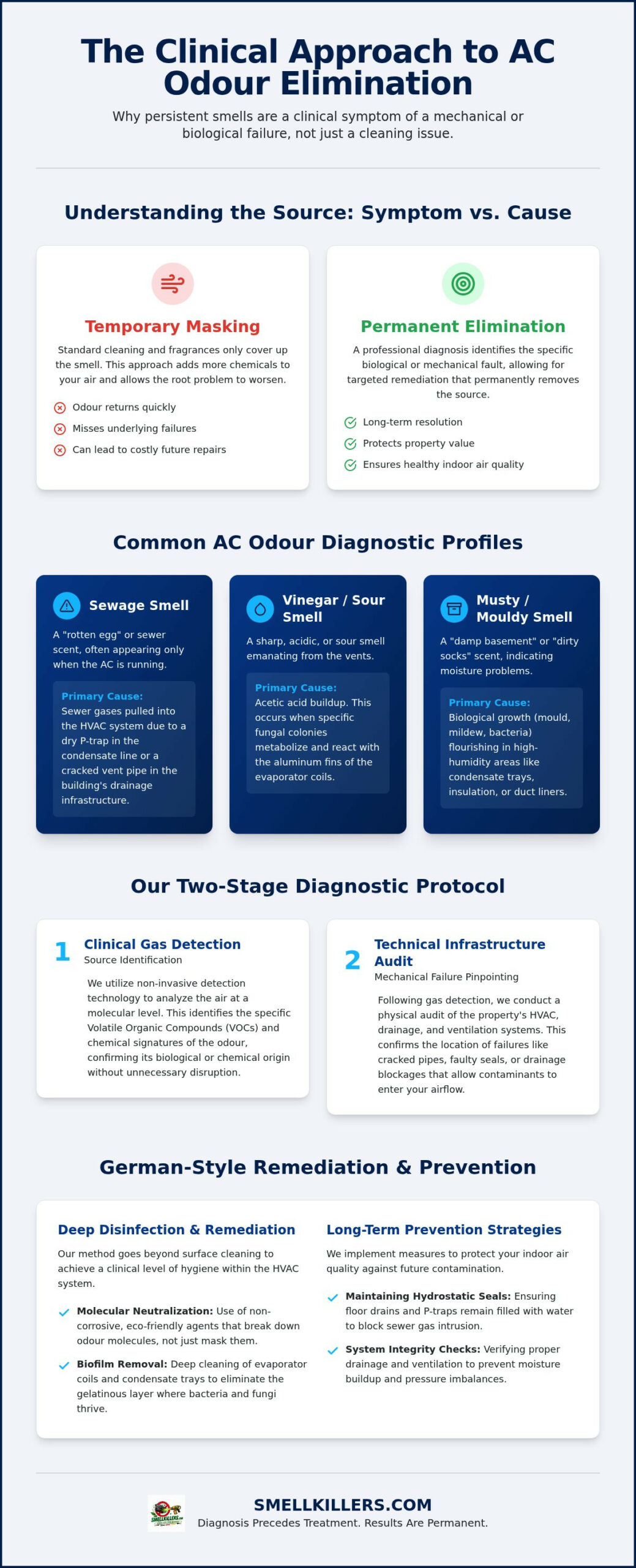
Professional AC odour removal is a clinical methodology. It involves identifying, isolating, and neutralizing the biological or mechanical source of airborne pollutants. This process differs fundamentally from general maintenance. While standard cleaning removes visible dust, a technical remediation addresses Volatile Organic Compounds (VOCs) at a molecular level. These gases are often the byproduct of metabolic activity from bacteria or chemical off-gassing within the unit. In the UAE, extreme heat and high humidity accelerate the development of bacterial biofilm. This gelatinous layer forms in condensate trays and cooling coils, acting as a persistent reservoir for foul scents. Without technical intervention, these microscopic colonies continue to replicate even after the filters are washed.
The science of HVAC systems and air quality dictates that moisture management is the primary defense against indoor pollutants. When drainage systems fail or hydrostatic seals dry out, the AC unit effectively pulls sewer gases or fungal spores into the ventilation stream. Molecular odour elimination requires specialized agents that break down the chemical bonds of the scent molecules. This is a permanent resolution. It’s the opposite of scent masking, which uses heavy fragrances to temporarily hide a problem. Masking only adds more chemicals to the air; remediation removes the threat entirely.
The Clinical Difference: Diagnosis vs. Cleaning
Standard maintenance often fails because it misses the root cause. A technician might wipe down a vent, but the smell persists because the origin lies deep within the infrastructure. Effective professional AC odour removal Dubai protocols utilize specialized odour detectors and clinical sensory analysis to pinpoint sub-surface contamination. We move beyond a cleaning mindset. We adopt a remediation mindset. This means we don’t just clear the tray; we investigate why the tray is stagnant. We look for cracked vent pipes or dry P-traps that allow gas to bypass the system. Diagnosis precedes treatment. This investigative approach ensures that the resolution is technical and final.
Impact of Indoor Air Quality on Property Value
Persistent odours are red flags for underlying building maintenance issues. They often indicate a failure in the building’s envelope or plumbing integrity. Under Dubai’s Law No. (3) of 2026, owners are responsible for the technical safety and quality of their buildings. Maintaining high air quality standards directly impacts property value and occupant wellness. Poor air quality leads to headaches, nausea, and respiratory discomfort. Investing in a professional source elimination is more cost-effective than paying for recurring temporary fixes. It preserves the mechanical life of the HVAC system and ensures a healthy environment for residents. A clean-smelling home is a verified indicator of a well-maintained property.
Diagnostic Profiles: Identifying the Root Cause of AC Smells
Identifying the specific chemical signature of an odour is the critical first step in a technical audit. We categorize these scents into diagnostic profiles to isolate the origin of the failure. Each profile points to a distinct mechanical or biological issue. The Vinegar Profile usually indicates acetic acid buildup. This occurs when specific fungal colonies react with the aluminum fins of the cooling coils. The Musty Profile signals high-humidity biological growth within the insulation or porous duct liners. A Chemical Profile suggests refrigerant leaks or industrial pollutant infiltration. These profiles allow for targeted professional AC odour removal Dubai services that address the root cause rather than just the air.
Why Your AC Smells Like Sewage
The connection between your HVAC infrastructure and the building’s plumbing is a common failure point. A recurring sewage smell home often originates from the condensate drain system. If the P-trap is dry or the vent pipe is cracked, sewer gases are drawn into the air stream via siphonage. This typically happens when pressure imbalances pull air from the drainage system. These ‘phantom’ smells may only appear when the AC is operational. The blower creates a negative pressure environment that sucks gas through empty traps. Technical professional AC odour removal Dubai requires verifying these hydrostatic seals to ensure a permanent barrier against gas infiltration. No amount of duct cleaning can fix a plumbing bypass.
Bacteria and Mould: The Biological Vectors
Biological contaminants produce Microbial Volatile Organic Compounds (mVOCs). These are the metabolic byproducts of bacteria living in your system. ‘Dirty Sock Syndrome’ is a specific condition where the evaporator coil becomes a breeding ground for these organisms. Standard cleaning often fails because it only addresses the surface. Effective remediation must target the biofilm layer where colonies are anchored. According to EPA guidelines on indoor air quality, source control is the most effective way to manage indoor pollutants. Understanding how to get rid of AC smell requires a deep disinfection protocol that neutralizes these biological vectors at their origin. We focus on molecular elimination. We replace mystery with scientific certainty.
If you suspect a biological or structural failure, an on-site property odour assessment can provide the technical clarity needed for a final resolution. Identify the signature. Isolate the source. Eliminate the threat.
The Diagnostic Protocol: Source Detection vs. Superficial Masking
Eliminating a persistent air conditioning smell requires more than a keen sense of smell; it requires empirical data. Our diagnostic protocol follows a strict, four-stage investigative process designed to find the root cause before any remediation begins. This methodical approach ensures that the resolution is permanent and technically sound. We don’t guess. We verify. Every property undergoes a systematic audit to ensure no mechanical or biological failure is overlooked.
- Step 1: On-site Property Odour Assessment. We conduct a clinical sensory analysis combined with electronic gas detection. This isolates the specific chemical or biological signature of the pollutant.
- Step 2: Technical HVAC Infrastructure Inspection. Our specialists examine the internal components of the system. This includes a deep dive into ducts, cooling coils, and condensate drains to find stagnant moisture or biofilm.
- Step 3: Plumbing Schematic Cross-Referencing. We analyze how the HVAC system interacts with the building’s drainage. By checking plumbing schematics, we identify potential gas bypasses or cracked vent pipes that allow sewer gases to enter the air stream.
- Step 4: Formal ‘Origin of Odour’ Reporting. We provide a documented diagnosis. This report outlines the technical cause and the proposed treatment path, ensuring transparency before work starts.
Adhering to this sequence is what defines professional AC odour removal Dubai services. It moves the process away from guesswork and toward scientific certainty. By documenting the origin of the odour, we ensure the treatment targets the source, not just the symptoms.
Advanced Detection Technology
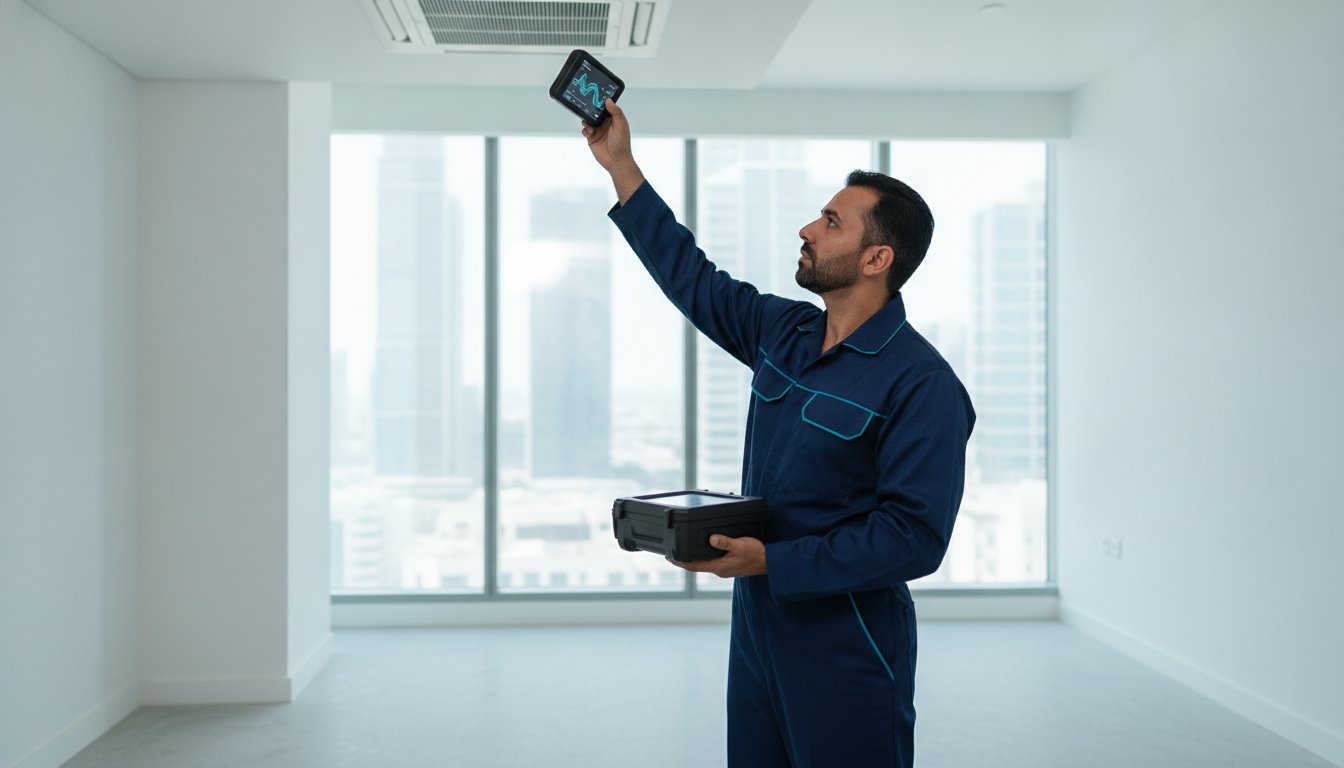
We utilize non-invasive tools to see what the human eye cannot. Thermal imaging cameras identify cold spots and moisture traps within the ducting where mould is likely to colonize. To verify the integrity of plumbing vents, we employ hydrogen tracer gases or smoke testing. These methods pinpoint exact leak locations without damaging the property. We also deploy air quality monitors to measure particulate matter and gas concentration levels. This data provides a baseline for indoor air health and confirms the effectiveness of the remediation once complete. Technology replaces mystery with measurable results.
The Failure of Fragrance-Based Fixes
Scented sprays and ozone generators are temporary diversions, not solutions. Masking agents only introduce aerosolized chemicals into your living space. In small apartments, these particulates can cause respiratory irritation or allergic reactions. Ozone generators, while effective at killing surface bacteria, don’t address the structural source of the smell. The odour inevitably returns once the machine is turned off. A technical apartment odour assessment UAE is the only reliable way to stop the cycle. We prioritize molecular elimination over superficial masking to ensure your long-term health and comfort.
Professional German-Style Aircon Cleaning and Remediation
Precision is the foundation of effective remediation. Integrating German engineering standards into the cleaning workflow ensures that every mechanical component returns to its original state of hygiene. This is not a superficial rinse. It is a technical intervention designed to eliminate the biological sludge that standard services ignore. We focus on the evaporator coil, the blower fan, and the condensate tray. These are the primary sites for bacterial colonization. By utilizing eco-friendly, non-corrosive agents, we achieve deep disinfection without compromising the structural integrity of the HVAC hardware.
Mechanical cleaning is mandatory for permanent results. We remove the biofilm layer from the blower fan to restore airflow efficiency and eliminate metabolic odours. The condensate tray is stripped of biological sludge to prevent stagnant water from becoming a reservoir for pathogens. Finally, we sterilize the internal housing. This step is critical. It creates a hostile environment for microbes, preventing the immediate re-colonization that often follows low-quality cleaning services. For property owners seeking professional AC odour removal Dubai specialists, this level of technical detail is the only path to a permanent solution.
High-Pressure Steam vs. Chemical Flushing
Heat-based sterilization offers a clinical advantage over traditional chemical methods. High-pressure steam penetrates the deepest recesses of the cooling fins, neutralizing bacteria and fungal spores on contact. This process avoids the aircon chemical cleaning side effects that often include coil corrosion or the release of toxic fumes into your living space. A residue-free finish is essential for long-term air purity. Chemical residues can actually attract more dust and moisture, leading to faster re-contamination. We prioritize non-invasive, heat-driven protocols to protect both your equipment and your health.
Duct Remediation and Seal Integrity
Surface treatment is insufficient if the ductwork itself is compromised. We identify instances where porous duct insulation has absorbed persistent odours. In these cases, specialized duct cleaning or material replacement is required. We also verify the integrity of all seals. Leaky connections allow cross-contamination from ceiling voids, pulling in dust, insulation fibres, and odours from unconditioned spaces. Ensuring airtight ductwork is a technical requirement for maintaining the air quality standards mandated by Dubai’s Law No. (3) of 2026. Airtight integrity prevents the HVAC system from drawing in external pollutants.
Restore your indoor environment with a professional German style aircon cleaning that targets the source of contamination with surgical precision.
Implementing Long-Term Odour Prevention and Air Quality Standards
Prevention is a technical discipline. Moving from reactive cleaning to proactive management requires a predictive maintenance schedule based on property usage. In the UAE, high cooling loads during summer months accelerate component wear and biological accumulation. A standard biannual service is often insufficient for high-occupancy properties. Technical oversight ensures that potential failure points are identified before they emit metabolic byproducts. Engaging a professional AC odour removal Dubai specialist for a technical audit establishes a baseline for air purity that simple filter changes cannot match.
Maintaining hydrostatic seals is the most critical task for preventing gas infiltration. Every floor drain and AC condensate trap relies on a water barrier to block sewer gases. If a property remains vacant or a drain is rarely used, this water evaporates. The seal breaks. Siphoning effects then pull foul air directly into the ventilation system. We recommend consulting an odour expert UAE to conduct annual air quality audits. These inspections verify the integrity of the building’s plumbing-HVAC interface and ensure that gas concentrations remain at zero.
Thermostat optimization also plays a role in managing biological growth. Setting temperatures too high can lead to humidity spikes that encourage fungal colonization. Conversely, extreme cooling can cause excessive condensation that overwhelms drainage trays. Maintain a consistent temperature and ensure the fan setting allows for adequate coil drying cycles. This technical balance prevents the stagnant moisture that leads to persistent smells.
The Role of the Property Manager
Property managers must transition from general oversight to technical stewardship. Educating tenants on the early signs of HVAC contamination, such as a faint vinegar scent, prevents localized issues from becoming building-wide problems. Implement mandatory building-wide plumbing vent inspections to ensure no blockages are causing pressure imbalances. It’s important to recognize that a bathroom drain smell UAE is often an HVAC-linked issue. When the AC blower creates negative pressure, it pulls air from the weakest point in the drainage system. Solving the smell requires a holistic view of the building’s mechanical health.
Final Checklist for a Smell-Free Environment
Follow this technical checklist to maintain a sterile indoor environment. These steps ensure that the root causes of odours are managed systematically.
- Prime P-traps weekly. Pour a liter of water into every floor drain and unused sink to maintain the hydrostatic seal.
- Inspect condensate lines. Ensure the AC drain line is not directly hard-piped into the sewage system without an air gap or proper trap.
- Monitor humidity. Use a hygrometer to ensure indoor humidity levels stay below 60% to inhibit microbial volatile organic compounds.
- Schedule professional audits. Request a professional AC odour removal Dubai inspection at the first sign of any chemical or biological scent.
Long-term resolution is the result of diagnostic accuracy and disciplined maintenance. Replace mystery with science. Maintain your infrastructure to protect your air.
Achieving Permanent Air Quality Excellence
Resolving persistent indoor odours requires a transition from superficial cleaning to technical remediation. You now understand that vinegar or sewage smells are clinical symptoms of underlying mechanical or biological failures. These issues demand precise diagnosis and permanent root-cause elimination rather than temporary masking. By utilizing expert diagnostic detection technology and specialized German-style cleaning protocols, you can restore your property’s air quality to a clinical standard. We replace mystery with scientific certainty; every technical intervention is documented and effective.
Maintaining your infrastructure through regular P-trap priming and humidity management ensures these results remain permanent. If you are ready to end the cycle of recurring smells and ineffective services, it is time to secure the professional AC odour removal Dubai residents trust for technical accuracy. Our methodical approach identifies the origin of the pollutant and neutralizes it at the molecular level. Book Your Technical On-Site Odour Inspection Today to finally identify the source and treat the threat. Take control of your indoor environment and breathe with confidence again.
Frequently Asked Questions
Why does my AC smell like vinegar even after I changed the filters?
A vinegar scent indicates acetic acid buildup caused by fungal colonies reacting with the aluminum fins of your cooling coils. Filters only capture particulate matter like dust; they cannot neutralize the metabolic byproducts of bacteria anchored deep within the system. This biological growth requires a clinical disinfection of the evaporator hardware to stop the chemical reaction at its source. Standard filter replacement is a maintenance task, not a remediation for active fungal growth.
Is the bad smell coming from my air conditioner harmful to my health?
Yes, persistent odours are often indicators of Microbial Volatile Organic Compounds (mVOCs) or sewer gas infiltration. Exposure to these airborne pollutants can lead to headaches, nausea, and respiratory discomfort. While the smell itself is a symptom, the underlying biological or mechanical failure compromises your indoor air quality. Addressing the source of the odour is essential for maintaining a healthy living environment and preventing long-term respiratory irritation.
Can a professional AC odour removal service fix a sewage smell permanently?
A professional AC odour removal Dubai specialist can provide a permanent resolution by identifying the structural origin of the gas. Sewage smells usually enter the HVAC system through dry P-traps, cracked vent pipes, or improper drainage connections. Once we isolate the mechanical breach or restore the hydrostatic seal, the gas is physically blocked from entering your air stream. We focus on structural integrity rather than temporary scent masking.
How long does a professional odour detection and treatment session take?
A technical diagnostic and remediation session typically requires between two and four hours to complete. This timeframe allows for a comprehensive property assessment, clinical gas detection, and the subsequent treatment of the HVAC infrastructure. Larger properties or complex multi-unit systems may require additional time for a thorough audit. We prioritize diagnostic accuracy to ensure the treatment is effective during the first visit, replacing mystery with documented results.
Why does the musty smell return every time I turn on the AC after a break?
Musty smells return because dormant moisture in the condensate tray or porous insulation allows bacteria to thrive while the system is inactive. When the blower fan restarts, it aerosolizes these concentrated organic compounds into your living space. This cycle confirms the presence of a biofilm layer that standard cleaning cannot reach. Permanent elimination requires a deep mechanical cleaning of the internal housing and sterilization of the cooling components.
Do I need to clean the ducts or just the AC unit to get rid of the smell?
Remediation must target the specific component where the odour originates, which is frequently the internal unit rather than the ducts. While duct cleaning removes accumulated dust, the biological sources of smells are usually found on the cooling coils or in the drainage system. A professional AC odour removal Dubai audit identifies the exact location of the contaminant. We treat the source to ensure you don’t pay for unnecessary services.
Are the chemicals used in professional AC cleaning safe for pets and children?
Our clinical protocols utilize eco-friendly, non-corrosive agents and high-pressure steam for sterilization. These methods are specifically chosen because they are safe for sensitive environments, including homes with pets and children. We ensure a 100% residue-free finish, meaning no toxic particulates are released into the air after the service is complete. Our commitment to high-tech, responsible methods prioritizes both technical efficiency and environmental safety.
How can I tell if the smell is coming from the AC or the drains?
Specialists use non-invasive gas detection tools to differentiate between HVAC-linked odours and plumbing failures. If a sewage scent intensifies when the AC blower is active, it’s often a pressure-related issue pulling gas from a dry trap. If the smell is constant regardless of the AC status, the source is likely a direct plumbing breach. We cross-reference your building’s schematics with our findings to provide a definitive technical diagnosis.