
Article by
Jonathan Bonnett
Australian Air Conditioning Specialist with extensive hands-on experience in AC servicing, deep cleaning, maintenance, and troubleshooting. Focused on high-quality workmanship, reliability, and professional service to UAE standards.
That persistent sewage smell in your living room isn’t a cleaning problem; it’s a diagnostic failure. Most residents assume a standard vent wipe-down will solve the issue, yet the odour often returns within days. This happens because superficial treatments address the scent while ignoring the mechanical or biological source. If you’ve spent money on “deep cleaning” only to have the stench reappear, you’re dealing with a technical oversight, not a stubborn stain.
We understand the frustration of living with recurring health concerns and phantom smells that refuse to vanish. This clinical guide outlines the technical protocols for AC duct odour removal that property owners across the UAE need to achieve permanent remediation. By applying German-style diagnostic standards, we move beyond masking agents to identify the precise origin of the contamination. You’ll discover the scientific causes behind these smells, from drain line cross-contamination to mould colonisation. We provide a clear, sequential roadmap to eliminate the root cause and restore your indoor air quality to professional standards. No more temporary fixes. Just methodical, long-term resolution.
Key Takeaways
- Recognize that persistent odours are symptoms of mechanical or plumbing failures, not just surface dirt.
- Differentiate between biological “Dirty Sock Syndrome” and chemical sewage gases to determine the necessary technical treatment.
- Execute a professional on-site inspection using thermal imaging and moisture meters to pinpoint the exact origin of contamination.
- Deploy specialized protocols for AC duct odour removal Dubai based on German-style standards for precision and long-term resolution.
- Maintain a strict ventilation balance and follow a technical maintenance checklist to ensure the property remains permanently odour-free.
The Failure of Standard Cleaning: Why AC Duct Odour Removal in Dubai Requires Diagnosis
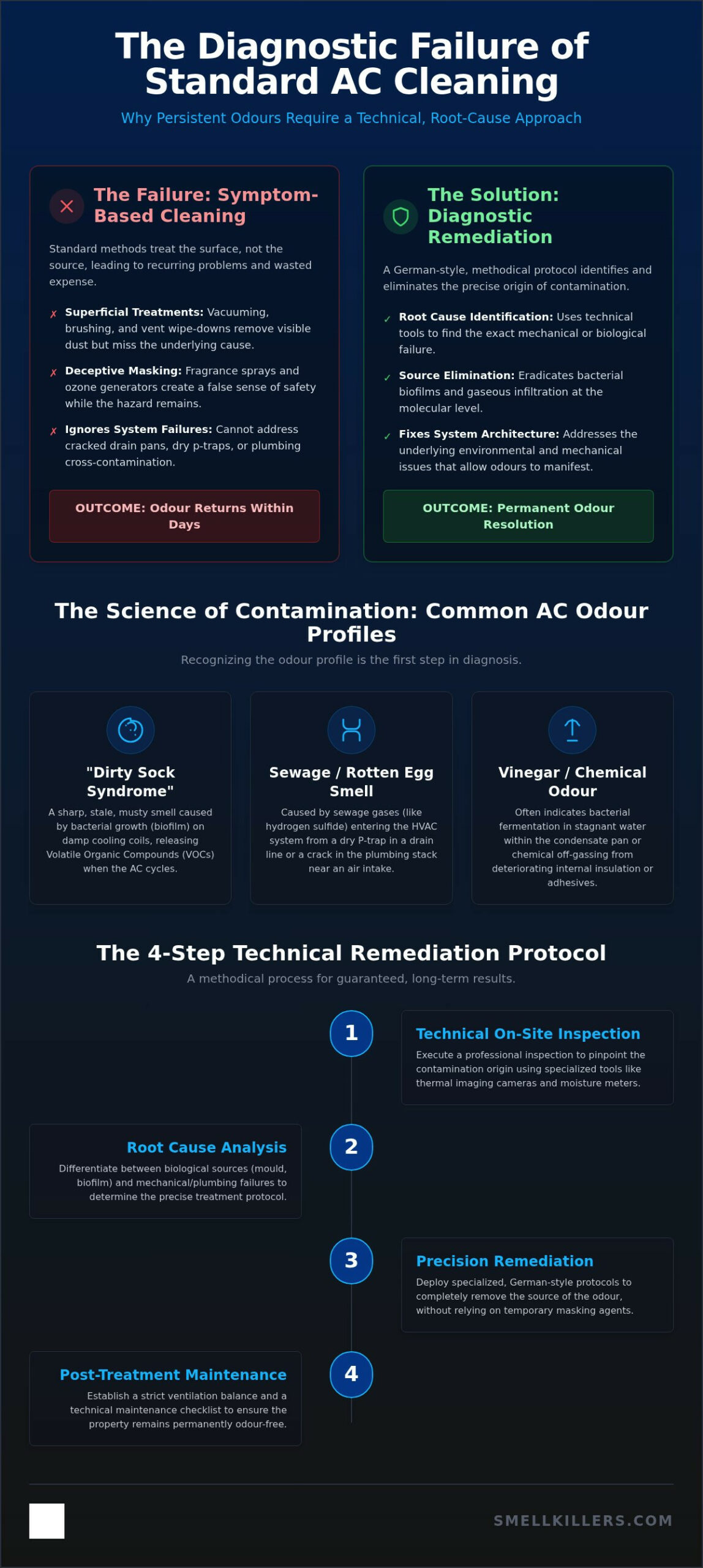
Standard AC cleaning is often sold as a universal solution for bad smells. It isn’t. For property owners in the UAE, traditional maintenance often fails because it treats the symptom while ignoring the complex architecture of Heating, ventilation, and air conditioning (HVAC) systems. True AC duct odour removal Dubai is a diagnostic-led clinical treatment for your building, not a simple janitorial chore. Vacuuming and brushing might remove visible particulate matter, but these methods cannot address gaseous infiltration or the microscopic microbial colonies hidden within the system’s mechanical junctions. If the odour originates from a cracked condensate pan or a dry p-trap, no amount of brushing will resolve it.
Symptom vs. Root Cause
Surface dust is merely a symptom. The root cause of a persistent odour is frequently a bacterial biofilm or a structural failure in the drainage integration. When A/C units are not properly isolated from the building’s plumbing, cross-contamination occurs. Sewage gases bypass the p-traps and enter the ventilation stream, turning your vents into conduits for foul air. Source detection remains the only path to permanent elimination of these contaminants. Without a comprehensive property odour assessment, any cleaning effort is expensive guesswork. We prioritize finding the origin before deploying any remediation tools. This methodical approach ensures that we don’t just clean the ducts; we fix the environment that allowed the smell to manifest.
The Dangers of Temporary Masking
Many service providers in the region rely on fragrance sprays or ozone generators. These methods are deceptive. They saturate the air with heavy scents to overwhelm the human olfactory system, yet the underlying biological or chemical hazard remains active. This approach creates a false sense of safety while compromising indoor air quality. Ozone, in particular, can react with existing indoor pollutants to create secondary irritants. This often leads to respiratory distress and long-term health risks, as detailed in our report on aircon chemical cleaning side effects. Effective AC duct odour removal Dubai requires the total extraction of the source, not the introduction of more chemicals. Our German-style protocols focus on technical accuracy. We eliminate the problem at the molecular level, ensuring the smell doesn’t just vanish; it stops existing entirely.
The Science of Contamination: Common AC Odour Profiles
Effective AC duct odour removal Dubai starts with understanding the chemistry of the air you breathe. In the UAE, high ambient humidity creates a unique set of challenges for cooling systems. When moisture levels exceed 60%, the internal components of an A/C unit become a primary site for microbial colonization. This isn’t just about dust; it’s about the metabolic byproducts of bacteria and fungi that thrive in dark, damp environments. While general cleaning is often touted as a cure-all, the official guidance on duct cleaning emphasizes that identifying the specific source of contamination is paramount for safety and efficacy.
One of the most frequent technical issues is “Dirty Sock Syndrome” (DSS). This occurs when cooling coils become coated with organic matter. As the unit cycles, bacteria grow on the fins and release volatile organic compounds (VOCs). The result is a sharp, stale scent that mirrors the smell of unwashed laundry. Similarly, vinegar-like odours usually indicate bacterial fermentation of accumulated debris or chemical off-gassing from deteriorating internal insulation. If your vents emit an intermittent stench during peak usage hours, a professional on-site inspection is the only way to confirm the source.
Bacterial Biofilms and Mould Growth
Condensate trays are designed to collect and drain moisture, but they often become stagnant pools of sludge. Over time, a thick bacterial biofilm forms on the tray surface. This biological layer is resistant to simple water rinsing. The odour is perpetuated by a re-evaporation cycle:
- Moisture collects in the tray during the cooling cycle.
- Bacteria multiply within the stagnant water.
- The blower fan pulls the resulting odours into the ductwork.
- Smells are pushed back into the living space as the air circulates.
Remediation requires a clinical approach. We utilize specialized agents to break down the biofilm at the molecular level, ensuring the biological source is eradicated rather than just rinsed.
Sewage Gas Infiltration (H2S)
A “rotten egg” smell signifies the presence of Hydrogen Sulphide (H2S). This is a plumbing failure, not a cooling issue. Many Dubai properties suffer from dried P-traps or faulty A/C drain connections that link directly to the building’s sewage lines. A “vacuum effect” occurs when the A/C blower creates negative pressure, literally pulling sewer air from the drainage pipes into the ventilation stream. This infiltration is often intermittent, peaking when building water usage is high or when the external wind pressure changes. Addressing this requires precise AC duct odour removal Dubai protocols that include sealing the air-drainage interface and restoring the integrity of the plumbing traps. We don’t just clean the air; we isolate the system from external contaminants.
Technical On-Site Inspection: The Diagnostic Protocol
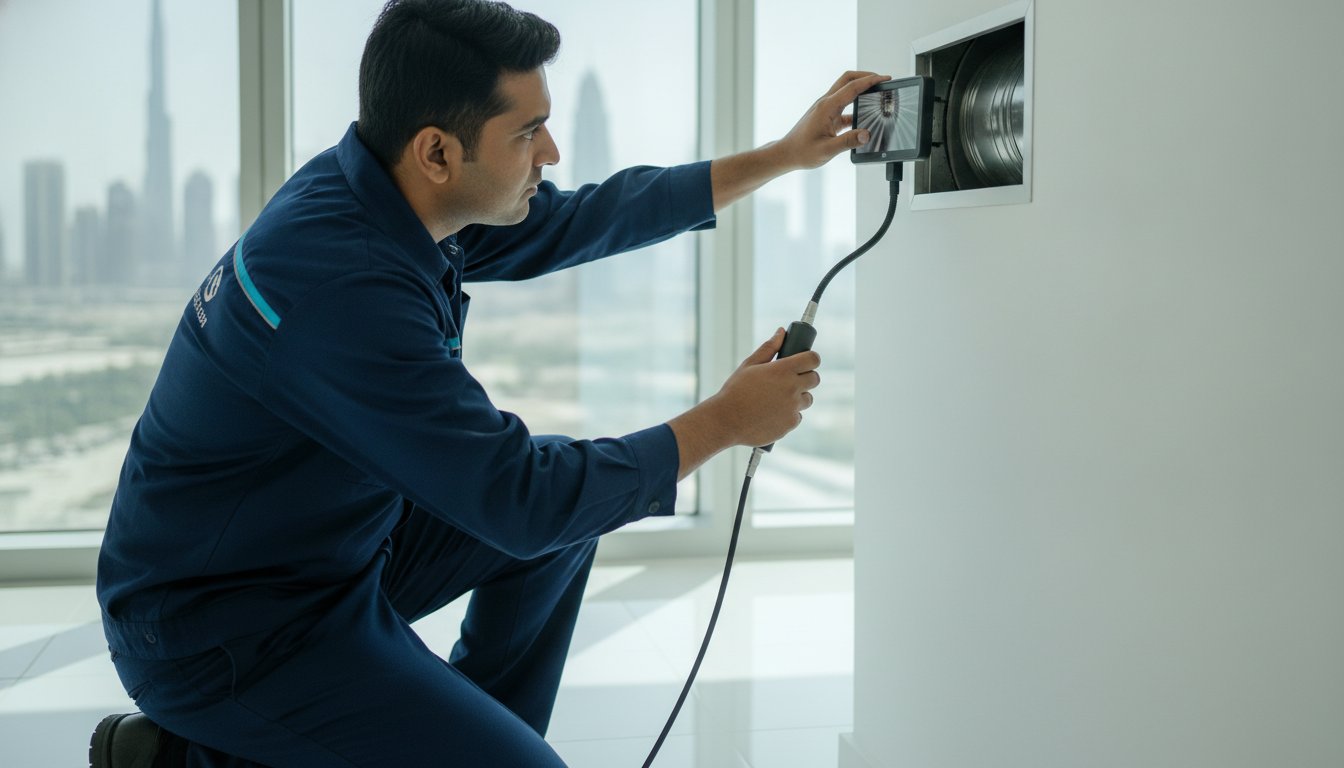
An effective AC duct odour removal Dubai strategy begins with a rigorous technical on-site inspection. We do not rely on olfactory guesswork. Instead, we deploy a diagnostic protocol designed to visualize invisible threats. Our technicians use high-resolution thermal imaging cameras to detect temperature anomalies behind wall panels, which often indicate hidden condensation or plumbing leaks. Moisture meters quantify the saturation levels of duct insulation, identifying areas that have become permanent reservoirs for microbial growth. This data-driven approach is essential for large-scale assets, where a commercial property smell inspection provides the necessary forensic evidence to justify specific remediation investments. Our standard diagnostic phase includes several critical steps:
- Deploy high-resolution thermal imaging to identify hidden condensation zones and thermal bridges.
- Utilize moisture meters to quantify the saturation levels of porous duct insulation and surrounding drywall.
- Conduct pressure testing to detect breaches in the ductwork seal and air distribution circuit.
- Perform vent isolation to triangulate the exact entry point of gaseous contaminants or external air infiltration.
Forensic Odour Mapping
We utilize forensic odour mapping to triangulate the source of contamination. Technicians measure odour intensity at various points throughout the ventilation circuit to create a technical heat map of the problem. This process includes a deep-dive analysis of the plenum box, which is the central distribution hub where odours often concentrate before being pushed into individual rooms. Visual inspection alone is insufficient for gas leaks; invisible sewage vapours can infiltrate through microscopic breaches in the drainage interface that a standard camera cannot capture. By mapping these concentrations, we move from general suspicion to scientific certainty.
Evaluating Duct Integrity
Duct integrity is a major factor in recurring smells. Breached duct insulation acts like a sponge, absorbing ambient odours and re-emitting them during the cooling cycle. We also investigate ‘dead air’ pockets within the ductwork where air velocity drops, allowing odours to stagnate and intensify. A critical part of our protocol involves testing the seal between the A/C unit and the structural wall. If this barrier is compromised, the system can pull unconditioned, foul air from the wall cavities or ceiling voids. Addressing these gaps is vital to mitigate the health effects of indoor air pollution, which can range from minor allergies to chronic respiratory irritation. We treat the property as a single integrated machine, ensuring that every diagnostic step leads to a verifiable technical conclusion.
Professional German-Style Aircon Cleaning and Remediation
German-style remediation is defined by technical accuracy and the total eradication of biological threats. While standard cleaning services in the UAE focus on removing visible dust, our clinical approach targets the molecular origin of the scent. We don’t just wash components; we re-engineer the hygiene state of the entire system. This process requires specialized non-toxic, eco-friendly agents that dissolve complex biofilms without leaving behind secondary chemical irritants. Our objective is long-term resolution, ensuring the property’s air remains neutral and safe long after the technicians depart.
The remediation sequence follows a strict, linear logic to ensure no cross-contamination occurs during the treatment. We begin with system isolation, followed by high-pressure extraction of all particulate matter. Unlike standard coil washing, which often pushes debris deeper into the fins, our clinical-grade disinfection utilizes targeted chemical reactions to break down organic binders. This level of precision is what separates a temporary fix from a permanent technical solution. For a deeper look at these specific methodologies, consult our resource on aircon odour elimination.
Precision Coil and Tray Sanitization
The evaporator coil is the primary site for heat exchange and moisture collection. We perform deep-seated biofilm removal using pH-neutral agents that penetrate the tight spacing of the aluminium fins. Following the coil treatment, we focus on the condensate drain line. We clear all obstructions and treat the internal surfaces to prevent future sewage backflow or stagnant water accumulation. The final stage involves applying long-lasting antimicrobial barriers. These coatings inhibit the regrowth of bacteria and fungi, providing a technical shield against the “Dirty Sock Syndrome” discussed in previous sections.
Ductwork Neutralization and Resealing
Odours trapped within the porous duct lining require chemical neutralization. We deploy atomized misting systems that reach every corner of the ventilation circuit, neutralizing volatile organic compounds on contact. Once the interior is sanitized, we inspect and reseal all duct joints. This prevents future air-pathway contamination from unconditioned ceiling voids. Maintaining the structural integrity of the ductwork is the only way to guarantee the results of our AC duct odour removal Dubai. If you’re ready to transition from temporary masking to a scientific resolution, book our Professional German Style Aircon Cleaning today.
Ensuring Permanent Results: Post-Treatment Protocols
Permanent AC duct odour removal Dubai requires more than a single technical intervention. It demands a state of “ventilation balance” where internal air pressure actively prevents the infiltration of external contaminants. When a system is imbalanced, negative pressure acts as a vacuum, drawing in sewer gases through microscopic structural gaps or faulty drain connections. The SMELLKILLERS.COM guarantee is built on source-focused resolution. We don’t just clear the air; we rectify the mechanical failure that allowed the odour to enter. This diagnostic transparency ensures that the root cause is permanently sealed, providing property owners with scientific certainty rather than a temporary fragrance-based fix.
Property managers must adopt a proactive stance to maintain these results. Regular sewage odour elimination UAE maintenance is the primary defense for high-occupancy assets. Follow this technical checklist to ensure a neutral environment:
- Prime Water Seals: Verify that all floor drains and A/C condensate traps contain water to block gas entry.
- Audit Insulation: Check the integrity of A/C drain line insulation to prevent thermal bridging and condensation.
- Seal Verification: Inspect ductwork joints and plenum boxes for physical breaches or sealant degradation.
- Humidity Control: Monitor indoor moisture levels to ensure they consistently remain below 60% to inhibit microbial growth.
Preventive Maintenance for Drainage Links
Block sewer gas entry by keeping P-traps primed. These traps rely on a water barrier to prevent the backflow of foul air. In unoccupied Dubai properties, these water seals often evaporate during “dry” periods. This evaporation creates an open conduit for sewage gases to enter the ductwork, causing sudden odour spikes when the system is restarted. Installing one-way valves in A/C drain lines provides a mechanical backup to traditional traps. These valves ensure that air and water only flow out of the system, never back into the ventilation stream. It’s a simple mechanical upgrade that prevents complex biological contamination.
Monitoring Indoor Air Quality
Deploy digital sensors to monitor volatile organic compounds (VOCs) and humidity levels. These sensors detect the early markers of biological growth before they become perceptible to the human nose. For high-occupancy buildings, technical inspections should occur at six-month intervals to maintain the integrity of the ventilation seals and drainage interfaces. This methodical monitoring prevents the return of “Dirty Sock Syndrome” and other common UAE air quality issues. Book your clinical odour assessment with the UAE’s technical experts today.
Restore Your Property’s Technical Hygiene
Persistent odours in UAE properties are rarely solved by surface-level cleaning. Successful remediation requires a methodical shift from general maintenance to forensic diagnosis. By identifying the specific biological or mechanical origin of a scent, you move beyond temporary masking toward a permanent solution. Professional AC duct odour removal Dubai requires technical accuracy and structural isolation to prevent the return of hazardous sewage gases or bacterial biofilms. Masking agents only delay the inevitable return of the problem; true resolution is found in the clinical treatment of the property’s infrastructure.
SMELLKILLERS.COM, operated by PANKOBAU Building Maintenance LLC, utilizes clinical German-style diagnostic standards to treat the root cause of contamination. We are specialists in sewage and drain smell elimination, ensuring your ventilation system operates as a closed, hygienic circuit. Our on-site assessments replace mystery with data, providing you with a clear roadmap to clean air. Request a Professional On-Site Odour Inspection to secure your indoor environment. Scientific certainty is just one inspection away; it’s time to breathe with confidence again.
Frequently Asked Questions
Why does my AC smell like sewage even after a deep cleaning?
Standard deep cleaning often misses the critical connection between the A/C drain line and the building’s sewage system. If a P-trap is dry or a one-way valve is missing, sewer gases infiltrate the ductwork regardless of how clean the internal surfaces are. Permanent AC duct odour removal Dubai requires sealing these mechanical breaches and isolating the ventilation circuit from the plumbing infrastructure rather than just washing the coils.
Can a bad smell from the air conditioner affect my health?
Persistent odours often signal the presence of active mould spores, bacterial colonies, or toxic gases like Hydrogen Sulphide. These airborne contaminants can cause respiratory irritation, chronic headaches, and severe allergic reactions. A technical odour assessment identifies these biological and chemical risks. This ensures the air is safe for occupants by moving beyond masking scents to total source eradication.
How long does a professional AC duct odour removal treatment take?
A standard diagnostic and treatment session typically takes between three to six hours per unit. This timeframe includes the initial forensic mapping, thermal imaging, and the subsequent German-style cleaning protocols. Complex cases involving multi-unit commercial properties or deep-seated sewage infiltration may require extended sessions. We prioritize technical accuracy over speed to ensure the source is permanently eliminated during the first intervention.
Is the German-style aircon cleaning safe for children and pets?
Our remediation protocols utilize exclusively eco-friendly, non-toxic agents that are safe for sensitive environments. We prioritize pH-neutral compounds that leave no harmful residues or secondary chemical vapours in the air. This clinical approach ensures that the property is habitable immediately following the treatment. It eliminates the risk of respiratory distress or skin irritation for children, pets, and residents with existing allergies.
Do I need to replace my ductwork if the smell is persistent?
Replacement is rarely necessary if the structural integrity of the ducts remains intact. Most persistent odours are caused by absorbed volatile organic compounds in the insulation or active microbial colonies in the plenum box. Our neutralization protocols penetrate these materials to eradicate the biological source. We only recommend replacement if the duct lining has physically disintegrated or suffered extreme, non-remediable saturation from water leaks.
What is the difference between AC sanitizing and odour elimination?
Sanitizing is a surface-level maintenance task designed to reduce microbial counts on visible components. Odour elimination is a forensic remediation process that identifies and seals the entry point of the smell. While sanitizing cleans the machine, odour elimination addresses the underlying mechanical failures. This includes fixing faulty drainage connections or breached duct seals that allow external contaminants to bypass the filtration system.
Why does the smell from my AC vent only appear at certain times of the day?
Intermittent smells usually indicate pressure-related infiltration or building usage patterns. In Dubai, sewage smells often peak when neighbours use their plumbing, creating air displacement that pushes gas through dry traps. Thermal changes during the afternoon can also trigger the re-evaporation of bacterial biofilms on the cooling coils. These fluctuations require a diagnostic inspection to triangulate the specific environmental triggers causing the scent.
How can I prevent drain smells from entering my AC system in a villa?
Ensure all floor drains are regularly primed with water to maintain the integrity of the P-trap seal. In villas, installing a dedicated one-way drainage valve on the A/C condensate line provides a mechanical barrier against sewer air. These steps prevent the vacuum effect from pulling foul air into the ventilation circuit. Regular maintenance of these plumbing links is essential for sustaining the results of AC duct odour removal Dubai.