

Article by
Jonathan Bonnett
Australian Air Conditioning Specialist with extensive hands-on experience in AC servicing, deep cleaning, maintenance, and troubleshooting. Focused on high-quality workmanship, reliability, and professional service to UAE standards.
Pouring a bottle of bleach down your pipes will not solve a structural drainage failure. For many property owners, a persistent bathroom drain smell UAE is a source of deep embarrassment and health anxiety, yet the issue usually has nothing to do with your cleaning standards. You have likely tried every DIY remedy available, from vinegar to expensive chemical gels, only to find the sewer gas scent returning within hours. This recurring odor happens because topical treatments ignore the mechanical root cause hidden behind your walls or under your floor tiles.
It is frustrating to feel like a guest in your own home due to an invisible, pungent problem. We promise to help you identify the technical origin of these smells and explain why professional diagnostic detection is the only permanent solution in the UAE climate. This guide previews the critical role of the 75mm water seal, the mechanics of P-traps, and how ventilation fluctuations compromise your air quality. It is time to replace guesswork with scientific certainty and reclaim your property’s environment through precise source identification and technical treatment.
Key Takeaways
- Learn how the extreme UAE heat causes rapid water evaporation in P-traps, leading to a persistent bathroom drain smell UAE even in clean homes.
- Understand the mechanical role of the 75mm water seal and how structural failures allow hydrogen sulphide gas to infiltrate your living space.
- Discover why chemical cleaners and masking fragrances provide only temporary relief and can lead to pipe corrosion without addressing the root cause.
- Master simple diagnostic techniques, such as the flashlight method, to verify water levels in floor traps before seeking professional intervention.
- Explore the SMELLKILLERS.COM protocol, which utilizes German-style technical precision to locate the exact origin of odors during a professional on-site inspection.
Understanding Bathroom Drain Smells in the UAE Climate
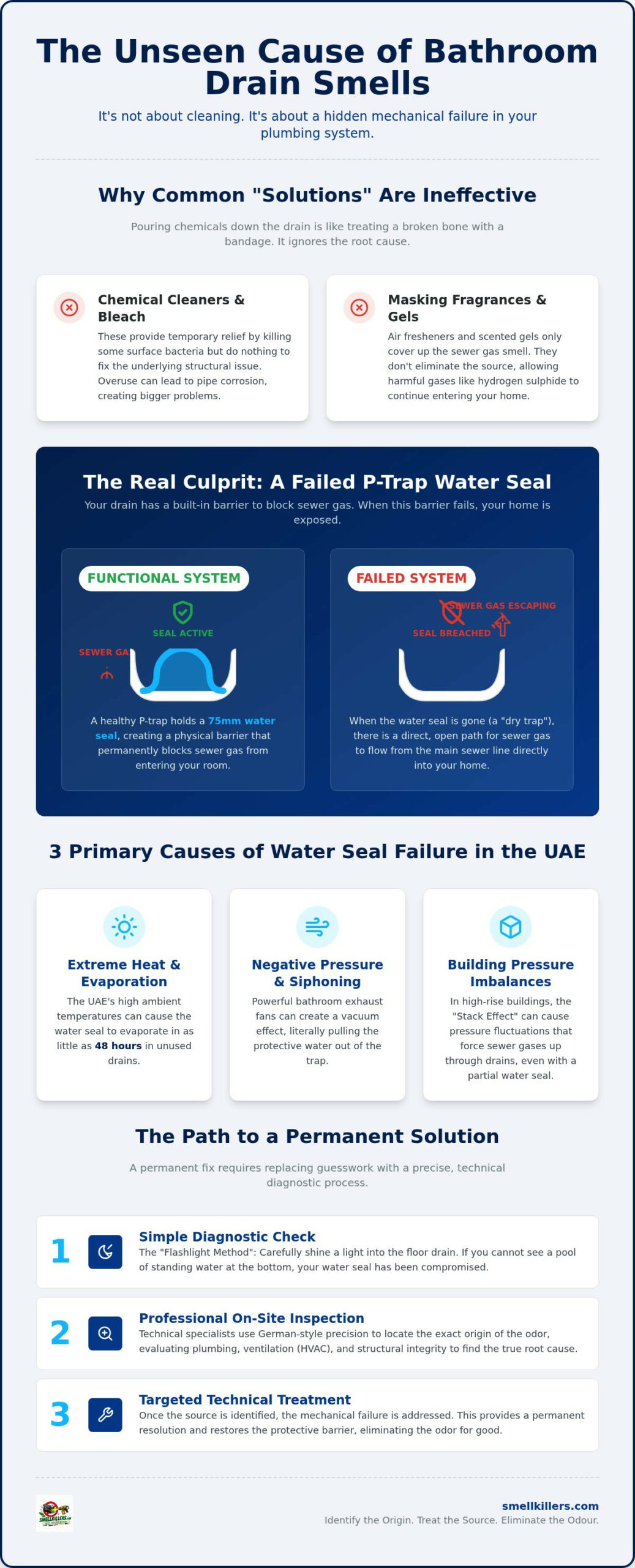
The UAE climate imposes extreme thermal stress on residential drainage systems. While a bathroom drain smell UAE is often dismissed as a cleaning failure, it’s frequently a symptom of atmospheric conditions. High evaporation rates in the region mean that the water seal within a P-trap can disappear in as little as 48 hours if a drain isn’t used. This creates the “dry trap” phenomenon. Without this liquid barrier, the composition of sewer gas, including hydrogen sulphide and methane, bypasses the plumbing system and enters your living space directly.
Extreme heat also accelerates the decomposition of organic matter trapped within pipes. Hair, soap scum, and skin cells break down much faster at 40°C than at 20°C. This biological acceleration turns minor residue into a potent odour source. In high-rise environments, pressure differentials between the building’s interior and the external drainage stack can force these gases through even partially filled traps. Identify the origin. Treat the source. Eliminate the odour.
The Impact of High Ambient Temperatures
Thermal expansion is a constant factor in UAE properties. PVC piping expands and contracts significantly as indoor temperatures fluctuate between cooled AC environments and external heat. This movement can compromise the integrity of seals and joints over time. Odours typically peak during the summer months when ground temperatures rise, causing gases in the municipal sewage lines to expand and seek any available exit point. High humidity further complicates the issue. It slows the dissipation of heavy gas molecules, allowing them to linger at floor level where they’re most perceptible.
HVAC and Plumbing Integration Issues
A common yet overlooked source of odour is the integration of AC condensate lines with bathroom drainage. In many UAE developments, the water runoff from your air conditioning unit drains directly into the floor trap. This creates a complex mechanical relationship:
- Dry Trap Risk: If the AC unit is inactive for extended periods, the trap lacks a consistent water supply and dries out.
- Cross-Contamination: Biofilms from the AC drain can merge with plumbing waste, creating a unique, musty sewage scent.
- Negative Pressure: Powerful exhaust fans in windowless bathrooms create a “siphon effect.” These fans can pull sewer gases upward through the drain or even evaporate the water seal faster.
Professional diagnostics must evaluate both the HVAC and plumbing systems simultaneously. Standard cleaning cannot fix a pressure imbalance or a dry trap. Scientific detection is required to determine if the smell is a plumbing failure or a ventilation conflict. When the source is traced to the air conditioning system, professional AC odour removal Dubai specialists can deploy non-invasive diagnostic technology to identify biological and mechanical failures within the unit before they compromise your indoor air quality further.
The Mechanics of Drainage Systems and Sewage Gas Infiltration
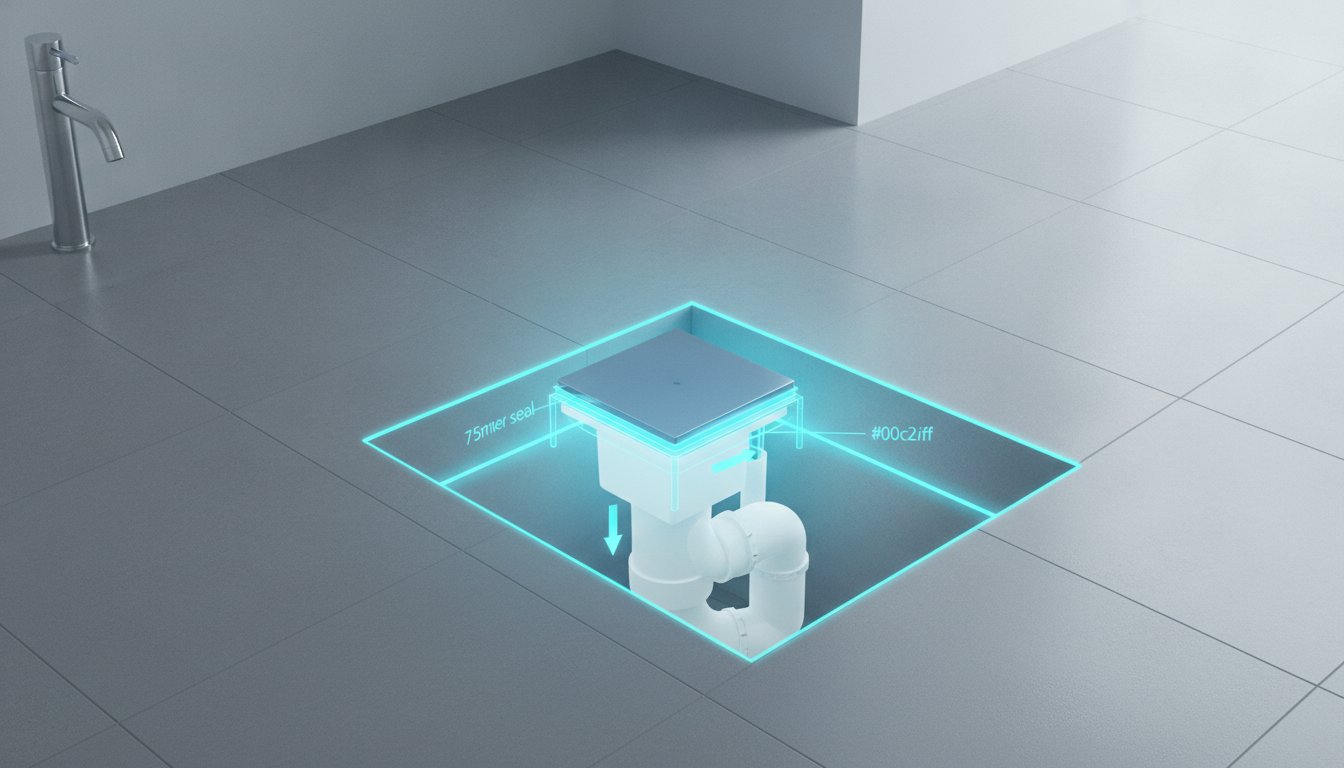
A functional drainage system is a precision-engineered barrier designed to isolate your living space from the municipal sewer network. When you encounter a persistent bathroom drain smell UAE, it indicates a mechanical breach in this isolation. The primary component of this barrier is the P-trap or U-bend. These curved pipe sections are designed to hold a specific volume of water, creating a physical seal that prevents gases from traveling backward into the room. Without this liquid plug, your bathroom becomes a direct vent for the entire building’s waste infrastructure.
Hydrogen Sulphide (H2S) is the dominant gas responsible for that characteristic “rotten egg” scent. It is heavy, corrosive, and produced by the metabolic activity of bacteria within the biofilm. This biofilm is a living layer of microorganisms that coats the internal walls of your pipes. Over time, it thickens, trapping hair and organic debris, which accelerates gas production. In high-rise developments across the UAE, the “Stack Effect” complicates this further. Vertical vent pipes move air and gas through the building; however, pressure imbalances can force these gases through your traps, even if they aren’t completely dry. Understanding these mechanics is the first step toward a permanent drain and sewage smell elimination strategy.
The Science of the Water Seal
In Dubai, building regulations specify a minimum water seal depth of 75mm for floor drains to ensure gas-blocking efficiency. A seal breach occurs through three primary mechanisms: evaporation, siphoning, and backpressure. Evaporation is common in the heat, but siphoning is a more complex mechanical failure where water is literally pulled out of the trap by pressure changes elsewhere in the line. Occasionally, a “phantom” leak occurs where the water level appears sufficient, but a hairline crack in the pipe allows gas to bypass the seal entirely. Diagnostic accuracy is vital here. Guessing leads to failed repairs.
Secondary Odour Vectors
The source of a recurring sewage smell home problem is not always located inside the pipe. Secondary vectors often harbor significant bacterial colonies that produce localized odours. Grout and silicone around floor drains often degrade over time. These porous materials absorb moisture and organic matter, becoming hidden breeding grounds for mould and bacteria. Similarly, the overflow channels in sinks are frequently ignored during standard cleaning. These dark, damp voids accumulate biofilm that remains untouched by topical sprays. If your drain smells despite the trap being full, the issue likely resides in these structural voids. Isolate the vector. Identify the cause. Treat the source.
Why Standard Cleaning Methods Fail to Eliminate Persistent Odours
Hygiene is rarely the issue when a bathroom drain smell UAE refuses to dissipate. Surface cleaning addresses visible residue, but it cannot reach the mechanical or biological origin of a sewage leak. Many property owners spend weeks scrubbing tiles and pouring boiling water down drains, only to find the scent returns within hours. This happens because topical treatments fail to penetrate the industrial-scale biofilms that anchor themselves to the internal walls of your plumbing. These biological layers are resistant to standard household products and continue to off-gas even after a thorough cleaning.
DIY “natural” remedies like baking soda and vinegar are clinically ineffective against established sewage gas infiltration. While the chemical reaction creates a satisfying foam, it lacks the concentration to dissolve deep-seated organic clogs or alter the building’s pressure dynamics. If the odour returns quickly, the issue is likely structural rather than sanitary. In these cases, a professional apartment odour assessment UAE is the only logical step. It moves the process from superficial maintenance to technical diagnostic detection.
The Danger of Corrosive Cleaners
Harsh chemical cleaners pose a significant risk to your property’s infrastructure. These substances are highly acidic or alkaline. They are designed to dissolve organic matter, but they also attack the rubber seals and gaskets that keep your plumbing airtight. Over time, this chemical erosion creates “phantom” leaks where gas escapes into the bathroom without a visible water leak. Chemical “fixes” often lead to expensive pipe repairs later. Additionally, the excessive use of these toxins negatively impacts the UAE’s local water treatment systems. Protect your infrastructure by avoiding aggressive chemical interventions.
Masking vs. Technical Elimination
There is a critical distinction between cleaning and remediation. Cleaning addresses visible dirt. Remediation eliminates the source of a biological or mechanical failure. Many property owners fall into the psychological trap of using heavy fragrances or automatic sprays. These products merely coat your olfactory receptors, leaving the toxic sewer gas present in the air you breathe. For a permanent resolution, you must consult an odour expert UAE to implement technical protocols that address the specific physics of your building’s drainage. Stop masking the symptom. Start treating the source.
A Diagnostic Checklist for Identifying the Source of Sewer Smells
Accurate diagnosis is the foundation of any permanent resolution. To resolve a bathroom drain smell UAE, you must first isolate the precise point of entry. Start with the ‘Sniff Test’ protocol. Get close to each individual fixture. Often, the odour emanates from the floor drain, while the sink remains clear. This distinction is vital because it indicates which branch of your plumbing is failing. If the sink smells, the issue might be a biological buildup in the overflow channel. If the floor drain is the culprit, the problem is likely a compromised water seal.
Use the flashlight method to verify the integrity of your P-trap. Shine a light directly into the drain. You should see a clear, still pool of water. If you see the bottom of the pipe or a dry void, your gas barrier has failed. Additionally, evaluate the scent profile. A ‘musty’ or earthy smell typically indicates mould or mildew growth within the grout or AC condensate line. A ‘rotten egg’ scent is a definitive sign of hydrogen sulphide, confirming that sewage gas is infiltrating your home. Turn on your exhaust fan and monitor the intensity. If the smell worsens, the fan is creating negative pressure, actively pulling gas through your drains.
Step-by-Step DIY Inspection
- Isolate the source: Seal each drain individually with waterproof tape for 12 hours. Remove them one by one to see which release trapped odours.
- Monitor timing: Track the scent intensity. In the UAE, smells often peak in the evening when building-wide water usage increases, creating pressure fluctuations.
- Examine the sealant: Inspect the silicone or grout around the drain cover. Cracks here allow moisture to seep under tiles, creating secondary bacterial sources.
When Troubleshooting Hits a Wall
DIY methods have limitations. If your traps are full and your drains are clean, but the smell persists, you are likely facing a structural failure. Symptoms of a collapsed vent stack or a deep-line blockage often manifest as gurgling sounds or recurring odours that affect multiple bathrooms. In high-density UAE developments, the problem might even originate from a neighbor’s plumbing, with gas traveling through shared ventilation shafts. When these complexities arise, a professional apartment odour assessment UAE is the next logical step. It replaces surface-level guessing with technical investigative precision.
Stop living with the discomfort of persistent sewage scents. Book an on-site inspection today to receive a definitive technical diagnosis and a permanent treatment plan from the specialists at Smellkillers.
Technical Odour Detection: The SMELLKILLERS.COM Protocol for Permanent Resolution
Eliminating a persistent bathroom drain smell UAE requires a transition from superficial maintenance to scientific building diagnostics. At SMELLKILLERS.COM, we replace guesswork with German-style technical precision. Our methodology treats the property as an integrated mechanical system rather than a series of isolated fixtures. We identify the origin. We treat the source. We verify the resolution. This methodical approach ensures that property owners move beyond temporary masking toward a permanent environmental recovery.
Our specialists utilize non-invasive detection technology to map gas movement within your infrastructure. This is a critical advantage for modern UAE residences. We locate structural leaks, compromised vent seals, and pressure imbalances without the need for destructive tile removal or invasive plumbing teardowns. By focusing on diagnostic accuracy, we provide a clear roadmap for remediation that targets the specific physics of your bathroom’s drainage and ventilation network.
The On-Site Inspection Advantage
The mandatory first step in our protocol is the professional on-site inspection. During this phase, we deploy specialized sensors to track hydrogen sulphide concentrations and airflow fluctuations. This data allows for the professional verification of the recurring sewage smell home source, distinguishing between a simple dry trap and a complex structural venting failure. We provide detailed reporting that explains the “how” and “why” of the infiltration. You receive a transparent assessment of your building’s health and a customized strategy for long-term prevention.
Our Specialized Elimination Treatments
Once the diagnosis is complete, we implement targeted treatments designed for high-performance results. Our protocols are not one-size-fits-all cleaning routines. We utilize:
- Targeted Biological Treatments: We deploy eco-conscious microbial agents that safely consume industrial-scale biofilms. These treatments reach deep into the drainage walls where standard chemicals fail.
- Structural Remediation: We address the mechanical integrity of vent seals and trap depths, ensuring your plumbing meets the 75mm water seal standards required in the UAE.
- Final Verification Protocols: We don’t consider a project finished until our sensors confirm the total eradication of sewer gases. We monitor the air quality post-treatment to guarantee a permanent end to the odour.
Stop managing the smell and start eliminating it. Our process is fast-paced, highly structured, and focused entirely on the transition from a state of discomfort to a state of resolution. Trust the precise specialists at SMELLKILLERS.COM to reclaim your indoor air quality through technical integrity and modern investigative methods.
Reclaim Your Property’s Air Quality Today
Persistent odors are structural symptoms, not cleaning failures. As established, the extreme climate accelerates evaporation and organic decomposition, making a bathroom drain smell UAE a complex mechanical issue rather than a lack of hygiene. Standard chemicals only mask the problem while damaging your infrastructure. True resolution requires moving beyond surface-level scrubbing toward a scientific understanding of your building’s pressure dynamics and water seal integrity.
Our no-nonsense, source-focused methodology replaces mystery with diagnostic certainty. SMELLKILLERS.COM provides UAE-wide specialized service using clinical German-style diagnostic precision to identify the exact origin of sewage gas infiltration. It’s time to stop the cycle of temporary fixes and invest in a technical treatment that works. Book a Technical On-Site Inspection for Permanent Odour Elimination to restore your home to a state of comfort and safety. You don’t have to tolerate persistent odors any longer; professional resolution is the only permanent path forward.
Frequently Asked Questions
Why does my bathroom smell like rotten eggs in the UAE?
The rotten egg scent is caused by Hydrogen Sulphide (H2S) gas escaping from your drainage system. This occurs when the water seal in your P-trap evaporates due to high ambient temperatures or when organic matter decomposes rapidly in the pipes. If this liquid barrier is missing, sewer gas enters your bathroom directly.
Can sewer gas in my bathroom make me sick?
Prolonged exposure to sewer gas can cause health issues ranging from headaches to respiratory irritation. Hydrogen Sulphide is toxic at high concentrations and can lead to nausea or dizziness even at lower levels. It’s essential to identify the root cause to ensure your indoor air quality remains safe for all inhabitants.
Is it normal for a new apartment in the UAE to have drain smells?
It is common for new UAE apartments to experience odours, especially if they have been vacant for an extended period. Unused drains allow the water seal to evaporate quickly. However, persistent smells in new builds often point to structural venting errors or improper trap installation that requires professional diagnostic verification.
Why does the smell get worse when I turn on the bathroom exhaust fan?
Your exhaust fan creates negative pressure within the bathroom, which actively pulls sewer gas through the drain. If the air pressure in the room is lower than the pressure in the drainage stack, the fan acts like a vacuum. This confirms that your water seal is either insufficient or mechanically compromised.
Will pouring bleach down the drain fix the sewage smell?
Bleach is a temporary disinfectant that won’t solve a structural bathroom drain smell UAE. It might kill surface bacteria, but it cannot replenish a dry trap or fix a pressure imbalance. Excessive bleach usage can also corrode rubber gaskets and pipe seals, leading to more significant leaks over time.
How long does a professional odour inspection take?
A professional on-site odour inspection generally takes between 60 to 90 minutes. This timeframe allows our specialists to conduct sensor-based air quality tests, check P-trap water levels, and evaluate the building’s ventilation mechanics. You receive a technical report and a treatment plan immediately following the diagnosis.
What is the difference between a plumber and an odour specialist?
A plumber focuses on water flow and mechanical blockages, while an odour specialist focuses on gas infiltration and air quality. Specialists use precision sensors to track invisible gas paths that standard plumbing tools cannot detect. We treat the environmental root cause rather than just addressing visible symptoms.
Can the smell come from the AC vents instead of the drain?
Odours can originate from AC vents if the condensate lines are improperly integrated with the bathroom drainage. Biofilms can grow within the AC unit and travel through the ducting. We evaluate both systems during an inspection to determine if the source is the plumbing or the HVAC network. If the air conditioning unit is identified as the primary source, a dedicated professional AC odour removal Dubai assessment applies German-style diagnostic protocols to permanently eliminate biological and mechanical failures within the system.