
Article by
Jonathan Bonnett
Australian Air Conditioning Specialist with extensive hands-on experience in AC servicing, deep cleaning, maintenance, and troubleshooting. Focused on high-quality workmanship, reliability, and professional service to UAE standards.
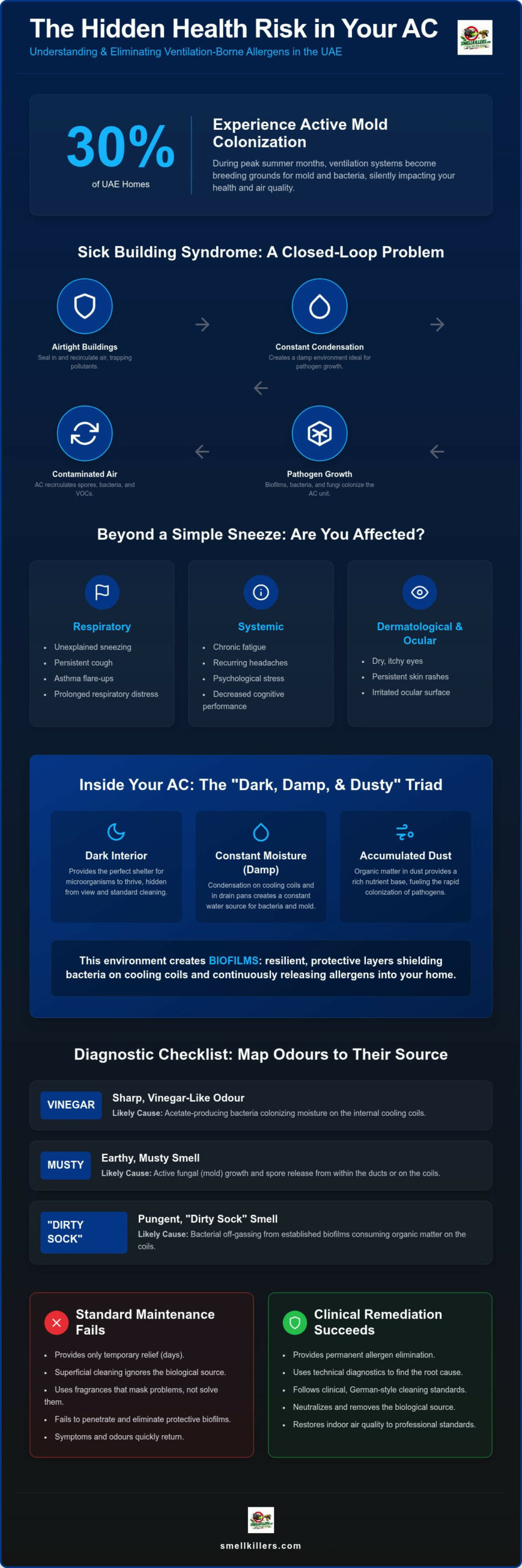
Up to 30% of homes in the UAE experience active mold colonization within their ventilation systems during the peak summer months. If you are suffering from unexplained sneezing or a persistent cough, your AC causing allergies UAE is not just a suspicion; it’s a technical reality. You’ve likely experienced the frustration of a standard “deep clean” that provides only a few days of relief before the symptoms return. This happens because superficial cleaning ignores the biological source hidden deep within the mechanical infrastructure.
You deserve a home environment defined by scientific certainty rather than invisible threats. This guide identifies the specific biological pathogens, such as acetate-producing bacteria and fungal spores, that thrive in the local climate. We will detail the clinical protocols required for permanent allergen elimination and explain why technical source detection is the only path to resolution. You’ll learn how to transition from temporary masking to a high-tech health intervention that restores your indoor air quality to professional standards, moving beyond the mystery of recurring respiratory irritation toward a state of total environmental control.
Key Takeaways
- Analyze the physiological impact of Sick Building Syndrome within the UAE’s airtight building envelopes and high-humidity environments.
- Identify the specific biological triggers behind your AC causing allergies UAE, including biofilm formation and acetate-producing bacteria.
- Evaluate why standard maintenance and fragrance masking fail to eliminate microscopic pathogens hidden on internal cooling coils.
- Utilize a technical diagnostic checklist to map scent profiles, such as vinegar or musty odours, to their mechanical or biological origins.
- Implement clinical remediation protocols based on German-style aircon cleaning standards for the permanent elimination of ventilation-borne allergens.
Sick Building Syndrome: Why Your AC is a Health Risk in the UAE
The UAE climate necessitates airtight building envelopes to maintain thermal efficiency. While effective for cooling, these sealed environments create a closed loop where air is continuously recirculated. When the HVAC system is compromised, it becomes a delivery mechanism for pollutants rather than a filtration system. This phenomenon is technically defined as Sick Building Syndrome (SBS). If you suspect your AC causing allergies UAE, the issue is likely rooted in the recirculation of these pathogens. Unlike seasonal hay fever, which is external and transitory, chronic HVAC-induced irritation persists as long as the occupant remains indoors. Modern ventilation systems in the UAE are particularly prone to biological stagnation. The extreme temperature differential between the humid exterior and chilled interior leads to constant condensation. This moisture, trapped within dark ductwork and cooling coils, allows pathogens to colonize the system without interference. Regulatory standards across the UAE set strict limits for formaldehyde and TVOCs, yet many residential units unfortunately exceed these levels due to internal contamination.
Common Respiratory and Systemic Symptoms
Occupants often report systemic issues that extend beyond simple sneezing. Chronic fatigue and recurring headaches are frequently documented in buildings with poor indoor air quality. These symptoms result from the body’s inflammatory response to high concentrations of volatile organic compounds (VOCs) and fungal spores. For those with pre-existing conditions, an AC causing allergies UAE can trigger severe asthma flare-ups and prolonged respiratory distress. The impact is also dermatological. Contaminated air strips moisture from the skin and irritates the ocular surface, leading to dry, itchy eyes and persistent skin rashes that don’t respond to topical treatments.
The Clinical Link Between HVAC Odours and Illness
A bad smell is a diagnostic signal. Musty or vinegary odours indicate that the “odour threshold” has been breached. We define the odour threshold as the minimum concentration of a substance in the air that can be detected by the human olfactory system, marking the transition from a clean environment to one that is chemically or biologically compromised. Once this threshold is crossed, the air quality is a documented health hazard. These odours aren’t just unpleasant; they cause significant psychological stress and physical nausea. Persistent exposure to these signals tells the brain that the environment is unsafe, leading to anxiety and decreased cognitive performance. Identifying the specific scent profile is the first step in a technical health intervention rather than a superficial cleaning fix.
Biological Pathogens: Mapping AC Odours to Respiratory Triggers
The ‘Dark, Damp, and Dusty’ triad defines the internal environment of most poorly maintained units. These conditions transform the HVAC system into a biological incubator. Dust provides the nutrient base. Condensation provides the moisture. The dark interior provides the shelter. Within this environment, microorganisms form complex structures known as biofilms on the cooling coils. These biofilms are protective layers that shield bacteria from standard cleaning agents. Poor indoor air quality (IAQ) is often the direct result of these biofilms releasing metabolic byproducts into the air stream. One common manifestation is ‘Dirty Sock Syndrome,’ where the system emits a pungent, earthy smell caused by the off-gassing of bacteria as they consume organic matter. This biological activity is a primary driver for an AC causing allergies UAE, as it continuously seeds the air with irritants.
Stagnant water in condensate trays and drain lines introduces additional risks. Legionella and other water-borne bacteria thrive in these warm, anaerobic environments. If the drain line is blocked or improperly sloped, the resulting bacterial sludge becomes a source of volatile pathogens. These pathogens enter the room every time the fan engages. These biological signals are technical warnings that the environment is no longer sterile.
Bacterial Contamination: From Vinegar to Sewage Smells
Specific scent profiles help diagnose the underlying contamination. A sharp, vinegar-like odour is typically caused by acetate-producing bacteria colonizing the moisture on the coils. These bacteria convert organic dust into acetic acid. In other cases, the system may draw in sewer gases through dry P-traps or faulty plumbing connections. This requires specialized sewage odour elimination UAE to prevent the infiltration of hydrogen sulphide and other toxic gases. Identifying these sources is critical because masking the smell does nothing to stop the physiological impact of the gas. If you notice these specific triggers, a technical property odour assessment can pinpoint the mechanical failure.
Mould Spores and Mycotoxins
Mould colonization represents a significant escalation in health risk. Once mould establishes itself in the ductwork, it releases thousands of microscopic spores into the air stream. These spores are often coated in mycotoxins, which are toxic secondary metabolites. While visible mould on vents is a clear warning sign, the primary danger lies in the invisible airborne toxins that bypass standard filters. Chronic exposure to these mycotoxins is linked to long-term respiratory issues and immune system suppression. For residents dealing with an AC causing allergies UAE, the presence of fungal growth necessitates a clinical remediation approach to ensure the source is entirely eradicated rather than just wiped away.
The Failure of Standard Maintenance in Protecting Indoor Air Quality
Standard maintenance packages in the UAE frequently prioritize visible cleanliness over technical hygiene. These services often consist of washing mesh filters and wiping external vents. Such superficial actions fail to address the root cause of an AC causing allergies UAE. When a “quick clean” is performed, pressurized water often pushes surface dust and biological matter deeper into the cooling fins and insulation. This creates unreachable pockets of decay. This process facilitates the development of deep-seated biofilms that resist standard agitation. Improperly applied detergents also introduce risks. Using harsh, non-specialized agents can lead to documented aircon chemical cleaning side effects. These include persistent throat irritation, coughing, and chemical sensitivity. Many standard cleaning services use high-pH detergents that corrode the aluminum fins of the evaporator coil, shortening the unit’s lifespan while releasing metallic particles into your breathing zone.
The Myth of the ‘Clean Filter’
A pristine filter doesn’t guarantee sterile air. Filters are designed to trap large particulates like sand and hair. They are ineffective against microscopic fungal spores and bacteria that have already bypassed the mesh to settle on the internal evaporator coil. The blower fan and condensate tray are also critical failure points. These components remain damp for months, allowing pathogens to multiply regardless of filter status. If the blower wheel is coated in dust, it acts as a centrifugal spreader for fungal spores. If the tray is blocked, it becomes a reservoir for bacterial sludge. Technical filtration is only one part of a multi-stage IAQ protocol; it isn’t a standalone solution for biological remediation.
Masking vs. Eliminating: The Technical Difference
Masking an odour with fragrance sprays is a dangerous mechanical oversight. These products contain high levels of Volatile Organic Compounds (VOCs) that further degrade indoor air quality. Fragrances merely coat the olfactory receptors, allowing underlying biological colonies to strengthen and become more resistant to future treatment. For those suffering from an AC causing allergies UAE, chemical masking can exacerbate asthma and allergic rhinitis. Permanent resolution requires professional aircon odour elimination at the source. Identify the origin. Neutralize the pathogen. Restore the air stream. This methodical approach ensures that the environment is clinically clean rather than just superficially scented.
Diagnostic Checklist: Identifying the Source of AC-Borne Allergens
Determining the origin of respiratory distress requires a methodical investigation. If you suspect your AC causing allergies UAE, use this checklist to differentiate between mechanical failure and biological contamination. Superficial cleaning ignores the underlying triggers. Follow these diagnostic steps to provide a technical baseline for remediation.
- Step 1: Identify the scent profile. Analyze the air stream for musty, rotten egg (sulphur), or vinegar-like notes. Each profile points to a specific biological or mechanical culprit.
- Step 2: Evaluate timing. Determine if the odour occurs only during unit startup or remains constant. Startup odours suggest moisture on the evaporator coil; constant smells often indicate deep duct contamination or plumbing gas infiltration.
- Step 3: Execute a visual check. Inspect vents for ‘black dust’ or moisture staining. Black accumulation is frequently a sign of active mould spores being discharged into the living space.
- Step 4: Correlation analysis. Monitor your physical response. If sneezing and headaches stop within 30 minutes of leaving the air-conditioned space, the building envelope is the primary irritant source.
- Step 5: Inspect the plumbing interface. Check the relationship between the AC condensate line and the property’s drainage system. Improper connections allow sewage gases to bypass traps and enter the ventilation loop.
Mapping Odours to Root Causes
A musty or earthy scent is a technical indicator of fungal growth. These colonies thrive in the ‘Dark, Damp, and Dusty’ triad previously discussed. If you detect a sewage or sulphur smell, the issue likely stems from a dry P-trap or a faulty connection to the main waste line. This requires a professional property odour assessment to track gas migration through the infrastructure. Sharp, vinegar-like smells are caused by acetate-producing bacteria colonizing the cooling coils. These metabolic byproducts are significant triggers for an AC causing allergies UAE and cannot be resolved with fragrance sprays.
When to Call a Diagnostic Specialist
Persistent respiratory issues indicate that the contamination has breached your system’s defensive thresholds. General handymen lack the diagnostic equipment to find root causes hidden within wall cavities or secondary drain lines. If your symptoms return within days of a basic service, you need a technical remediation plan. A professional on-site inspection provides the scientific certainty needed to eliminate allergens permanently. Don’t settle for temporary fixes when your health is dictated by the air you breathe. Professional intervention moves beyond cleaning to provide a clinical health intervention for your property.
Clinical Remediation: The German-Style Standard for Allergen Elimination
Resolving a persistent AC causing allergies UAE requires a transition from general maintenance to clinical remediation. German-style aircon cleaning standards prioritize technical precision over superficial speed. This protocol treats the HVAC system as a medical-grade infrastructure rather than a simple appliance. By focusing on the mechanical and biological root causes, this method ensures the complete removal of biofilms and fungal colonies that standard services leave behind. A clinical approach is the only way to break the cycle of recurring respiratory irritation. It replaces temporary fragrance masking with scientific de-contamination. This transition is essential for property owners who have exhausted traditional cleaning options without achieving long-term relief.
A technical on-site inspection is the foundation of this process. Specialists don’t just look for dust; they track gas leaks and biological origins across the entire property. This diagnostic phase identifies failures in the building envelope, such as faulty insulation or compromised duct seals, that allow external pollutants to bypass the filtration system. Every property presents a unique set of environmental variables. Consequently, a bespoke remediation strategy is developed for every system we treat. This ensures that the intervention addresses the specific pathogens present, whether they are acetate-producing bacteria or mycotoxin-releasing moulds. Engaging an odour expert UAE provides access to these specialized technical protocols, ensuring that air safety is restored through evidence-based practices.
Precision Deep Cleaning Methodology
The remediation process targets the most critical internal components: the evaporator coils, condensate trays, and blower wheels. We utilize eco-friendly, non-toxic treatments that physically eliminate pathogens rather than simply suppressing them. These specialized agents dissolve the protective biofilm layer, allowing for the complete extraction of bacterial sludge. Every internal surface is clinically cleaned to prevent rapid re-contamination. This high-tech approach ensures that the air passing through the unit remains sterile, directly addressing the core triggers of your AC causing allergies UAE. We don’t use harsh detergents that cause chemical sensitivity; we use precise interventions that respect the indoor environment.
Ensuring Permanent Air Quality Results
Permanent resolution requires addressing the plumbing-HVAC interface. If the AC condensate line is improperly connected to the sewage system, allergens and toxic gases will continue to ingress regardless of how clean the coils are. We inspect and seal these interfaces to stop gas migration. Post-treatment verification is the final step. We confirm the elimination of biological signals to ensure your indoor air is truly safe for vulnerable occupants. This methodical closure transforms your home from a source of discomfort to a sanctuary of health. Don’t let invisible pathogens dictate your quality of life. Book a technical on-site odour inspection today to identify the source and implement a permanent clinical solution.
Restoring Environmental Integrity to Your Indoor Air
Respiratory irritation and persistent sneezing are biological signals of a systemic failure within your property’s ventilation loop. Resolving an AC causing allergies UAE requires a transition from superficial maintenance to technical source detection. Standard cleaning often ignores the deep-seated biofilms and fungal colonies that thrive in the local climate. True resolution depends on expert root cause identification and the complete extraction of these hidden pathogens.
Your health is dictated by the air you breathe. By implementing specialized German-style cleaning standards, we ensure that every internal component is clinically sterile. We provide a strict no-masking guarantee; our process eliminates the biological origin of irritants rather than hiding them behind volatile fragrances. This methodical approach replaces environmental mystery with scientific certainty and long-term relief.
Take the first step toward a permanent health intervention for your property. Schedule a Professional Diagnostic Odour Inspection to identify the specific triggers affecting your household. Reclaiming your indoor air quality is a technical necessity that restores your home to a state of total environmental safety.
Frequently Asked Questions
Can a dirty AC cause flu-like symptoms and allergies?
Yes. Contaminated systems recirculate biological irritants that trigger an inflammatory response. Symptoms like fatigue, headaches, and nasal congestion often mimic the flu. This is technically defined as Sick Building Syndrome. In the UAE, where air is recirculated within airtight building envelopes, these pathogens become highly concentrated. Professional intervention identifies the specific biological triggers rather than just cleaning surface dust to ensure a healthier indoor environment.
How often should I clean my AC to avoid health risks in the UAE?
We recommend a professional deep clean at least once every six months. The UAE’s high humidity and extreme summer temperatures accelerate microbial growth within the dark ductwork. Law No. (5) of 2025 in Dubai now mandates annual indoor air quality testing for public buildings, reflecting the rising priority of air safety. For residential properties, more frequent technical inspections are necessary to prevent the 30% mold colonization rate often reported during peak summer.
Is the ‘vinegar’ smell from my AC dangerous to breathe?
A vinegar-like odour indicates the presence of acetate-producing bacteria colonizing the moisture on your cooling coils. While the smell itself is a metabolic byproduct, breathing these bacterial emissions can lead to chronic respiratory irritation and nausea. This scent profile signifies that the system has crossed the technical odour threshold and is no longer providing sterile air. It requires a clinical remediation plan to neutralize the bacterial source permanently.
Why does my AC smell like sewage even after a filter change?
Sewage smells typically originate from the plumbing interface rather than the filter itself. If your AC causing allergies UAE is accompanied by a sulphur scent, it often indicates a dry P-trap or a direct connection to the main waste line. Changing filters won’t stop gas migration. You need a property odour assessment to identify the mechanical failure allowing sewer gases to bypass traps and infiltrate your ventilation loop.
What is the most dangerous bacteria found in unmaintained AC systems?
Legionella is among the most hazardous pathogens found in stagnant AC condensate trays. It thrives in warm, anaerobic environments and can cause severe pneumonia if aerosolized into the air stream. Other risks include acetate-producing bacteria and various fungal species that release toxic mycotoxins. These biological threats require clinical-grade disinfection rather than standard detergents to ensure the safety of vulnerable populations, including children and the elderly.
Can professional AC cleaning help with chronic allergies?
Professional cleaning based on German-style standards significantly reduces chronic allergy triggers by removing the biological source of irritation. Standard cleaning often misses the biofilms on internal coils that cause your AC causing allergies UAE. By extracting mould spores and neutralizing bacterial colonies, we restore the air stream to a sterile state. This technical health intervention provides long-term relief for residents suffering from recurring respiratory distress and environmental sensitivities.
Is it safe to use ozone generators for AC odour removal?
We don’t recommend ozone generators for residential odour removal. Ozone is a known lung irritant that can react with other indoor pollutants to form harmful secondary compounds like formaldehyde. Dubai Municipality standards limit formaldehyde to less than 0.08 ppm for health reasons. Instead of using reactive gases that pose secondary health risks, we utilize eco-friendly, non-toxic treatments that physically eliminate the biological source of the odour.
How do I know if my AC has black mould inside the ducts?
Look for “black dust” accumulation or dark staining around your supply vents. If cleaning the vent provides only temporary relief, the colony is likely established deep within the ductwork insulation or on the evaporator coil. Persistent musty smells and chronic respiratory symptoms are also strong diagnostic indicators. A professional on-site inspection is required to confirm the presence of black mould and determine the appropriate clinical remediation strategy.