

Article by
Jonathan Bonnett
Australian Air Conditioning Specialist with extensive hands-on experience in AC servicing, deep cleaning, maintenance, and troubleshooting. Focused on high-quality workmanship, reliability, and professional service to UAE standards.
That foul, lingering scent in your hallway isn’t a hygiene failure; it’s a mechanical one. You’ve likely scrubbed every drain and exhausted your supply of air fresheners, yet the recurring sewage smell home persists. It’s an embarrassing problem that creates genuine anxiety about your family’s health. You’re right to be concerned. Sewer gas often contains hydrogen sulfide and methane. These aren’t just unpleasant; they can cause dizziness and nausea even at low levels. Superficial cleaning cannot fix a structural breach.
We understand your frustration with temporary solutions that fail to address the root cause. This technical guide replaces mystery with diagnostic precision. You’ll learn to identify the hidden structural failures, such as dry P-traps, blocked vent stacks, or compromised sewer lines, that allow gas to bypass your plumbing’s defenses. We’ll preview the professional investigative methods used to find the origin of the odour, including smoke testing and video pipe inspections. By the end of this article, you will have a clear roadmap to achieve permanent elimination and restore the air quality of your property through scientific certainty.
Key Takeaways
- Recognize that a recurring sewage smell home indicates a mechanical failure in your building’s barrier systems rather than a lack of hygiene.
- Identify how structural defects, such as dry P-traps and obstructed vent stacks, create pressure imbalances that push sewer gases into your living space.
- Learn why clinical diagnostic protocols and on-site inspections are essential for locating invisible gas leaks that air fresheners cannot resolve.
- Follow a technical checklist to investigate floor drain water levels and monitor A/C vent intensity for localized odour vectors.
- Understand the professional remediation process where accurate diagnosis precedes treatment, incorporating German-style cleaning for biological odour reservoirs.
What Is a Recurring Sewage Smell and Why It Persists
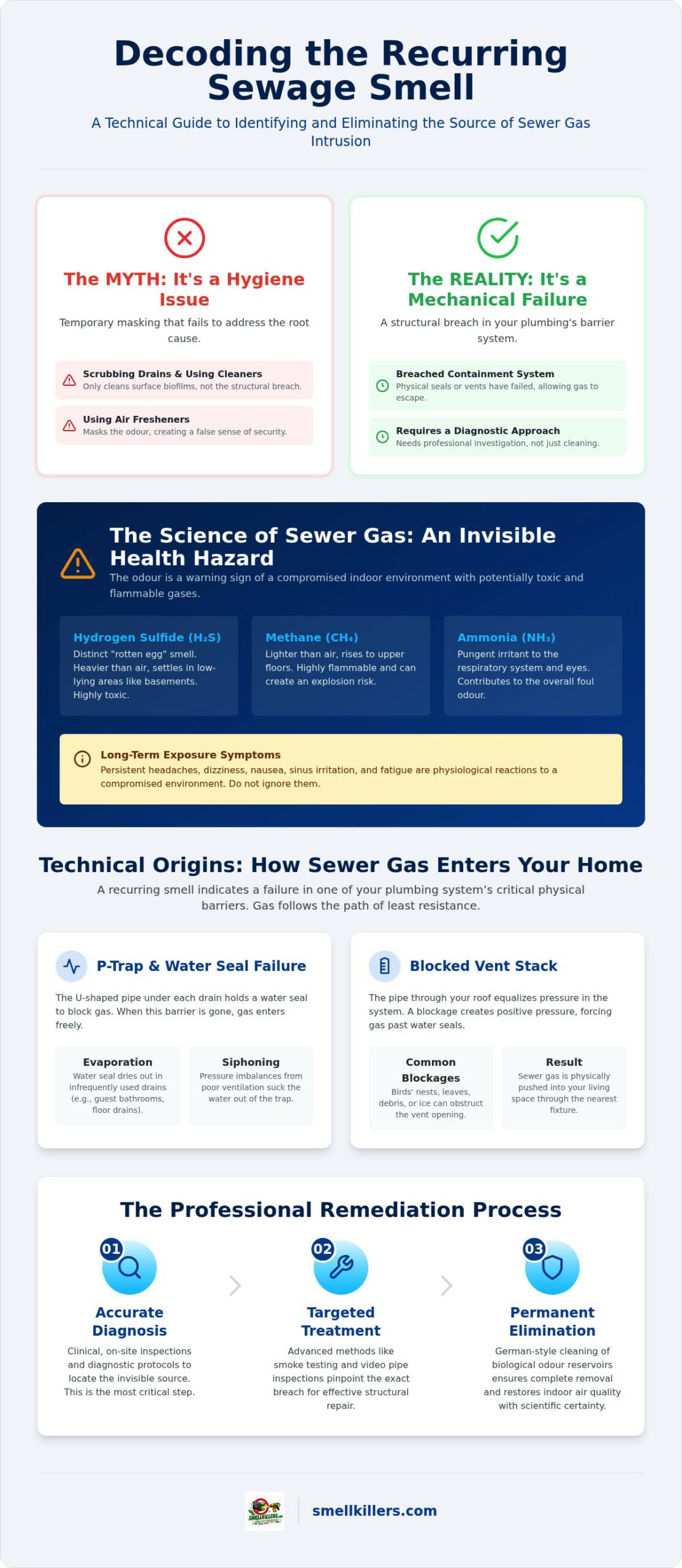
A recurring sewage smell home is more than a nuisance. It is a technical indicator of a breached containment system. When we define an odour as “recurring,” we aren’t describing a temporary clog or a dirty sink. We are identifying a systemic failure in the building’s mechanical barriers. Your plumbing is designed with specific traps and vents to keep hazardous waste air where it belongs—inside the pipes. When these barriers fail, sewer gas enters your living space. If the smell disappears only to return a few days later, you aren’t dealing with a hygiene issue. You’re dealing with a mechanical breakdown.
Hydrogen Sulphide (H2S) is the primary chemical responsible for that distinct rotten egg scent. While a one-time blockage causes localized problems, a recurring odour suggests a deeper fault. This could be a cracked pipe, a dried-out seal, or a pressure imbalance in the ventilation system. You must distinguish between a simple clog and a structural breach. One requires a plunger; the other requires a clinical diagnostic approach.
The Science of Sewer Gas
To solve the problem, you must understand What is Sewer Gas? and how it behaves. It is a complex mixture of gases produced by the decomposition of organic waste. Its behavior depends on its chemical composition:
- Hydrogen Sulphide (H2S): This gas is heavier than air. It settles in basements, floor drains, and low-lying areas. It is highly toxic even in small amounts.
- Methane: Lighter than air and highly flammable. It rises through vertical shafts and can accumulate in attic spaces or upper floors.
- Ammonia: A pungent irritant that affects the respiratory system and eyes.
Long-term exposure to these gases leads to chronic health issues. Residents often report persistent headaches, sinus irritation, and fatigue. These aren’t random symptoms. They are physiological reactions to a compromised indoor environment. Don’t ignore the scent; it’s a warning from your home’s infrastructure.
Why Cleaning Drains Rarely Works
Stop reaching for caustic cleaners. Surface-level scrubbing addresses biofilms—the thin layers of bacteria living just below the drain grate. While biofilms produce musty odours, they rarely mimic the intense, pervasive scent of raw sewage. Biofilms are a hygiene symptom; sewer gas is a structural failure.
Cleaning ignores the source. If a P-trap has lost its water seal or a vent stack is obstructed, no amount of bleach will fix the problem. You are masking a symptom while the underlying mechanical failure remains active. This “symptom masking” is dangerous because it provides a false sense of security while flammable methane or toxic H2S continues to leak. Effective remediation requires a shift from superficial cleaning to professional source detection. Identify the origin. Restore the barrier. Ensure the safety of your property.
Technical Origins: The Mechanics of Sewer Gas Intrusion
Structural breaches. Mechanical failures. Invisible leaks. A recurring sewage smell home is rarely the result of a single event; it is the consequence of a compromised physical barrier. Your property’s drainage network relies on a series of mechanical seals and pressure-balancing vents to contain hazardous gases. When these systems fail, gas follows the path of least resistance into your living areas. Understanding these mechanics is the first step toward a permanent resolution.
The Role of the P-Trap and Water Seals
Every plumbing fixture in your home uses a P-trap. This U-shaped pipe remains filled with water to create a liquid seal, preventing sewer gases from back-flowing into the room. According to the federal plumbing code for P-traps, these seals must maintain a specific depth, typically between 2 and 4 inches, to function correctly. Failure occurs in two primary ways:
- Evaporation: In guest bathrooms or floor drains that see infrequent use, the water seal simply evaporates. The barrier vanishes. Gas enters freely.
- Siphoning: If the building’s ventilation is poor, a large volume of water moving through a nearby pipe creates a vacuum. This vacuum “sucks” the water out of the trap, breaking the seal.
Vent stack obstructions represent another common failure point. These pipes exit through your roof to equalize pressure. If birds’ nests, debris, or ice block these vents, pressure builds within the system. This positive pressure physically pushes sewer gas through your water seals and into your home. Additionally, cracked internal piping hidden behind drywall can leak gas for years without ever showing a visible water stain. These “dry leaks” require specialized diagnostic tools to locate. Property owners dealing with a persistent bathroom drain smell UAE will often find that these same water seal failures and hidden pipe defects are the precise mechanical origin of the problem.
HVAC and Sewage Smell Cross-Contamination
The intersection of your cooling system and your drainage network is a frequent, yet overlooked, odour vector. Most modern air conditioning units use a condensate drain line that connects directly to the home’s sewage stack. If this connection lacks a dedicated trap or if the trap has run dry, the HVAC system becomes a distribution hub for sewer gas.
Negative pressure scenarios exacerbate this issue. When your A/C blower fan operates, it creates a slight vacuum within the mechanical closet or ductwork. If there is a breach in the drainage connection, the system “pulls” gas from the sewer and circulates it through every vent in the house. This is why the smell often intensifies when the cooling kicks in. Addressing these complex interactions requires specialized aircon odour elimination strategies that look beyond the filters. If you suspect your cooling system is pulling odours from your drains, a professional on-site inspection is the only way to confirm the mechanical source of the intrusion.
Diagnostic Protocols: How Professionals Track the Odour Source
Eliminating a recurring sewage smell home requires a transition from speculative guesswork to clinical diagnostic methodology. Most property owners exhaust themselves with superficial fixes because they lack the tools to see through walls or into ventilation stacks. Professional detection focuses on the origin rather than the symptom. It relies on scientific certainty. An effective Property Odour Assessment isn’t a quick walkthrough; it’s a multi-point forensic investigation into your building’s infrastructure.
Advanced Detection Technology
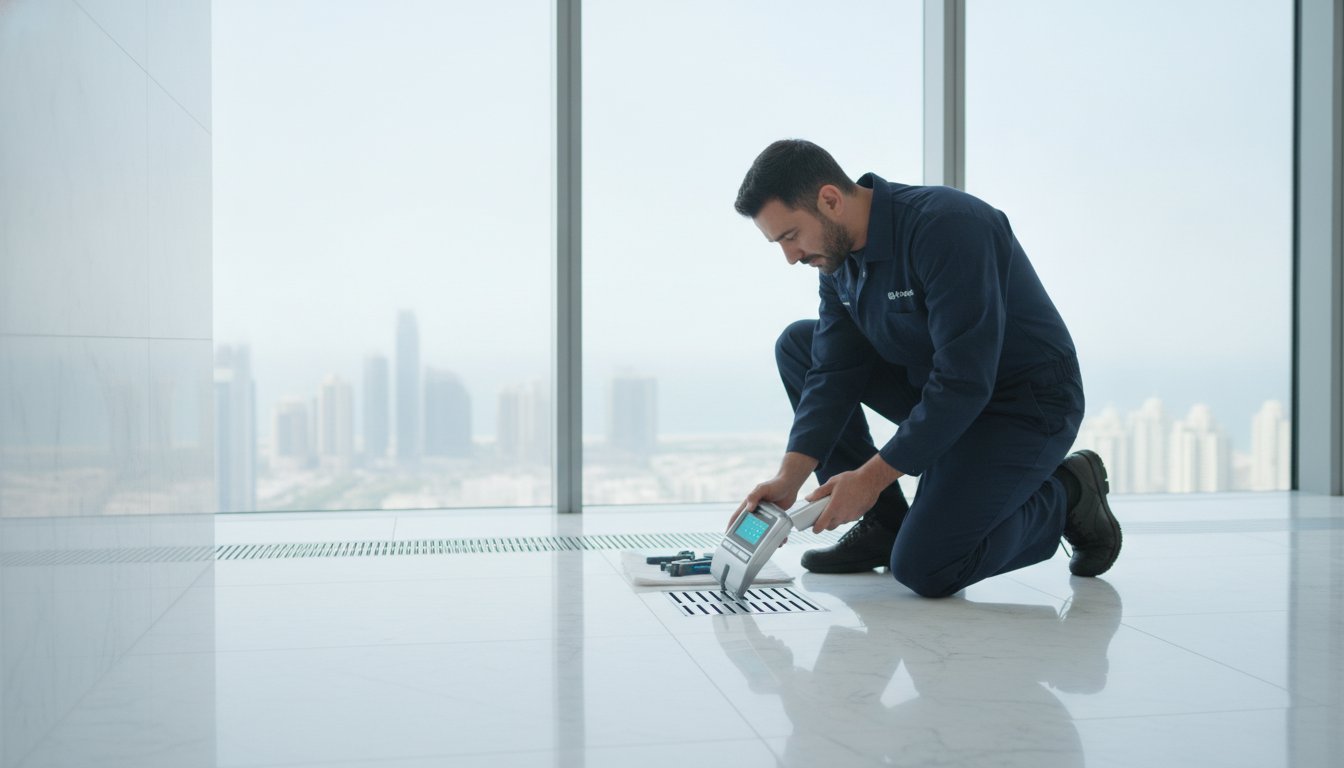
Professionals use specialized equipment to visualize the invisible path of sewer gas. Smoke testing is the industry standard for identifying structural breaches. By pumping non-toxic, pressurized smoke into the drainage system, technicians see exactly where gas escapes. If smoke drifts from a baseboard or a ceiling light fixture, it confirms a cracked pipe or a failed vent seal behind the drywall. This non-invasive method prevents unnecessary demolition during the investigative phase.
- Electronic Gas Sniffers: These handheld sensors detect Hydrogen Sulphide (H2S) at concentrations as low as one part per billion. They allow for the precise mapping of gas concentrations throughout a room.
- Thermal Imaging: Infrared cameras identify hidden moisture patterns. This helps locate slow leaks or condensation issues within the HVAC-drainage interface that contribute to biological odour reservoirs.
- Video Pipe Inspection: Inserting high-resolution cameras into the sewer lines reveals root intrusions or pipe collapses that cause pressure backups.
The Clinical Inspection Process
A structured approach is mandatory for permanent resolution. When you engage an odour expert UAE, the process begins with a comprehensive on-site inspection. This protocol involves air pressure testing to verify the integrity of vent stacks. If the system fails to hold pressure, a leak is present. This test identifies failures that visual inspections miss entirely.
Technicians also perform “Odour Mapping.” This involves correlating smell intensity with specific variables like wind direction, barometric pressure, and HVAC usage. For example, a smell that only appears during high winds often points to a vent stack termination issue. A smell that coincides with A/C operation suggests a cross-contamination problem in the condensate line. This methodical data collection transforms a mystery into a solvable mechanical problem. We don’t guess. We diagnose. For residents dealing with persistent indoor air quality issues, a dedicated apartment odour assessment UAE applies this same forensic methodology to identify the precise structural or mechanical source of the problem.
Immediate Checklist: Investigating Potential Odour Vectors
Systematic investigation is the only way to isolate the source of a recurring sewage smell home. Before engaging technical support, perform a methodical walkthrough of your property to identify the specific vectors allowing gas intrusion. Start with the most common mechanical failure points. Restore water seals in every floor drain by pouring exactly 1 litre of water into the grate. If the smell dissipates and then returns after a few days, you have confirmed a dry trap or a pressure-related siphoning issue.
Track the environmental variables. Document the exact conditions when the odour peaks. Does the intensity increase during heavy laundry usage? This suggests a partial blockage or a venting fault in the main stack. Does it only occur during high winds? This indicates a vent termination problem on the roof. Check the cabinet space under every sink and the area surrounding your water heater. Look for moisture or “ghost” odours that indicate a failed gasket. If the scent is localized specifically to your A/C vents and only appears when the unit is running, your cooling system is likely pulling gas from a compromised condensate line connection.
DIY Troubleshooting for Homeowners
Perform these specific technical checks to rule out simple mechanical failures:
- Inspect the Air Admittance Valve (AAV): Look under your kitchen or bathroom sinks for a small plastic vent cap. If the internal spring has failed, this valve will stay open. It allows sewer gas to bypass the trap entirely.
- Verify Guest Room Traps: Run the water in rarely used bathrooms for at least 30 seconds. Evaporation is a frequent culprit in secondary rooms where the water seal is not regularly replenished.
- Conduct a Condensate Sniff Test: Locate your A/C condensate pump or the point where the drain line exits the unit. If the odour is strongest at this mechanical interface, the connection between your HVAC and drainage requires technical remediation.
When to Stop DIY and Call a Specialist
Self-diagnosis has limits. If the odour is constant, causes physical symptoms like headaches, or is detectable across multiple floors, the breach is systemic. Do not attempt to resolve these issues with chemical drain cleaners. These substances are corrosive; they often mask structural defects without fixing the underlying leak. If your investigation confirms that the cooling system is the primary vector, consult our guide on how to get rid of AC smell for specialized HVAC remediation protocols.
Resolving a persistent structural odour requires more than a surface-level fix. If your checklist confirms a recurring intrusion, the most efficient path to resolution is a professional drain and sewage smell elimination service to locate and seal the precise origin of the leak.
Professional Odour Elimination: Permanent Remediation
Treatment follows diagnosis. This is the fundamental rule of effective odour remediation. Attempting to eliminate a recurring sewage smell home without first identifying the mechanical origin is an exercise in futility. Superficial cleaning or chemical masking only delays the inevitable return of the scent. Once the forensic investigation is complete, we apply targeted technical interventions to the confirmed source. We restore the integrity of your building’s barriers through scientific precision rather than guesswork.
Mechanical repairs form the core of permanent remediation. Depending on the diagnostic findings, this phase involves replacing failed hardware or correcting structural ventilation faults. We address the specific vectors identified during the inspection. Common interventions include:
- Valve and Seal Replacement: Installing new, high-specification Air Admittance Valves (AAVs) and replacing degraded wax rings or gaskets.
- Vent Stack Correction: Removing obstructions from roof-level vents and repairing breaches in the vertical drainage stacks.
- Trap Restoration: Modifying plumbing configurations to prevent siphoning and ensuring every fixture maintains a code-compliant water seal.
The SMELLKILLERS.COM Treatment Protocol
Our remediation process targets the biological reservoirs that general cleaning services miss. We utilize Professional German Style Aircon Cleaning standards to sanitize the interface between your HVAC system and the drainage network. This isn’t a surface wipe-down. It’s a deep-system decontamination. We remove the biofilm and organic matter that serve as secondary odour sources within your ductwork and condensate lines.
The benefits of professional-grade, eco-friendly treatments are clear. We use specialized surfactants and enzymatic cleaners that break down organic waste without damaging your infrastructure. This approach distinguishes specialized odour remediation from general maintenance. We don’t just clean; we neutralize the chemical and biological drivers of the smell. This methodical transition from discomfort to resolution ensures that the ‘recurring’ nature of the problem is broken forever.
Ensuring Permanent Air Quality
Long-term success requires ongoing vigilance and technical maintenance. Regular deep cleaning of your cooling system prevents the accumulation of moisture and debris that leads to cross-contamination. For property managers or owners of large-scale facilities, we recommend a commercial property smell inspection to evaluate complex multi-unit drainage networks. This proactive assessment identifies potential failures before they manifest as pervasive odours.
Your indoor air quality is a direct reflection of your home’s mechanical health. Don’t settle for temporary masking or ineffective DIY attempts. Restore the safety and comfort of your living environment through diagnostic accuracy and professional treatment. Schedule your professional odour assessment today and eliminate the source of the recurring sewage smell home permanently.
Restore Your Property’s Atmospheric Integrity
A recurring sewage smell home is a technical signal that your building’s mechanical barriers have failed. As discussed, scrubbing surfaces and applying fragrances will not repair a breached vent stack or a compromised P-trap. Permanent resolution requires the transition from speculative cleaning to forensic diagnosis. By identifying the specific structural origin of the gas intrusion, you replace mystery with scientific certainty. You now understand that your HVAC system often acts as a distribution hub for sewer gas and that professional detection technology can visualize leaks behind your walls without invasive demolition.
Experience the German-style diagnostic precision offered by SMELLKILLERS.COM. We are operated by PANKOBAU Building Maintenance LLC and utilize non-invasive detection technology to pinpoint the root cause of every odour. Our clinical approach ensures that treatment follows a definitive diagnosis, preventing the waste of resources on temporary fixes. This methodical process ensures that every structural breach is sealed and every biological reservoir is neutralized. Take the final step toward a healthy, odour-free environment today.
Book a Professional Odour Detection Inspection to secure your indoor air quality and eliminate persistent sewer gas for good.
Frequently Asked Questions
Why does my house smell like sewage only when the A/C is on?
Negative pressure within your ventilation system is the primary cause. When the A/C blower fan operates, it creates a slight vacuum that pulls sewer gas from a compromised condensate drain line or a dry trap. This gas is then distributed through your ductwork. This cross-contamination indicates a mechanical failure in the connection between your HVAC system and the building’s drainage network.
Is it dangerous to breathe in recurring sewage smells at home?
Yes, prolonged exposure to sewer gas is hazardous. It contains hydrogen sulfide, which is toxic and causes dizziness or nausea even at low concentrations. It also contains methane, a highly flammable gas. A persistent odour is a technical indicator of a structural breach. You should prioritize a professional diagnosis to ensure the safety of your indoor air quality.
Can a dry P-trap cause a recurring sewage smell?
A dry P-trap is the most frequent mechanical cause of gas intrusion. Every plumbing fixture requires a water seal to block sewer gases. In guest bathrooms or floor drains with infrequent use, this water evaporates over time. Without the liquid barrier, gas enters your living space freely. Restoring the water level usually provides an immediate, though temporary, resolution.
How do I find where a sewage smell is coming from in my apartment?
Isolate the source through systematic mapping. Start by checking all floor drains and sink cabinets for moisture or localized odour intensity. Perform a “sniff test” near A/C vents while the system is running. If these visual checks fail, professional diagnostic protocols like smoke testing or electronic H2S sniffing are required. These tools visualize invisible leaks behind walls or within ventilation stacks. A structured apartment odour assessment UAE service applies exactly this forensic methodology to identify the root cause with scientific precision.
Why does the sewage smell come back after I use drain cleaner?
Drain cleaners only address surface biofilms and organic clogs. They cannot repair structural failures like a cracked vent stack or a failed mechanical seal. While the chemicals might briefly reduce odours from bacteria, they don’t fix the underlying breach. This is why the recurring sewage smell home returns once the chemical scent fades. Permanent remediation requires a mechanical repair rather than a hygiene fix. If the problem originates specifically from your bathroom plumbing, understanding the root causes of a bathroom drain smell UAE professionals diagnose will clarify why chemical treatments consistently fail to deliver lasting results.
What is an Air Admittance Valve and can it cause smells?
An Air Admittance Valve (AAV) is a one-way mechanical vent typically located under sinks. It allows air into the drainage system to prevent siphoning but should seal shut to keep gas out. If the internal spring or gasket fails, the valve stays open. This allows sewer gas to escape directly into your cabinets and living areas, bypassing the plumbing’s intended barriers.
How much does a professional odour inspection cost in the UAE?
Pricing for a technical odour assessment depends on the property’s square footage and the diagnostic tools required. A standard inspection for a small apartment differs from a multi-point forensic investigation for a large villa or commercial office. These inspections utilize specialized gas detection and thermal imaging equipment. Contact a technical expert for a detailed quote based on your specific property requirements.
Can a blocked roof vent cause sewage smells inside the house?
Yes, a blocked vent stack creates significant pressure imbalances. These vents equalize the air pressure within your pipes. When they are obstructed by debris or nests, the air displaced by water during a flush has nowhere to go. This positive pressure physically pushes sewer gas through your water traps and into your home. It is a common structural cause for widespread odours.