
Article by
Jonathan Bonnett
Australian Air Conditioning Specialist with extensive hands-on experience in AC servicing, deep cleaning, maintenance, and troubleshooting. Focused on high-quality workmanship, reliability, and professional service to UAE standards.
A standard jet-wash service might be the reason your home still smells like a damp basement. Many property owners across the UAE assume a quick blast of water solves the issue. It doesn’t. Superficial cleaning often pushes spores deeper into the insulation and drainage lines. Effective AC mold smell removal UAE requires more than a basic rinse; it demands a clinical investigation into the microbial colonies thriving in your system’s dark, humid recesses. With coastal humidity often exceeding 80 percent during summer months, your HVAC unit is a primary target for biological growth.
You’ve likely felt the frustration of a “clean” AC that still triggers allergies or emits a musty stench within days. It’s a common cycle of wasted expenditure on services that mask symptoms rather than treating the source. We’ll show you exactly how to break that cycle. This article details the specialized German-style remediation protocols and technical diagnostic steps required for permanent elimination. You’ll learn the difference between a temporary fix and a scientifically backed treatment that restores your indoor air quality and protects your health.
Key Takeaways
- Identify how the unique combination of 80% UAE humidity and fine desert dust creates a breeding ground for resilient microbial colonies.
- Understand why biofilm protects bacterial growth from standard sprays, requiring specialized AC mold smell removal UAE protocols to penetrate the source.
- Discover why a technical property odour assessment is the essential first step to distinguish between surface dust and deep-seated biological infestations.
- Learn the five phases of the German-style clinical protocol designed to achieve permanent system sterilization rather than temporary masking.
- Master long-term prevention strategies, including maintaining indoor humidity below 60% and executing critical P-trap maintenance to stop recurring odours.
Understanding the Root Causes of AC Mold Smell in the UAE
Effective AC mold smell removal UAE isn’t a standard cleaning task; it’s the technical remediation of established microbial colonies. In the United Arab Emirates, two specific environmental factors create a high-risk environment for HVAC systems: extreme humidity and microscopic desert dust. When the relative humidity exceeds 60 percent, moisture accumulates rapidly on evaporator coils. This moisture mixes with fine dust particles to create a nutrient-rich substrate, often referred to as “bio-sludge,” which allows fungi to thrive in the dark recesses of your unit.
A musty scent is never just an inconvenience. It’s a primary warning sign of active biological air contamination. Distinguishing between simple surface dust and deep-seated fungal growth is the first step in a professional diagnosis. While dust can be removed with basic filtration, fungal colonies root themselves into the system’s porous components, such as insulation and gaskets. Understanding Indoor Mold Growth is essential for property owners to realize that these colonies act as continuous sources of airborne spores, affecting both mechanical efficiency and resident health.
The Role of Condensate Stagnation
The UAE’s summer climate forces AC systems to produce excessive amounts of condensate as they dehumidify the air. Problems arise when mechanical flaws, such as improper drain sloping or clogged lines, prevent this water from exiting the building. Stagnant water pools within the condensate pan or internal ducting. These warm, dark reservoirs become the primary breeding grounds for mold. Without proper drainage, the water remains trapped, allowing microbial life to double in population every few hours during peak heat months.
Microbial Volatile Organic Compounds (mVOCs)
The characteristic “moldy” smell is actually the byproduct of metabolic activity. As mold consumes organic matter, it releases gases known as Microbial Volatile Organic Compounds (mVOCs). Common mVOC profiles in UAE residential units range from “dirty sock” odours to heavy, earthy scents. These gases are highly invasive. Unlike solid particles, mVOCs can penetrate porous building materials like gypsum walls, carpets, and upholstery. This penetration explains why a foul smell often lingers in a room even after a superficial “jet wash” of the AC unit; the biological gases have already saturated the living space.
The Science of Biological Colonization: Biofilm and Bio-Growth
Biological growth in an HVAC system is not a surface-level event. It is a sophisticated process of microbial colonization that begins with the formation of biofilm. Within the high-moisture environments of evaporator coils and condensate pans, bacteria and fungi secrete a protective slime layer known as Extracellular Polymeric Substances (EPS). This biofilm acts as a physical shield. It renders standard cleaning agents ineffective because the chemicals cannot penetrate the dense, glue-like matrix to reach the living organisms beneath. For effective AC mold smell removal UAE, this biological fortress must be mechanically and chemically disrupted at its core.
The presence of “Dirty Sock Syndrome” is a primary indicator of this advanced colonization. This specific sour or vinegar-like odour results from a synergy between bacteria and mold colonies. As these organisms compete for space and nutrients, they release volatile metabolic byproducts. These smells are often more intense in the UAE’s high-humidity cycles where moisture levels fluctuate, triggering rapid microbial expansion. Beyond the coils, colonization spreads to “hot zones” such as blower wheels and internal insulation. The blower wheel acts as a centrifugal distributor, flinging microbial particles across the entire air stream. Adhering to EPA Mold Remediation Guidelines is critical to ensure these zones are treated with clinical precision rather than superficial masking.
Evaporator Coils: The Epicentre of Infestation
Evaporator coils feature an intricate structure of thousands of aluminum fins designed to maximize heat transfer. This design creates a perfect trap for organic matter and skin cells. Surface cleaning only addresses the visible edges. It leaves the core of the coil, where moisture is highest, untouched. Over time, “bridging” occurs. This is where mold growth becomes so dense that it physically blocks the gaps between fins, reducing airflow and creating a permanent reservoir for foul odours. Technical AC mold smell removal UAE requires penetrating these deep layers.
Health Implications of Aerosolized Mold
Every time your AC fan starts, it aerosolizes millions of microscopic mold spores and bacterial fragments. In the UAE’s sealed indoor environments, these contaminants circulate repeatedly. Residents often report persistent respiratory symptoms, including chronic coughing, nasal congestion, and aggravated asthma. For sensitive occupants, professional aircon odour elimination is a health necessity rather than a luxury. If you suspect your system is compromised, a professional on-site inspection can identify the exact biological source and prevent further exposure.
Standard HVAC Maintenance vs. Technical Odour Remediation
The primary reason property owners struggle with recurring musty smells is the reliance on standard maintenance routines. A typical “jet wash” service focuses on rinsing the visible parts of the evaporator coil and cleaning the filters. While this improves immediate airflow, it fails to address the established microbial colonies residing in inaccessible areas. Effective AC mold smell removal UAE requires a transition from general cleaning to technical remediation. Standard services often leave behind 60 to 70 percent of the internal contamination, leading to a resurgence of odours within weeks.
Clinical remediation begins with a property odour assessment. This diagnostic phase is essential to map the specific origin of the scent, distinguishing between mechanical failures, stagnant condensate, or cross-contamination from building drains. Without this data, any cleaning attempt is speculative. Following EPA guidelines on air duct cleaning for mold, professional intervention is necessary when there is substantial visible growth or a confirmed biological odour. Our approach prioritizes source detection, ensuring that the root cause is eliminated rather than just the perceptible symptom.
The German Standard for Aircon Cleaning
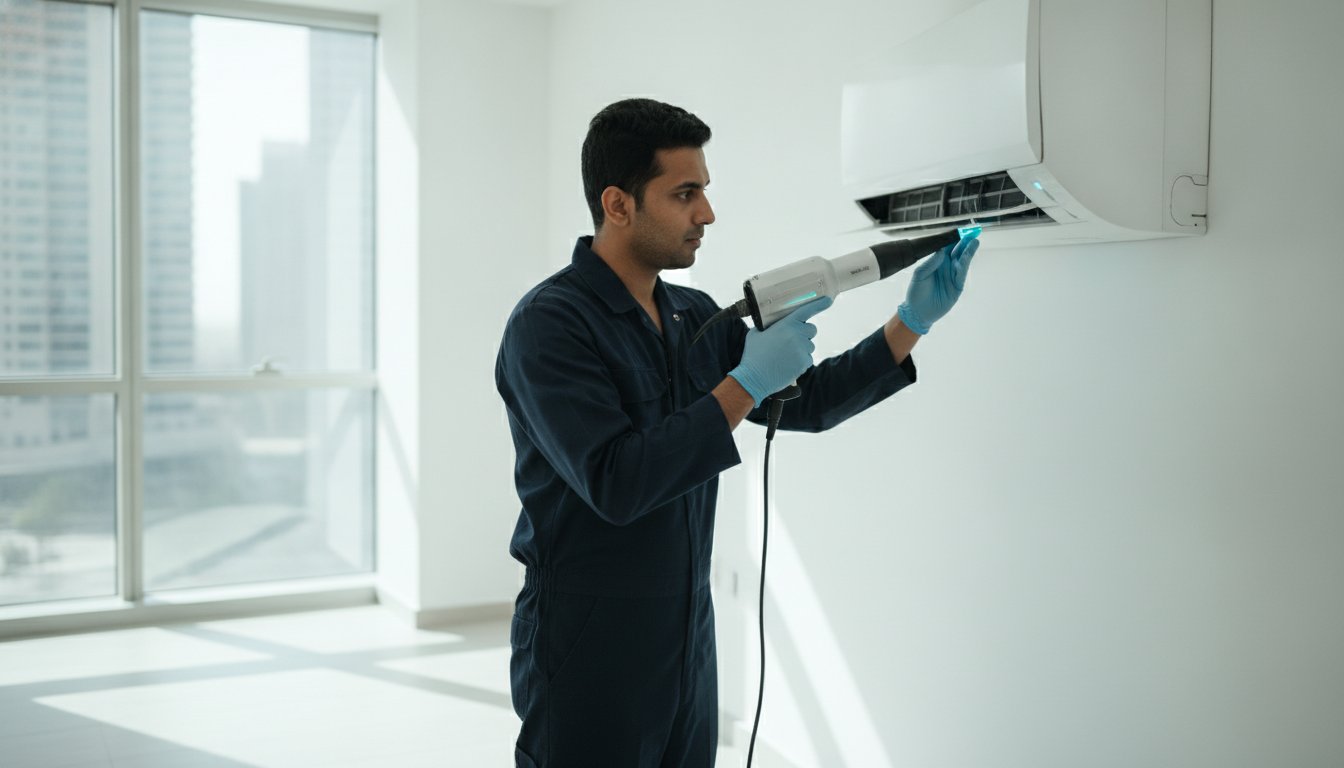
The German-style approach is defined by surgical precision and depth. It involves the deep disassembly of the indoor unit to expose the blower fan, the rear of the evaporator coil, and the primary drain pan. Technicians use high-temperature steam (exceeding 100°C) to thermally disrupt the biofilm matrix. This is followed by the application of specialized, non-toxic antimicrobial agents that provide a residual barrier against future colonization. This method ensures that every internal component is sterilized, not just rinsed. We don’t just clean; we restore the system to its original factory hygiene levels.
Why Fragrances and Ozone are Temporary Fixes
Many services attempt to resolve smells by using fragrance sprays or ozone generators. Masking biological gases with perfumes is a chemical risk; it creates a complex cocktail of VOCs that can irritate the respiratory system without removing the mold. Ozone generators, while effective at neutralizing airborne molecules, cannot penetrate the dense biofilm protecting the core colony. True clean air has no perceptible scent. If you can smell a fragrance, the remediation is incomplete. Achieving permanent AC mold smell removal UAE means returning the system to a neutral, sterile state where no artificial masking is required.
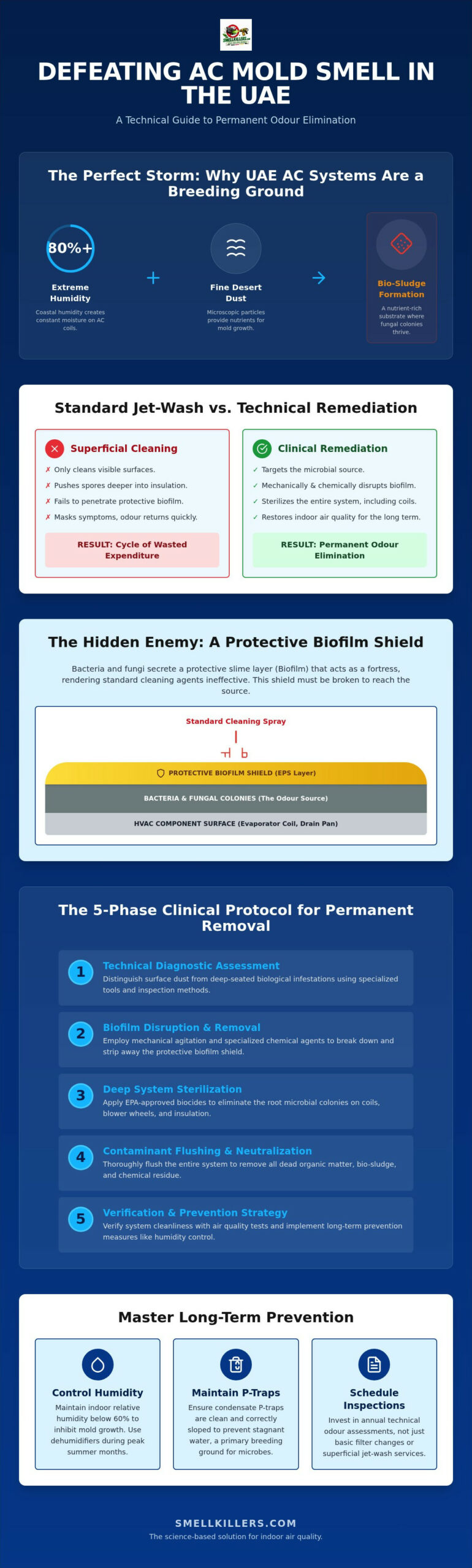
The 5-Step Clinical Protocol for Permanent AC Mold Smell Removal
Achieving permanent AC mold smell removal UAE requires a methodical transition from surface cleaning to deep-system sterilization. This is not a task for general maintenance staff. It is a clinical intervention performed by specialists using advanced diagnostic equipment. We utilize high-resolution borescopes to inspect the internal geometry of the unit, reaching areas hidden from the naked eye. This data-driven approach ensures that no microbial pocket remains untreated. Our objective is simple: restore the HVAC system to a state of clinical hygiene where biological growth is physically impossible. This protocol replaces the mystery of recurring odours with scientific certainty.
Diagnostic and Deep Disassembly Phases
Step 1: Technical On-Site Inspection. We begin by identifying the specific odour vector. This involves testing moisture levels and using thermal imaging to locate condensate leaks or insulation failures. We don’t guess; we diagnose. Step 2: Full System Disassembly. Effective remediation is impossible while the unit is intact. We remove the external shroud, directional louvres, and the entire blower fan assembly. This exposure is critical because a smell coming from AC vent often indicates that the internal insulation has absorbed mVOCs and requires direct treatment or replacement. Accessing these hidden components is the only way to ensure 100 percent removal of the biological source.
Clinical Remediation and Verification
Step 3: Biofilm Disruption. We perform a mechanical and chemical removal of the biofilm matrix from the condensate tray. This tray is the primary reservoir for bacterial sludge in the UAE. We use specialized scrapers and enzymatic cleaners to ensure the surface is biologically inert. Step 4: Thermal Sterilization. We inject high-pressure steam at 100°C deep into the evaporator fins. This heat physically destroys mold spores on contact. We follow this with a German-style antimicrobial treatment that creates a microscopic protective layer on the aluminum, preventing new colonies from anchoring. Step 5: Operational Verification. The final stage involves testing the drain slope and system sealing. We verify that condensate flows freely without stagnation. We then reseal internal gaps to prevent humid air bypass, which is a common cause of recurring moisture issues.
If your current provider relies on simple filter washing, your health remains at risk. Superficial fixes won’t stop the biological cycle. Ensure your indoor environment is safe and sterile by booking a professional on-site inspection today.
Long-Term Prevention: Maintaining Sterile Air Quality
Successful AC mold smell removal UAE is only the first phase of air quality management. The second phase involves controlling the environmental variables that allowed the initial infestation to occur. Humidity is the primary catalyst. In the UAE, maintaining indoor relative humidity levels below 60 percent is non-negotiable. When levels climb higher, your AC components remain damp, providing a continuous water source for dormant spores. Investing in a high-quality hygrometer allows you to monitor these levels in real-time, ensuring your home doesn’t become a biological incubator during the peak summer months. Understanding how to prevent mold in AC UAE through clinical moisture control and biofilm elimination is essential to breaking the cycle of recurring infestations.
Beyond moisture, you must address mechanical vulnerabilities. A common issue property owners face is when their AC smells like sewage. This specific odour is often caused by dry or improperly maintained P-traps in the condensate drainage line. When the trap dries out, sewer gases are sucked into the HVAC system and distributed throughout the property. Regular P-trap maintenance, involving a simple water prime, prevents this cross-contamination. Establishing a 6-month schedule for professional German-style inspections is a significant cost-saving measure. Proactive detection of biofilm formation is always more affordable than reactive remediation of a full-scale infestation.
The Role of Thermostat Management
Your thermostat settings directly impact the moisture levels within the unit. Set your fan to “Auto” rather than “On.” When the fan runs continuously, it prevents the moisture on the evaporator coils from draining properly, often blowing it back into the living space. During the UAE’s high-humidity transitions, utilize the “Dry Mode” setting. This function optimizes the compressor and fan speed specifically for dehumidification without over-cooling the room. Property managers should follow this basic air quality checklist:
- Monitor hygrometer readings daily to ensure RH remains under 60 percent.
- Inspect supply vents for any signs of dark spotting or moisture beads.
- Verify that condensate drain lines are discharging water freely outside or into the designated drain.
Why Clinical Cleaning is a Health Investment
Clinical cleaning is a direct investment in your respiratory health. Standard maintenance often leaves behind microbial fragments that can trigger asthma and allergies. By choosing a specialized remediation service, you receive a “no-masking” guarantee. This means the system is restored to a neutral state where no artificial fragrances are needed to hide lingering odours. True air quality is odorless. Our German-style protocols ensure that the source is eradicated, not just hidden. Prioritize technical source detection over superficial fixes to ensure your indoor environment remains a safe, sterile sanctuary. For a definitive resolution to recurring odours, book a professional on-site inspection today.
Restore Your Home to a Sterile State
Persistent musty odors are biological indicators of systemic failure. Surface-level cleaning cannot penetrate the protective biofilm shielding microbial colonies within your evaporator coils. Permanent AC mold smell removal UAE requires a diagnostic approach that identifies the specific moisture vector and sterilizes the system at its core. By utilizing specialized German-style remediation protocols, you replace temporary masking with long-term mechanical hygiene.
Our methodology prioritizes expert root cause detection to ensure the smell doesn’t return. We provide a clinical “no-masking” guarantee; we eliminate metabolic gases rather than covering them with harmful fragrances. Don’t settle for recurring symptoms or wasted expenditure on superficial services. It’s time to prioritize your health and restore your property’s air quality to a neutral, sterile condition.
Take action now: Book a Technical On-site Inspection for Permanent AC Mold Smell Removal. You deserve an indoor environment that’s both safe and scent-free.
Frequently Asked Questions
Is the mold smell from my AC dangerous to my health?
Yes, inhaling aerosolized spores and microbial volatile organic compounds (mVOCs) can lead to chronic respiratory symptoms. In the UAE’s sealed indoor environments, these contaminants concentrate rapidly. Exposure often causes headaches, nasal congestion, and aggravated asthma. Clinical remediation is necessary to stop the continuous release of these biological irritants into your living space.
Why does the AC smell go away after a few minutes of running?
This phenomenon occurs primarily due to olfactory fatigue, where your senses temporarily stop detecting the odor after initial exposure. Additionally, as the evaporator coil reaches its operating temperature and becomes saturated with condensate, the release rate of certain gases may stabilize. The biological source remains active and continues to contaminate your air even when you no longer perceive the scent.
Can I use bleach to remove the AC mold smell myself?
Do not use bleach for DIY cleaning. Bleach is highly corrosive to the delicate aluminum fins of the evaporator coil and can cause permanent mechanical damage. It also lacks the surfactant properties needed to penetrate the dense, protective biofilm matrix. This means the underlying mold colony will survive and return within days of the application.
What is the difference between AC mold and AC bacteria?
Mold is a fungus that reproduces via airborne spores, while bacteria are single-celled organisms that often form the structural “sludge” found in drain pans. Both work synergistically within a biofilm to produce foul odors. Effective AC mold smell removal UAE must target both microbial types through thermal and chemical sterilization to ensure a permanent resolution.
How often should I get a professional German-style AC cleaning in the UAE?
We recommend a professional German-style cleaning every six months for residential properties. This interval is necessary due to the high particulate load from desert dust and extreme humidity levels that accelerate microbial growth. Regular AC mold smell removal UAE protocols prevent biological colonies from reaching the advanced stages of colonization that cause persistent odors.
Why does my AC smell like vinegar specifically?
A sharp vinegar odor indicates the presence of acetic acid, a byproduct of metabolic activity from specific bacteria and molds. This usually occurs when organic matter, such as skin cells and fine dust, ferments within the moist environment of the evaporator coil or drain tray. It is a definitive sign of an established biological infestation that requires technical remediation.
Will standard duct cleaning remove a persistent mold smell?
Standard duct cleaning is usually ineffective if the origin of the smell is within the indoor unit itself. While ducts can collect dust, the biological “factory” producing the odor is almost always the evaporator coil or the blower assembly. You must treat the source first; otherwise, the cleaned ducts will be re-contaminated as soon as the system is powered on.
How long does a professional clinical AC mold smell treatment take?
A professional clinical treatment typically takes between two to four hours per indoor unit. This timeframe allows for full disassembly, high-temperature steam sterilization, and the application of long-term antimicrobial barriers. Complex systems with deep-seated contamination in the internal insulation may require additional time for thorough remediation and final verification. If your system is also producing a sharp chemical scent alongside musty odours, our guide on AC musty smell removal in Dubai and sulphur odour diagnosis can help you identify whether a separate mechanical failure is compounding the biological contamination.