

Article by
Jonathan Bonnett
Australian Air Conditioning Specialist with extensive hands-on experience in AC servicing, deep cleaning, maintenance, and troubleshooting. Focused on high-quality workmanship, reliability, and professional service to UAE standards.
That sharp sulphur smell coming from your vents isn’t just a nuisance; it’s a chemical signal that your property’s mechanical systems are in conflict. You’ve likely already invested in standard servicing, yet the scent persists. It’s exhausting to deal with recurring odours, and the anxiety of a potential gas leak or health hazard is real. When you’re searching for effective AC musty smell removal, you aren’t looking for a fragrance. You’re looking for a definitive end to a systemic failure.
At SMELLKILLERS.COM, we understand the confusion between plumbing malfunctions and HVAC contamination. This article provides a clinical diagnostic protocol to identify the root cause of sulphur and musty odours. You’ll learn how to distinguish between refrigerant leaks and sewage gas infiltration. We’ll outline the exact steps for permanent remediation, ensuring your property is safe and your air is objectively clean. By the end, you’ll have a technical roadmap to replace mystery with scientific certainty.
Key Takeaways
- Establish property safety by distinguishing between natural gas mercaptan and hydrogen sulphide infiltration from the building’s sewage system.
- Understand how pressure differentials in your ventilation unit can actively pull gases from dry drains, requiring specialized AC musty smell removal Dubai protocols.
- Replace superficial masking with clinical diagnostics, including H2S monitoring and gas concentration mapping, to find the root source of the odour.
- Eliminate biological contaminants using German-style high-pressure disinfection rather than temporary chemical sprays or fragrances.
- Implement permanent mechanical remediation by sealing the HVAC-plumbing interface with deep-seal traps and air-gap breaks.
Immediate Safety Protocols: Distinguishing Gas Leaks from HVAC Issues
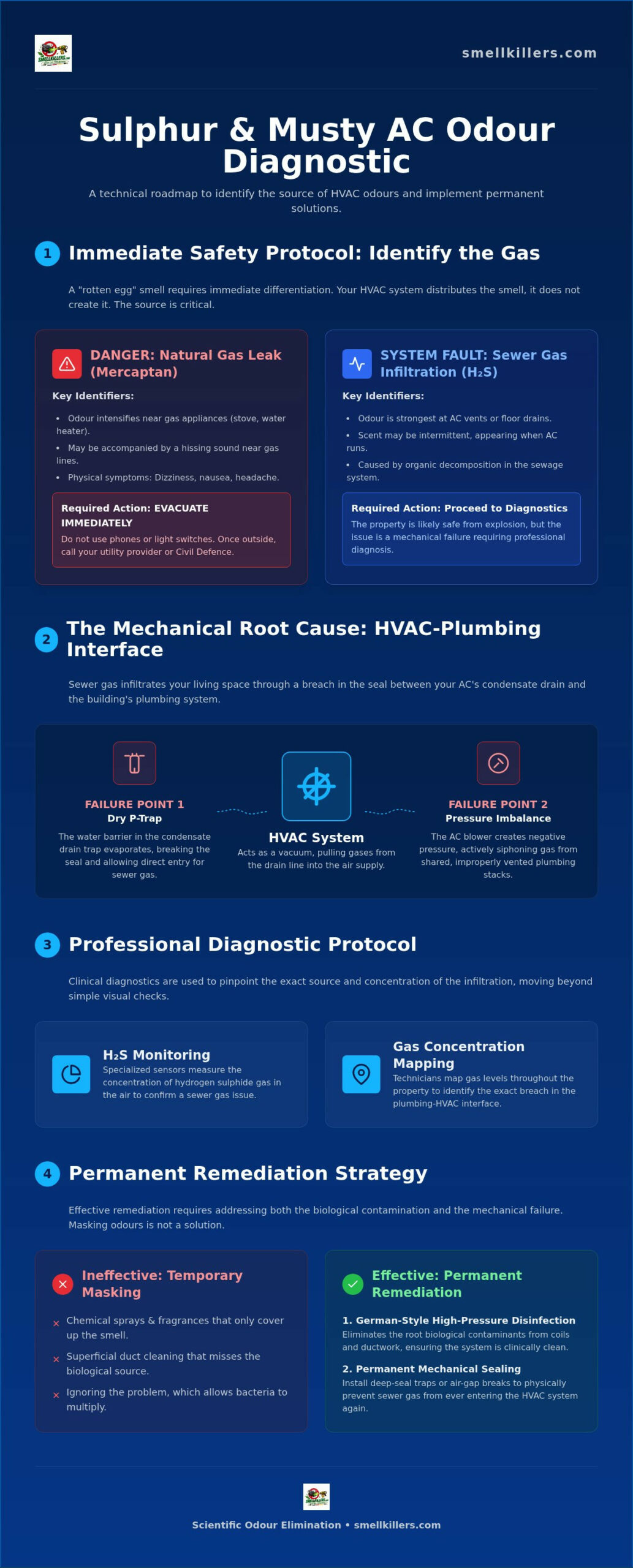
A sulphur or “rotten egg” smell in a Dubai property is a high-priority technical symptom. It demands immediate differentiation between a utility gas leak and a drainage system failure. Your air conditioning unit does not contain sulphur-based chemicals. Modern refrigerants are typically odourless or possess a faint, sweet chemical scent. If you perceive a pungent sulphur odour, the HVAC system is acting as a distribution vector. It’s pulling gases from an external source and circulating them through your ductwork. Identifying the origin is the first step toward effective AC musty smell removal Dubai.
Identifying Natural Gas vs. Sewer Gas
Accurate diagnosis begins with identifying the specific chemical source. Utility providers add mercaptan to natural gas to ensure leaks are detectable. This additive mimics the scent of rotten eggs. In contrast, Hydrogen Sulphide Infiltration occurs when organic matter decomposes in stagnant drain lines or sewage systems. This gas often enters the home through dried-out P-traps or faulty vent stacks.
Track the symptoms methodically. Does the odour intensify near gas-fired appliances like your stove or water heater? If so, treat the situation as a natural gas leak. If the scent is strongest at the AC vents or near floor drains, the issue is likely a mechanical failure in the plumbing-HVAC interface. Natural gas is distinguished by the presence of mercaptan additives for leak detection, whereas sewer gas consists of hydrogen sulphide produced through organic decomposition.
When to Evacuate the Property
Safety is non-negotiable. If the odour is accompanied by physical symptoms such as dizziness, nausea, or a persistent headache, evacuate the property immediately. Do not operate light switches, use telephones inside the building, or start any motor vehicles nearby. These actions can trigger an ignition in the presence of high gas concentrations. Once you’re safely outside, contact your utility provider or the Dubai Civil Defence.
Never attempt a DIY diagnosis when safety is at risk. “Waiting it out” is a dangerous strategy that risks fire or asphyxiation. Professional AC musty smell removal Dubai should only be scheduled after the property is cleared of explosive gas risks. Specialists can then use H2S monitors to map gas concentrations and identify the exact mechanical breach in your drainage or ventilation system.
The Mechanics of Hydrogen Sulphide Infiltration in HVAC Systems
The mechanical bridge between your cooling system and the building’s waste infrastructure is the condensate drain. This pipe carries moisture away from the evaporator coil. In many Dubai developments, these lines are plumbed directly into the sewage stacks. This connection creates a direct pathway for hydrogen sulphide to migrate into your living space. Achieving permanent AC musty smell removal Dubai requires a technical understanding of this interface. The scent isn’t generated by the AC; it’s imported through a breach in the plumbing seal.
Dry P-Traps and Condensate Drain Lines
A P-trap holds a small volume of water to block sewer gases from entering the ductwork. In the high-heat, low-humidity environment of the UAE, this water evaporates quickly. Unused guest rooms or secondary units are particularly vulnerable to this failure. When the trap dries, the mechanical seal breaks. The result is that your AC smells like sewage because the system is actively venting the drain line. Effective aircon odour elimination requires verifying the integrity of these traps before proceeding with clinical cleaning.
Shared Vent Stacks and Pressure Imbalance
Modern Dubai high-rises use shared vent stacks for plumbing. This creates a complex pressure environment within the building’s core. When your AC blower operates, it creates negative pressure within the unit cabinet. It acts like a vacuum. If the drain trap is dry or improperly vented, the system “pulls” sewer gas directly into the supply air. This explains why you detect a smell coming from AC vent even when the unit appears clean. The “piston effect” in tall buildings further complicates this; rapid air movement in elevator shafts can siphon water out of your traps, leaving the system exposed.
Establishing long-term air quality requires Professional Diagnostic Procedures that look beyond the filter. We must map the pressure differentials between your living space and the building infrastructure. Our diagnostic protocol includes:
- Identifying the exact connection point of the condensate line to the main stack.
- Inspecting the depth and water level of every P-trap in the system.
- Measuring the static pressure within the AC cabinet during peak operation.
- Verifying the integrity of the building’s secondary vent stacks to ensure proper gas dispersal.
Effective AC musty smell removal Dubai involves more than scrubbing coils; it requires sealing the mechanical breaches where gases enter the system. If you’re struggling with a recurring scent, an on-site inspection is the only way to confirm if your drainage system is compromising your air quality.
Biological and Electrical Sources of Sulphur-Like Odours
Internal contamination presents a different diagnostic challenge than external gas infiltration. While external issues are often mechanical, internal sources are typically biological or electrical. Anaerobic bacteria, specifically sulphur-reducing strains, colonize stagnant water in condensate pans. They produce hydrogen sulphide as a metabolic byproduct. This creates a persistent “rotten egg” scent that standard surface cleaning cannot resolve. Effective AC musty smell removal Dubai requires identifying whether the odour originates from these microbial colonies or from failing electrical components.
Electrical failure often mimics chemical odours. Overheating capacitors or blower motor windings release a sharp, acrid scent similar to burnt matches or sulphur. This is a critical safety warning. Ignoring this symptom leads to total system failure or electrical fires. Understanding the health risks associated with these gases is vital. Property owners should consult OSHA guidelines on hydrogen sulfide exposure to understand the physiological impact of even low-level concentrations. Differentiating these sources is essential for AC mold smell removal UAE. Biological decay requires clinical disinfection; electrical failure requires immediate component replacement.
Bacterial Colonies and Biofilm in Cooling Coils
Sulphur-reducing bacteria (SRB) thrive in the dark, anaerobic environment of your unit’s internal drainage. They form a thick, gelatinous biofilm that protects the colony from superficial sprays. Standard maintenance often misses these areas. A 2026 Dubai Municipality study found that 68% of DIY cleaning attempts fail to remove mold from drain pans entirely. Eliminating this source involves clinical-grade disinfectants that penetrate the biofilm. This process is a primary step in preventing mold in UAE AC. These bacteria don’t just smell; they corrode internal metal components over time.
Electrical Failure and Overheating
A failing capacitor often leaks electrolyte fluid. This fluid emits a pungent, sulphur-like odour when heated by the unit’s operation. Inspect your electrical cabinet for visual indicators. Look for swollen capacitor tops or charred insulation on the wiring. If the smell intensifies specifically when the compressor kicks in, the issue is likely electrical rather than biological. These components operate under high tension. They require professional replacement to prevent system-wide damage. A sulphur smell here is often the final precursor to a complete electrical short.
Professional Diagnostic Procedures: Beyond Visual Inspection
Relying on a technician’s sense of smell is a flawed strategy. Human olfaction is subjective and prone to sensory fatigue. A property odour assessment replaces guesswork with empirical data. This clinical approach is the foundation of effective AC musty smell removal Dubai. We execute a three-phase diagnostic protocol to pinpoint the exact origin of sulphur and damp scents.
Phase 1 involves ambient air monitoring. We deploy high-sensitivity monitors to map gas concentrations throughout the property. Phase 2 focuses on pressure testing. We evaluate the mechanical seal between your condensate drainage and the building’s waste stacks. Phase 3 utilizes endoscopic technology. We insert high-definition cameras into the HVAC cabinet and ductwork to inspect areas that are physically inaccessible. This methodical sequence ensures that the treatment addresses the root cause rather than just the perceptible symptoms.
On-Site Odour Assessment Technology
Our diagnostic toolkit includes specialized Hydrogen Sulphide (H2S) monitors. These devices detect gas concentrations at parts-per-billion levels, identifying leaks long before they become a health hazard. We also utilize thermal imaging cameras to locate moisture pockets within walls or ceiling voids. These hotspots often indicate where biological colonies are flourishing. Modern gas detection sensors utilize electrochemical technology to provide quantitative data, eliminating the subjectivity of human olfaction. This precision is vital for identifying the specific chemical markers of your indoor air quality issues.
Tracing the Source of Inaudible Gas Infiltration
Invisible gas leaks often occur within wall cavities where drain lines are concealed. We perform smoke testing to visualize these breaches. By introducing non-toxic smoke into the drainage system, we can see exactly where gas is escaping. We also conduct differential pressure testing. This measures the air pressure variance between your living space and the HVAC plenum. If your unit is under excessive negative pressure, it will actively pull sewer gas through even the smallest mechanical gaps. This odour expert UAE protocol is designed to find what standard cleaning services miss.
Effective AC musty smell removal Dubai requires this level of technical scrutiny. If your current service provider hasn’t used diagnostic equipment, they haven’t found the source. For a definitive resolution, you should schedule a professional on-site inspection to map your property’s air quality profile.
Permanent Remediation: German-Style Cleaning and System Sealing
Surface cleaning is a cosmetic intervention. Permanent AC musty smell removal Dubai requires a clinical approach that addresses both biological growth and mechanical breaches. Once the diagnostic phase identifies the source, we implement a two-part remediation protocol. This involves German-style clinical cleaning to eliminate existing contaminants and mechanical modifications to prevent future gas infiltration. We elevate residential air quality to commercial property smell inspection standards, ensuring a long-term resolution rather than a temporary mask.
Mechanical remediation focuses on the HVAC-plumbing interface. We install deep-seal traps designed specifically for the high-evaporation environment of the UAE. These traps maintain a water barrier longer than standard components. We also implement air-gap breaks in the condensate lines. This prevents the negative pressure within the unit cabinet from pulling sewer gases into the supply air. Finally, we seal all penetrations where the drainage lines enter wall cavities, stopping cross-contamination from building vent stacks.
Clinical Deep Cleaning Standards
Standard maintenance often involves simple chemical sprays that fail to penetrate deep biofilm layers. Our German-style protocol utilizes high-pressure, high-temperature disinfection. This process physically displaces sulphur-producing bacteria from the evaporator coils and internal drainage channels. We use eco-friendly, non-toxic biocides that neutralize pathogens without introducing harsh chemical odours into your living space. A critical step in this phase is verifying the condensate pan pitch. If the pan is not angled correctly, water stagnates, creating a permanent breeding ground for anaerobic bacteria. We correct these alignment issues to ensure total drainage.
Long-Term Prevention and Maintenance
Maintaining a scent-free environment requires consistent mechanical hygiene. Routine P-trap priming is essential, especially in guest rooms or during the winter months when the AC operates less frequently. Simply pouring water down floor drains and AC condensate points every two weeks maintains the gas barrier. We also recommend upgrading to high-efficiency filtration. These filters capture the organic particulates that serve as a food source for bacterial colonies. This proactive approach reduces the biological load on the system and extends the intervals between professional cleanings.
Don’t settle for recurring odours or superficial fixes. If you require a definitive diagnosis and a permanent mechanical solution, it’s time to transition from general maintenance to clinical remediation. Schedule a professional on-site odour inspection with SMELLKILLERS.COM today to restore the technical integrity of your property’s air quality.
Restoring Technical Integrity to Your Indoor Air
A sulphur odour is a precise mechanical symptom that requires an equally precise technical response. You’ve learned that effective remediation goes beyond surface-level cleaning; it demands the identification of hydrogen sulphide infiltration and the correction of pressure imbalances within your drainage system. By utilizing specialized H2S detection technology and German-engineered diagnostic protocols, you can move from temporary masking to a state of permanent resolution. Our team provides national coverage across the UAE, ensuring that every property owner has access to clinical-grade solutions.
It’s time to eliminate the frustration of recurring smells and the anxiety of unknown gas leaks. Achieving definitive AC musty smell removal Dubai is possible through methodical investigation and professional mechanical sealing. SMELLKILLERS.COM replaces guesswork with scientific data, providing you with a safe and objectively clean environment. Take the first step toward a scent-free property by focusing on root-cause identification rather than superficial fixes.
Book a Technical On-Site Odour Inspection to identify the origin of your AC issues and implement a treatment plan that lasts.
Frequently Asked Questions
Is the sulphur smell from my AC dangerous to breathe?
Yes, chronic exposure to hydrogen sulphide (H2S) can cause headaches, dizziness, and respiratory irritation. While low concentrations are primarily an olfactory nuisance, they indicate a mechanical breach in your property’s sewage ventilation. High concentrations are toxic. Immediate diagnostic mapping is required to ensure gas levels remain below safety thresholds and to restore air quality.
Can a dead animal in the AC cause a rotten egg smell?
Organic decomposition typically produces a sickly sweet or cloying scent rather than a pure sulphur odour. However, as tissue breaks down, it can release gases that mimic sulphur to an untrained nose. If the smell is accompanied by a sudden increase in flies or localized staining in the ductwork, organic decay is the likely source requiring extraction.
Why does the sulphur smell only appear when the AC first turns on?
This occurs due to gas loading within the unit cabinet while the fan is idle. When the blower starts, it flushes the concentrated volume of captured sewer gas into your living space in a single burst. This symptom confirms that gas is infiltrating the unit through the condensate drain or a dry P-trap during off-cycles.
Will a standard AC duct cleaning get rid of the sulphur odour?
No, standard cleaning only addresses dust and surface debris. Sulphur odours originate from mechanical breaches or deep-seated anaerobic bacteria. Effective AC musty smell removal Dubai requires clinical disinfection of the cooling coils and mechanical sealing of the drainage interface. Surface wiping will not prevent gas backflow from the building’s sewage stacks.
How do I know if the sulphur smell is a gas leak or a drainage issue?
Natural gas leaks usually intensify near gas-fired appliances like stoves or water heaters. Drainage issues are strongest at the AC vents or floor drains. If you experience dizziness or nausea, treat the situation as a utility gas leak and evacuate immediately. Professional H2S monitoring provides the only definitive confirmation of the gas type and concentration.
Can dry drains really make my air conditioning smell like sewage?
Yes, a dry P-trap loses its water seal, allowing sewer gases to bypass the plumbing barrier. The AC blower creates negative pressure that actively sucks these gases into the ventilation system. This is a frequent failure in Dubai properties during periods of low usage or high evaporation, especially in guest rooms or secondary bathrooms.
What is the “German-style” AC cleaning mentioned for odour removal?
This refers to a clinical protocol using high-pressure, high-temperature disinfection combined with specialized biocides. It goes beyond surface wiping to penetrate the thick biofilm layers where sulphur-producing bacteria thrive. This method is a core component of AC musty smell removal Dubai, focusing on total microbial eradication rather than temporary masking with fragrances.
How long does a professional odour detection inspection take?
A comprehensive on-site inspection typically requires 60 to 90 minutes. This timeframe allows for ambient air mapping, pressure testing of the drainage lines, and endoscopic visualization of the internal HVAC components. We provide a technical report immediately following the assessment to outline the required remediation steps and identify the exact source of the infiltration.