
Article by
Jonathan Bonnett
Australian Air Conditioning Specialist with extensive hands-on experience in AC servicing, deep cleaning, maintenance, and troubleshooting. Focused on high-quality workmanship, reliability, and professional service to UAE standards.
Most property owners in the UAE treat a musty AC unit as a minor maintenance chore when it’s actually a biological contamination event. You’ve likely experienced the frustration of recurring sewage smells or musty air despite regular servicing. It’s a common cycle. You pay for a quick fix; the scent vanishes for a few days; the biological source reactivates. This isn’t just an inconvenience. It’s a failure of standard maintenance to address deep-seated biofilms.
This guide introduces the clinical protocols for ac coil cleaning that move beyond superficial rinsing to achieve permanent odour elimination and verifiable indoor air hygiene. You’ll learn how to stop masking symptoms and start treating the root cause. We’ll break down the diagnostic process, from the mandatory on-site inspection to the precision of German-style technical cleaning. We’ll examine the science of UAE-specific microbial strains and the mechanical steps required to restore your cooling efficiency. It’s time to replace mystery with scientific certainty and ensure the biological safety of your home or office.
Key Takeaways
- Identify why standard sprays fail against AC biofilms and how these layers shield bacteria within the moist environment of evaporator coils.
- Differentiate between superficial maintenance and clinical ac coil cleaning by utilizing German-style precision standards for pressure and temperature.
- Implement a four-stage remediation workflow involving Inspection, Isolation, Treatment, and Verification to ensure source elimination while protecting sensitive electronics.
- Evaluate the impact of pH-balanced, biodegradable surfactants on coil longevity and their effectiveness in dissolving organic contaminants.
- Recognize symptoms that necessitate a professional property odour assessment to resolve complex issues like sewage or drain-related air quality failures.
Understanding the Biological Load: Why AC Coils Become Odour Reservoirs
The evaporator coil serves as the thermal exchange heart of Heating, ventilation, and air conditioning (HVAC) systems. In the UAE’s specific climate, this component functions as an accidental incubator. Continuous condensation creates a high-moisture environment. Combined with total darkness and a steady supply of organic dust, the coil becomes a primary reservoir for biological growth. While most maintenance focuses on mechanical blockage, the real threat is microscopic.
Standard dust accumulation restricts airflow and increases energy consumption. However, biological contamination is a separate, more complex diagnostic issue. Bacteria and fungi don’t just sit on the surface; they build a biofilm. This protective extracellular matrix shields microorganisms from superficial chemical sprays. Effective ac coil cleaning must penetrate this layer to reach the source. Without addressing this biological load, you face significant dirty AC health risks, ranging from respiratory irritation to chronic allergic reactions.
The Chemistry of the ‘Dirty Sock’ Syndrome
The pungent, vinegar-like odour often called ‘Dirty Sock Syndrome’ is a chemical byproduct of microbial metabolism. When stagnant moisture on the aluminum fins reacts with accumulated organic matter, it releases volatile organic compounds (VOCs). The condensate tray beneath the coil often acts as a secondary contamination site. If the tray isn’t draining perfectly, it creates a recirculating loop of bacteria. Many property owners attempt to solve this with aerosol air fresheners. This is a mistake. Fragrances add complex chemical layers that can actually nourish certain bacterial strains, making the eventual odour more difficult to treat.
Microbial Colonies in the UAE Climate
The UAE’s high ambient humidity accelerates fungal proliferation on cooling surfaces. Fine desert dust provides a rich nutrient source of minerals and organic particles that sustain these colonies. Biofilm is a structured community of microorganisms adhering to the coil surface. This biological infrastructure allows pathogens to survive even during the hottest months. Professional ac coil cleaning requires a transition from janitorial rinsing to clinical remediation. We focus on the total removal of these colonies rather than simply clearing the visible dust from the fins.
DIY vs. Clinical Standards: Evaluating AC Coil Cleaning Methods
Many property owners in Dubai and Abu Dhabi rely on off-the-shelf aerosol foams for ac coil cleaning. These “no-rinse” solutions promise professional results in minutes. In reality, they offer a superficial fix. High-contamination environments require deep penetration. Aerosol cans lack the pressure to reach the “blind side” of thick evaporator coil banks. Instead of removing debris, these foams often push contaminants deeper into the fins, creating a dense sludge that accelerates bacterial growth.
Using aggressive generic alkaline cleaners carries significant aircon chemical cleaning side effects. These harsh agents can corrode aluminum fins, leading to refrigerant leaks and reduced system longevity. A clinical approach prioritizes material safety and long-term resolution over immediate, aggressive chemical reactions. Diagnostic accuracy must precede any cleaning attempt to ensure the treatment matches the specific biological load of the unit.
The ‘Masking’ Trap: Why Fragrances Fail
Neutralizing an odour requires the elimination of its source. Masking it involves adding a stronger scent to overwhelm human olfactory receptors. This leads to “fragrance fatigue,” where the brain ignores the added scent while the underlying biological pollutants continue to multiply. Superficial cleaning often disturbs dry mould colonies without killing them. This can inadvertently spread active spores throughout the ductwork, contaminating the entire building. True remediation requires a non-scented, antimicrobial protocol that physically removes the biofilm.
Defining German-Style Precision Cleaning
Clinical remediation begins with diagnostic accuracy. Before any treatment, we utilize non-invasive inspection tools to map the contamination. This ensures we aren’t just cleaning visible surfaces but reaching the root of the problem. German-style precision cleaning relies on three technical pillars:
- Calibrated Pressure: We use sufficient force to dislodge biofilms without bending delicate aluminum fins.
- Thermal Regulation: Precise temperatures help dissolve organic oils and fats that bind dust to the coil.
- pH-Neutral Agents: We utilize biodegradable surfactants that detach contaminants without damaging the metal substrate.
This methodical approach ensures the source is eliminated, not just hidden. If you suspect your unit is harbouring deep-seated bacteria, it’s time to consider a professional German Style Aircon Cleaning to restore true air hygiene.
A Technical How-To: The Precision Protocol for AC Coil Remediation
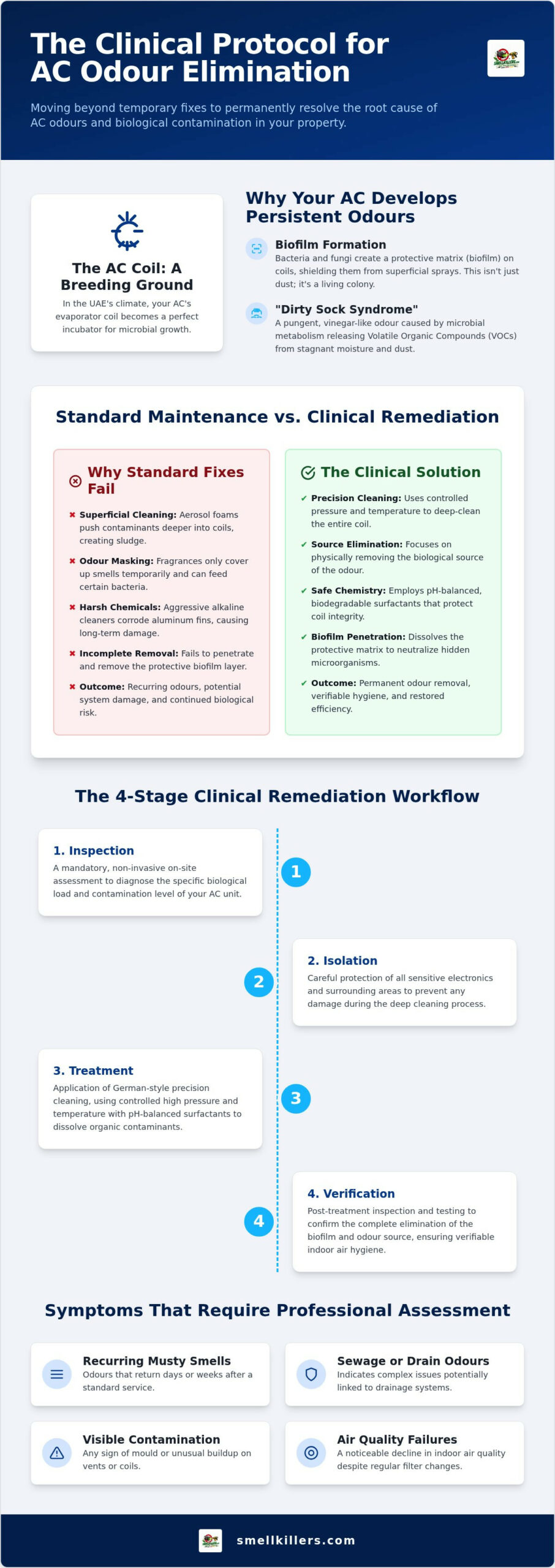
Professional ac coil cleaning requires a transition from janitorial guesswork to a medical-grade workflow. We don’t just wash surfaces; we remediate a technical system. This process follows a strict linear logic: Inspection, Isolation, Treatment, and Verification. Each stage is critical for ensuring the biological safety of the indoor environment. Skipping a single step leads to recurring odours and wasted resources.
Step 1: Diagnostic On-Site Inspection
The first priority is identifying the exact odour vector. We determine if the symptom is a localized biological load on the fins or a broader sewage odour elimination UAE issue originating from the plumbing. During this phase, we look for ‘blow-by’. This occurs when high air velocity pulls moisture off the coils and into the supply ducts, spreading contamination. We also assess fin integrity. Brittle or corroded aluminum requires specialized handling to avoid mechanical failure during treatment.
Step 2: Deep Cleaning and Biofilm Disruption
Effective remediation and Controlling biological growth require breaking the biofilm’s structural integrity. We apply high-penetration surfactants that reach the full depth of the coil bank. Controlled pressure is then utilized to physically dislodge colonies. A critical component of this stage is the condensate line remediation. To flush the line correctly:
- 1. Disconnect the drain pipe from the primary unit.
- 2. Remove visible sludge from the intake port.
- 3. Inject a pH-neutral antimicrobial agent through the entire length of the pipe.
- 4. Use low-pressure water to clear the dissolved organic matter.
- 5. Verify the exit flow at the external drainage point to ensure zero blockage.
Step 3: Post-Treatment Sanitization
Once the physical debris is removed, we apply medical-grade disinfectants. These agents provide a final kill-strike for remaining pathogens without leaving toxic chemical residues. Drying is the next mandatory step. We ensure the coil is entirely moisture-free before the system restarts. This prevents ‘flash-mould’, where spores reactivate in the presence of residual humidity. Finally, we utilize air quality sensors to verify the success of the ac coil cleaning and the total elimination of VOCs. We document the entire ‘before and after’ state, providing property managers with clear evidence of hygiene restoration.
Selecting the Right Cleaning Agents: Safety and Sustainability
Chemical selection determines the long-term integrity of your ventilation infrastructure. Many service providers in the UAE rely on aggressive acidic or high-alkaline cleaners because they provide immediate visible “brightening.” This is a technical error. Aluminum is an amphoteric metal. It reacts poorly to extreme pH levels. Over time, these harsh agents cause microscopic pitting on the fins, which reduces thermal transfer efficiency and creates new crevices for bacteria to inhabit. Professional ac coil cleaning must prioritize pH-neutral or mildly alkaline surfactants that protect the metal substrate while dissolving organic loads.
Alkaline vs. Acidic vs. pH-Neutral Cleaners
The choice of chemistry depends entirely on the diagnostic findings. Grease-heavy environments, such as kitchen-adjacent units, require alkaline degreasers to break down lipids. Scale-heavy coils might need mild acidification. However, for biological odours, we prioritize clinical-grade, low-toxicity agents. Cheap acidic “brighteners” are particularly hazardous. They strip the protective oxide layer from the aluminum, leading to premature coil failure and refrigerant leaks. Our methodology utilizes biodegradable surfactants that detach contaminants through molecular attraction rather than corrosive force. This ensures the system remains efficient without compromising the structural lifespan of the evaporator.
Indoor Air Quality (IAQ) Considerations
The substances used during ac coil cleaning eventually enter your breathing zone. In residential and hospital environments, Zero-VOC (Volatile Organic Compound) agents are mandatory. Standard industrial cleaners often leave a lingering “chemical” scent that indicates off-gassing. This can trigger sensitivities in occupants and degrade the overall breathability of the indoor environment. High-performance surfactants lower surface tension more effectively, allowing the agent to penetrate the microscopic gaps between the biofilm and the aluminum substrate for total detachment. By avoiding synthetic fragrances and harsh solvents, we ensure the air is biologically clean and chemically safe.
Many “no-rinse” foam products claim to simplify maintenance. In the heavy-duty commercial contexts of the UAE, these claims are often misleading. Without a thorough pressure rinse, the dissolved sludge remains on the coil, drying into a sticky film that traps new dust even faster. If your system has already been treated with low-quality agents, you may require specialized AC chemical smell removal to strip away residual toxins and restore neutral air quality. To ensure your system is treated with the correct clinical protocols, book a Professional German Style Aircon Cleaning today.
When to Call a Specialist: Beyond Basic AC Coil Cleaning
Standard ac coil cleaning addresses the symptoms of biological growth on the evaporator fins. However, some odours persist despite multiple interventions. This indicates a failure in the initial diagnostic phase. When a musty or sewage-like smell returns within 48 hours of a professional service, the issue is likely structural rather than mechanical. You’re no longer dealing with a dirty component; you’re facing a systemic air quality defect that requires a specialist’s investigation. Precision remediation requires looking beyond the visible fins to the underlying building infrastructure.
Persistent Odours and Root Cause Detection
In many UAE properties, AC condensate lines are connected directly to building sewage stacks. If the P-traps are dry or incorrectly installed, the blower fan creates negative pressure. This pulls sewer gases directly into the air stream. Standard maintenance crews often overlook this plumbing-ventilation link. Another common issue is cross-contamination. If the supply ducts are already colonized by fungi, they’ll re-infect a freshly cleaned coil almost immediately. Identifying these complex vectors requires a comprehensive property odour assessment. We use technical diagnostics to map airflow and drainage paths, ensuring we treat the origin rather than the symptom.
Professional German-Style Maintenance Plans
Transitioning from reactive cleaning to a proactive hygiene protocol is the most cost-effective strategy for property managers. A professional German-style maintenance plan is designed around the specific occupancy and environmental load of the building. This isn’t a one-size-fits-all schedule. It’s a technical roadmap that ensures biological safety and mechanical efficiency. The long-term ROI of precision ac coil cleaning includes:
- Reduced energy consumption due to optimal thermal exchange across clean fins.
- Zero recurring odour complaints from occupants or tenants.
- Extended lifespan of the evaporator coils by preventing corrosive biofilm buildup.
- Verifiable indoor air hygiene that meets 2026 clinical standards.
Don’t settle for temporary masking or recurring frustration. If your property suffers from persistent smells that standard servicing cannot resolve, you need a diagnostic solution. It’s time to replace mystery with scientific certainty and restore the biological safety of your environment. Book a professional on-site odour inspection today to identify the true source of your property’s odours.
Restoring Biological Integrity to Your Indoor Environment
Eliminating persistent AC odours requires a transition from superficial maintenance to technical remediation. You now understand how biofilms protect microbial colonies from standard sprays. You also recognize why pH-neutral chemistry is essential for protecting the structural lifespan of your aluminum fins. Effective ac coil cleaning is not a janitorial task; it’s a clinical intervention. By following a strict protocol of inspection, isolation, and treatment, you replace recurring frustration with scientific certainty. This methodical approach ensures that the source of the contamination is neutralized permanently.
Smellkillers, operated by PANKOBAU Building Maintenance LLC, utilizes specialized German diagnostic technology to identify the exact origin of every odour. We provide 100% source-focused remediation that ensures long-term air hygiene rather than temporary masking. Don’t let your ventilation system remain a reservoir for biological growth. Schedule your professional German-style AC inspection and treatment today to secure the biological safety of your property. You can finally breathe air that is both comfortable and clinically safe.
Frequently Asked Questions
How often should AC coils be cleaned in the UAE?
AC coils should be cleaned at least every six months in the UAE to manage the extreme humidity and fine desert dust loads. High-occupancy commercial spaces or residential properties with pets often require quarterly treatment to maintain hygiene. Regular ac coil cleaning prevents the formation of thick biofilms that lead to persistent odours, restricted airflow, and increased energy consumption.
Can I clean my AC coils myself with a spray from the supermarket?
DIY supermarket sprays are generally insufficient for technical remediation. These “no-rinse” foams rarely penetrate the full depth of the evaporator fins and often push contaminants deeper into the mechanical core. This results in a sludge layer that accelerates bacterial growth and risks damaging sensitive electronics. Clinical standards require high-pressure, thermal-regulated equipment that consumer products simply cannot provide.
Why does my AC still smell like vinegar after I cleaned the coils?
A persistent vinegar smell indicates that the biological source wasn’t fully eliminated during the last service. Residual biofilm can reactivate within hours if the cleaning agent didn’t achieve total penetration of the coil bank. In many cases, the odour may also originate from a secondary vector like a contaminated condensate tray or a plumbing defect that requires a specialized property odour assessment.
Is AC coil cleaning the same as duct cleaning?
No, these are distinct technical interventions. Coil remediation focuses on the evaporator unit where condensation and microbial growth are most concentrated. Duct cleaning addresses the distribution network. While both are necessary for total hygiene, cleaning the ducts without remediating the coil is ineffective. The contaminated coil will immediately release new spores into the freshly cleaned distribution system.
Are the chemicals used in professional coil cleaning safe for children and pets?
Professional German-style cleaning utilizes pH-neutral, Zero-VOC agents that are entirely safe for children and pets. We prioritize biodegradable surfactants that detach organic matter without releasing toxic fumes or leaving chemical residues. This methodical approach ensures your indoor environment is biologically clean and chemically safe for all occupants immediately after the system is restarted following the treatment.
How long does a professional German-style AC coil cleaning take?
A precise ac coil cleaning session typically requires between 90 minutes and three hours per unit depending on the contamination level. This timeframe includes the mandatory diagnostic inspection, isolation of electrical components, and the deep-cleaning protocol. We don’t rush the process because total biofilm removal requires specific dwell times for the cleaning agents to work effectively across the entire fin surface.
Can dirty AC coils really make me sick?
Contaminated coils release biological pollutants like mould spores and bacteria directly into your breathing zone. These pathogens are known to trigger respiratory irritation, chronic allergies, and symptoms associated with “Sick Building Syndrome.” In the UAE’s specific climate, the rapid proliferation of these microorganisms makes clinical-grade hygiene a critical health necessity rather than a simple aesthetic choice for property owners.
What happens if I never clean my AC coils?
Neglecting your coils leads to a drastic drop in cooling efficiency and significantly higher electricity bills. Over time, the accumulated biofilm corrodes the aluminum fins, which eventually causes refrigerant leaks and total mechanical failure. Most importantly, the unit will continue to circulate contaminated air, posing a constant risk to the biological safety and air hygiene of your home or office.