
Article by
Jonathan Bonnett
Australian Air Conditioning Specialist with extensive hands-on experience in AC servicing, deep cleaning, maintenance, and troubleshooting. Focused on high-quality workmanship, reliability, and professional service to UAE standards.
Spraying scent into your vents is not a solution. It is a tactical error that obscures the underlying biological or mechanical failure. You’ve likely tried deep cleaning or retail sprays, only to find the damp, musty odour returns within days. This cycle of temporary relief is frustrating and potentially hazardous to your respiratory health. Understanding how to get rid of AC smell requires moving beyond surface-level cleaning. It demands a diagnostic approach to identify the precise origin of the contamination.
We understand that a recurring smell is more than a nuisance; it is a sign of systemic failure. This guide provides the technical protocols needed to stop masking odours and start eliminating them. You will learn to differentiate between mould growth, stagnant condensate, and sewage cross-contamination. We provide a clear action plan for permanent remediation, moving from on-site diagnostic inspections to professional German-style cleaning standards. It’s time to replace mystery with scientific certainty and restore your home’s air quality for good.
Key Takeaways
- Identify specific odour profiles to determine if the systemic failure is biological or mechanical.
- Learn how to get rid of AC smell by utilizing a static test to isolate the source from the ventilation cycle.
- Understand why retail sprays fail and how over-applying chemicals can damage evaporator coil coatings.
- Inspect condensate drain lines for missing P-traps to prevent sewage gas cross-contamination.
- Apply German-style professional cleaning protocols to eliminate deep biofilm layers for permanent resolution.
Why Your AC Smells: Categorizing the Symptoms
Odours are not random occurrences. In a climate-controlled environment, a scent is a chemical signal indicating a specific mechanical or biological failure. To understand how to get rid of AC smell, you must first categorize the symptom. Treating a sewage leak with an anti-fungal spray is a waste of resources. Identifying the precise “profile” of the odour allows for a targeted diagnostic protocol. We move beyond generalities to find the technical root cause.
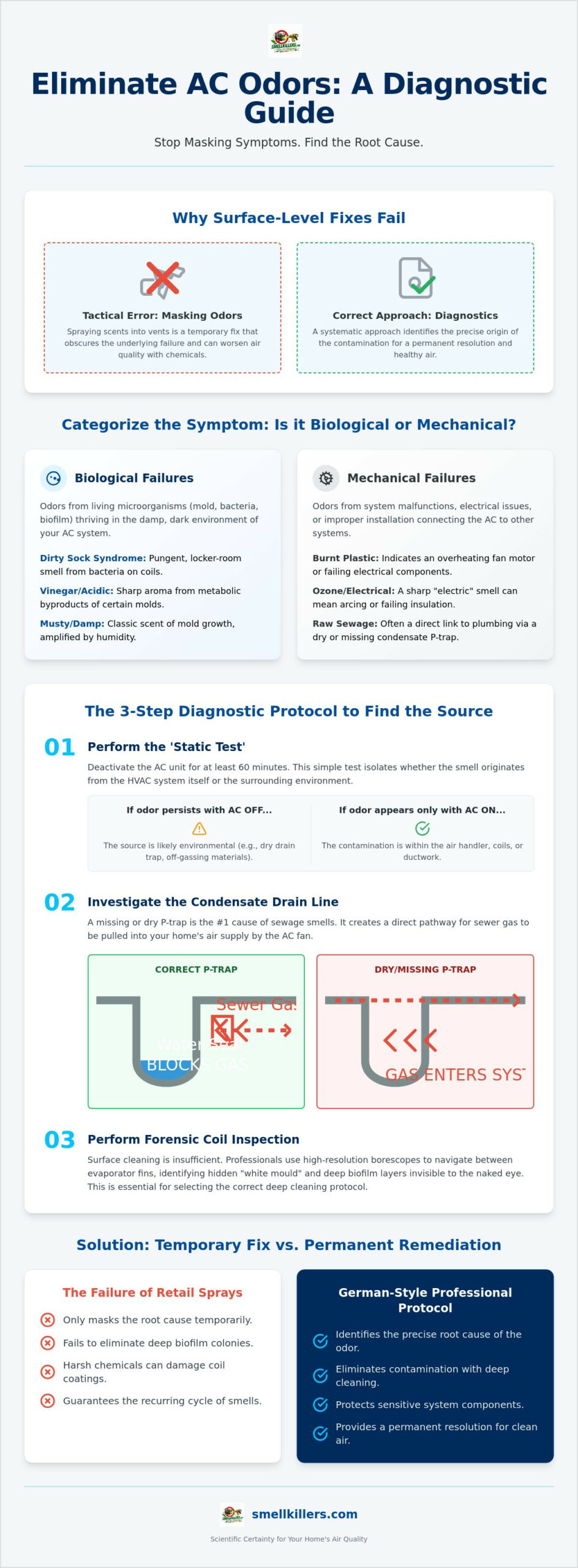
“Dirty Sock Syndrome” is the most frequent clinical observation. This pungent, locker-room odour occurs when bacteria and mould colonize the evaporator coils. As the unit cycles, these microorganisms release volatile organic compounds (VOCs). Vinegar or acidic scents suggest a different chemical process. Certain mould species produce acetate as a metabolic byproduct, resulting in a sharp, stinging aroma. If the smell resembles raw sewage, the issue is likely a mechanical bridge to the building’s plumbing. This happens when the AC condensate line connects directly to a drain without a proper P-trap, allowing sewer gases to be sucked into the air stream. A recurring sewage smell at home of this nature points to a structural plumbing failure rather than a hygiene issue, and requires forensic investigation to resolve permanently.
Biological vs. Mechanical Odours
Biological odours involve mould, yeast, or biofilm. Biofilm is a complex colony of microorganisms that thrives in AC condensate trays. These biological issues contribute significantly to Sick Building Syndrome, where degraded indoor air quality causes acute health effects for occupants. Mechanical failures present differently. Detect a scent of burnt plastic? Suspect an overheating fan motor. Smell ozone? Inspect for electrical arcing or failing insulation. These require an immediate power-down to prevent fire hazards.
The Role of Humidity in Odour Amplification
Humidity acts as a catalyst for odour amplification. High moisture levels accelerate microbial proliferation within the dark, cool recesses of the ductwork. When the system remains idle, moisture accumulates. Switched on, the initial blast of air carries a concentrated dose of these accumulated gases. This explains why smells often peak during the first ten minutes of operation. Stagnant water in un-pitched drain pans creates a reservoir for these scents, making humidity control a critical component of knowing how to get rid of AC smell permanently.
The Diagnostic Protocol: How to Find the Source
Professional diagnostics replace subjective sniffing with systematic logic. To determine how to get rid of AC smell, you must first isolate the system from its environment. Perform a ‘Static Test’ by deactivating the unit for at least 60 minutes. If the odour persists while the air is still, the source is likely environmental or a building defect, such as a dry drain trap. If the scent only manifests during active airflow, the contamination resides within the air handler, coils, or ductwork. This distinction prevents wasted effort on superficial cleaning when the issue is structural.
Examine the plenum and filter housing for signs of moisture ingress. Wet insulation or damp filters are primary indicators of a failure in humidity control. Referencing the EPA guide to indoor air quality confirms that moisture control is the fundamental step in preventing biological pollutants. Evaluate the pressure differential of your system. If the AC pulls air from ‘dead zones’ like wall cavities or ceiling voids due to poor sealing, it will distribute stagnant, dusty, or musty air throughout the property regardless of how clean the coils are.
Investigating the Drain Link
A dry P-trap is the most frequent cause of sewage-like scents in AC vents. When the water seal in the trap evaporates, the AC fan creates negative pressure, vacuuming sewer gases directly from the building’s plumbing into the ventilation stream. Check if your condensate line connects directly to a sewer pipe without a proper air break. We often utilize a ‘smoke test’ to identify these invisible air bypasses. This involves introducing a non-toxic tracer smoke into the drain system to visualize exactly where gases are entering the HVAC loop. For a comprehensive understanding of the hidden structural failures behind these gas intrusions, our technical guide on identifying the root cause of a recurring sewage smell in your home covers dry P-traps, blocked vent stacks, and compromised sewer lines in detail.
Forensic Coil Inspection
Surface-level inspections are insufficient for a permanent resolution. We utilize high-resolution borescopes to navigate the narrow gaps between evaporator fins. This allows us to identify ‘white mould’ colonies that are invisible to the naked eye but highly active in releasing spores. Distinguishing between standard dust accumulation and active biological growth is essential for selecting the correct treatment. Professional aircon odour elimination requires looking past the filters into the internal mechanical recesses where biofilm establishes itself. If your diagnostic efforts haven’t yielded a result, a professional property odour assessment can provide the technical data needed to stop the cycle of temporary fixes.
Immediate DIY Steps vs. Professional Intervention
Surface cleaning is maintenance. Technical remediation is a solution. Distinguishing between the two is the first step in understanding how to get rid of AC smell without causing collateral damage to your system. Most property owners stop at the filters, yet the root cause often resides deep within the mechanical assembly. Attempting to resolve a systemic biological issue with retail products often leads to “masking,” where heavy perfumes temporarily hide a failing environment while the underlying contamination continues to proliferate.
Over-spraying is a significant technical risk. Many homeowners apply aggressive household cleaners or acidic sprays directly onto the evaporator coils. Modern coils often feature sensitive hydrophilic or anti-corrosive coatings. Harsh chemicals can strip these layers, leading to rapid oxidation and metal fatigue. This damage creates a rougher surface area, making it even easier for biofilm to anchor itself in the future. Accurate identification is essential; refer to industry standards for diagnosing the specific AC scent before applying any liquid treatment to the internal components.
The cost of delay is high. When a smell persists, it indicates that moisture and organic matter are actively reacting. If left untreated, these odours can permeate porous materials within the HVAC system, such as internal duct insulation. Once the insulation absorbs these volatile organic compounds, professional cleaning of the unit may no longer suffice. At that stage, you face the expensive reality of full ductwork replacement rather than a targeted cleaning intervention. Working with a qualified odour expert UAE property owners trust ensures that forensic diagnostic protocols identify the root cause before irreversible damage occurs.
The DIY Maintenance Checklist
Perform these steps to rule out basic hygiene issues. If the odour remains after completing this list, the failure is internal and requires professional diagnostic tools.
- Clean the fascia: Wipe down the external casing and louvres with a damp microfibre cloth to remove surface dust.
- Service the filters: Rinse plastic pre-filters with lukewarm water. Replace disposable filters with high-efficiency MERV-8 or higher alternatives.
- Clear the drain: Use low-pressure water or a wet-dry vacuum to clear visible obstructions from the primary condensate exit point.
- Inspect the intake: Ensure no organic debris or stagnant water exists near the air return vents.
When to Call a Specialist
Stop DIY efforts immediately if you encounter any of the following technical red flags. These symptoms indicate a systemic failure that simple cleaning cannot resolve. Knowing how to get rid of AC smell permanently means recognizing when the source is beyond the reach of a homeowner.
- Sulphur or ‘rotten egg’ odours: This often indicates a dead animal in the ductwork or a dangerous natural gas leak.
- Visible mould: If you see black or grey spotting on the vents, the plenum, or the surrounding ceiling, the spores have already colonized the system.
- Recurring symptoms: If the bad smell returns within 48 hours of a filter change, the source is embedded in the evaporator fins or the drain pan.
- Electrical scents: A smell of ozone or burnt plastic requires a professional electrical diagnostic to prevent a fire.
How to Get Rid of AC Smell: Targeted Remediation
Targeted remediation is the transition from identification to elimination. Knowing how to get rid of AC smell permanently requires clinical interventions that address specific biological or structural failures. We do not apply generic treatments. Instead, we deploy technical protocols designed to neutralize the exact chemical or biological profile identified during the diagnostic phase. This methodical approach ensures that the odour source is destroyed at a molecular level, preventing the rapid recurrence typical of superficial cleaning services.
Deep coil disinfection is the primary objective for biological contamination. Biofilm is a resilient protective layer that shields bacteria from standard cleaners. Removing it requires professional-grade surfactants that break the molecular bond between the colony and the aluminium fins. We follow this with ductwork fogging. This process uses ultra-low volume (ULV) droplets to carry antimicrobial agents into the deepest recesses of the ventilation system, reaching areas that manual cleaning cannot touch. Finally, we seal the plenum. By reinforcing the architectural gaps where the AC unit meets the building structure, we prevent the intake of unconditioned, dusty, or smelly air from ceiling voids.
Protocol for Musty and Mouldy Smells
Neutralizing fungal spores requires a change in the internal environment. High-temperature steam cleaning is often superior to chemical washes for evaporator coils. Steam at 100°C penetrates the core of the coil, killing microorganisms instantly without leaving a sticky chemical residue that attracts future dust accumulation. We focus on restoring design-standard airflow. By ensuring the evaporator can shed moisture efficiently, we remove the stagnant conditions that allow mould to return. Permanent resolution depends on maintaining this dry state.
Protocol for Sewage and Drain Smells
Remediating sewage odours involves breaking the physical link between your HVAC and the plumbing system. We identify cross-ventilation points where the AC fan is vacuuming gases from the building’s drainage. This often requires installing proper P-traps with air breaks to ensure the water seal remains intact. In complex environments, a commercial property smell inspection is essential to map these systemic failures across multiple floors or zones. We conclude by sealing architectural gaps around the unit with professional-grade sealants to isolate the air stream from the building’s internal cavities.
Stop the cycle of temporary fixes and recurring odours. Contact us for a professional A/C Odour Detection and Treatment to restore your indoor air quality with scientific precision.
The SMELLKILLERS Solution: German-Style Precision
SMELLKILLERS operates at the intersection of mechanical engineering and environmental microbiology. We don’t guess. We diagnose. While standard providers offer superficial surface wiping, we implement professional German-style aircon cleaning standards across the UAE. This methodology prioritizes the absolute removal of contaminants over the temporary masking of symptoms. It is the definitive answer to how to get rid of AC smell without the frustration of recurring failures. We replace the mystery of bad air with scientific certainty.
Our process begins with a comprehensive on-site inspection. This is not a cursory walkthrough. Our specialists utilize calibrated diagnostic tools to map airflow patterns, identify pressure imbalances, and locate structural breaches. We investigate the building’s infrastructure, from plenum seals to sewage trap configurations. This data-driven approach ensures we treat the origin, not just the perceptible scent. We identify why the system is failing before we ever start the remediation process, ensuring that our technical intervention is targeted and effective.
Why Our Cleaning is Different
Most services use a “brush and spray” method that only addresses the visible 10% of the problem. Our German-style protocol involves deep technical extraction. We utilize specialized surfactants to break down biofilm layers at the molecular level, removing the biological anchor that allows odours to persist. We prioritize your health by using eco-friendly, non-toxic treatments that leave zero chemical residue behind. Our “Zero-Masking” guarantee is simple: we find the source or we don’t stop. If you want to know how to get rid of AC smell permanently, you must move beyond retail-grade aerosols. We target the biological and chemical roots of the problem, ensuring the air remains neutral and pure long after we leave the site.
Booking Your Professional Assessment
Precision requires transparency. Following our assessment, you receive a detailed report mapping the odour profile of your entire property. This document outlines the mechanical, biological, or structural failures discovered during the inspection. We provide a clear remediation plan tailored to your specific building dynamics. Whether you require A/C Odour Detection and Treatment or a Property Odour Assessment, we provide the technical roadmap for immediate relief. Our focus is long-term air quality management. We don’t just fix the current smell; we provide the protocols to prevent its return, ensuring your indoor environment remains a clinical standard of cleanliness.
Restore Your Indoor Air Quality with Technical Precision
Effective indoor air quality management requires a shift from superficial cleaning to technical diagnostics. You’ve learned that odours are chemical signals of systemic failures, whether biological biofilm or plumbing cross-contamination. Permanent resolution is only possible when you identify the root source before applying treatment. Masking products fail because they ignore the underlying mechanical or environmental reality. It’s the difference between hiding a symptom and curing the cause.
Learning how to get rid of AC smell is a process of replacing mystery with forensic data. SMELLKILLERS, operated by PANKOBAU Building Maintenance LLC, utilizes specialized technical odour detection equipment to map failures with clinical accuracy. We implement professional German-style aircon cleaning standards to ensure your environment meets strict purity requirements. Don’t settle for temporary relief when a permanent, scientific solution is available.
Take the first step toward a fresh, healthy home environment. Book a Professional On-Site Odour Inspection Today and eliminate the problem at its origin. You deserve air that is as clean as it is cool.
Frequently Asked Questions
Why does my AC smell like vinegar when I first turn it on?
A sharp vinegar scent typically indicates the presence of acetate, a metabolic byproduct produced by specific mould species or bacteria colonizing the evaporator coils. This occurs when moisture remains stagnant on the fins, creating a reactive environment. Understanding how to get rid of AC smell in this scenario requires a deep technical cleaning of the coil assembly. Surface sprays are insufficient; the biological source must be neutralized at the molecular level.
Can a bad AC smell make me sick?
Persistent AC odours are often indicators of poor indoor air quality that can lead to respiratory distress or allergic reactions. Mould spores and volatile organic compounds (VOCs) released by biofilm are primary contributors to Sick Building Syndrome. Occupants may experience headaches, fatigue, or throat irritation. Professional remediation focuses on eliminating these bio-aerosols to restore a clinical standard of air purity within the property and protect occupant health.
How often should I have my AC professionally cleaned to prevent smells?
We recommend a professional German-style cleaning every six to twelve months, depending on the property’s environmental load and usage patterns. In high-humidity regions like the UAE, microbial growth accelerates rapidly. Regular maintenance prevents the accumulation of biofilm and dust that serves as a food source for bacteria. Proactive diagnostics are more efficient than reactive remediation once a pungent odour has already developed and permeated the system.
Why does my AC smell like sewage even after I cleaned the filters?
Sewage odours after filter cleaning indicate a structural failure in the condensate drainage system rather than a hygiene issue. This usually results from a dry P-trap or a direct connection to the building’s plumbing without an air break. The AC fan creates negative pressure, vacuuming sewer gases into the ventilation stream. A professional on-site inspection is required to identify and seal these cross-ventilation points to stop the gas ingress permanently. If this problem extends beyond the AC unit itself, our technical guide on diagnosing a recurring sewage smell in your home outlines the full range of structural plumbing failures that may be responsible.
Is it safe to use store-bought AC disinfectant sprays?
What is the ‘Dirty Sock Syndrome’ in air conditioning?
‘Dirty Sock Syndrome’ refers to a specific pungent odour caused by the accumulation of bacteria and mould on the evaporator coils. This occurs most frequently when the system cycles between cooling and idle modes, allowing moisture to warm up and trigger microbial activity. It is a biological failure that requires specialized technical extraction. Knowing how to get rid of AC smell involves removing the biofilm layer where these microorganisms thrive.
How much does a professional AC odour inspection cost?
The cost of a professional inspection depends on the specific architectural and mechanical complexity of your property. We do not provide generic estimates as every property presents unique challenges, from ductwork accessibility to plumbing configurations. Our specialists conduct a detailed Property Odour Assessment to map the specific failure points before providing a transparent remediation plan. Contact us directly to discuss your requirements and schedule a diagnostic visit.
Can a dead animal in the ductwork cause a persistent AC smell?
A decomposing animal in the ductwork creates a persistent sulphur odour that simple cleaning cannot resolve. Decomposition releases organic gases that permeate porous duct insulation, making the scent stay even after the source is removed. This requires immediate extraction and specialized fogging to neutralize the lingering compounds. If the smell remains after a standard cleaning, a forensic inspection of the internal ductwork is the necessary next step.