
Article by
Jonathan Bonnett
Australian Air Conditioning Specialist with extensive hands-on experience in AC servicing, deep cleaning, maintenance, and troubleshooting. Focused on high-quality workmanship, reliability, and professional service to UAE standards.
A standard deep cleaning will not fix a plumbing-HVAC crossover. If you are smelling raw waste through your vents, the issue isn’t dust or mold; it’s a diagnostic failure of your building’s infrastructure. A persistent sewage smell from AC vent units in UAE properties often indicates a direct breach between the drainage system and the airflow path. You’ve likely tried masking the scent with perfumes or temporary sanitization, only to find the odor remains. It’s a frustrating cycle that compromises your home comfort and raises valid concerns about the health risks of sewer gas exposure.
We understand the urgency of resolving this. You need scientific certainty, not another superficial fix. This technical guide identifies the specific mechanical causes behind these odors, from dried-out p-traps to improper condensate line connections. We’ll explain the physics of pressure differentials that pull sewer gas into your living space. By the end of this article, you’ll understand the exact source of the problem and the precise steps required for a permanent resolution. We’re moving beyond cleaning to technical diagnostic accuracy. Your air should be clean, safe, and neutral.
Key Takeaways
- Identify the role of Hydrogen Sulphide gas and air pressure differentials in creating a persistent sewage smell from AC vent systems.
- Recognize mechanical failures like dry P-traps and improper condensate line connections that allow sewer gas to breach your ventilation.
- Execute a systematic diagnostic checklist, including zone-based sniff tests, to isolate the odor’s origin within your property.
- Understand why clinical diagnostic protocols and source elimination succeed where standard cleaning and fragrances fail.
Understanding the Source: Why Your AC Vent Smells Like Sewage
A persistent sewage smell from AC vent units isn’t a sign that your home is dirty. It’s a diagnostic indicator of a mechanical breach. While most homeowners assume the odor stems from a lack of cleaning, the reality is more technical. You’re likely experiencing the infiltration of Sewer gas into your climate control system. This happens when the airtight integrity between your plumbing and ventilation fails.
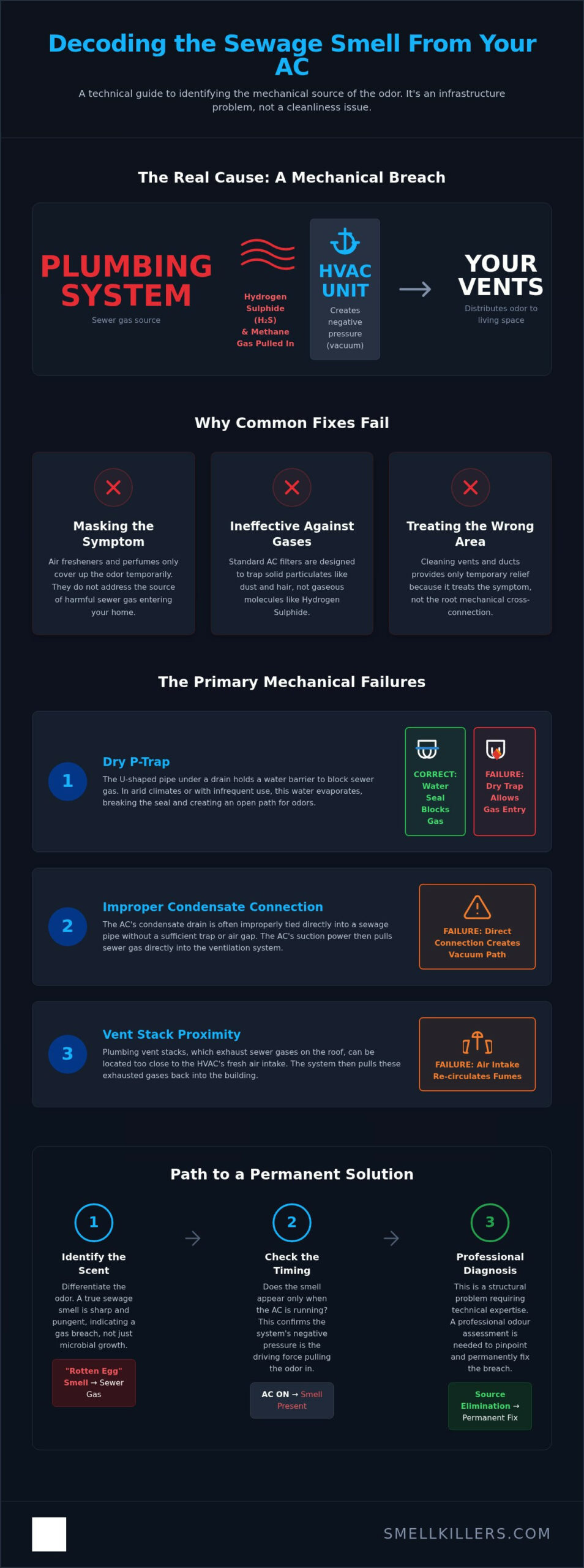
The timing of the odor provides a critical clue. If the smell only appears when the AC is running, it’s driven by air pressure. Modern air handling units create a powerful vacuum as they pull air across the cooling coils. If your condensate drain is incorrectly tied into the building’s sewage stack, this vacuum pulls foul air directly from the pipes. It bypasses your filters and distributes waste gases into every room. This isn’t a hygiene problem; it’s a structural crossover.
Differentiating the scent is the first step in our diagnostic protocol. Musty or “dirty sock” odors usually point to microbial growth on the evaporator coils. In contrast, a true sewage odor is sharp, pungent, and resembles rotten eggs. Living with this isn’t just unpleasant. It causes significant psychological stress and anxiety about the safety of the air you breathe. Property owners often report headaches and a sense of “sick building syndrome” when these gases aren’t properly vented.
Identifying Hydrogen Sulphide: The ‘Rotten Egg’ Indicator
Hydrogen Sulphide (H2S) is the primary chemical compound responsible for that distinct rotten egg smell. It forms during the anaerobic breakdown of organic matter within UAE drainage systems. When your HVAC system’s negative pressure draws these sulphur compounds into the airstream, they become concentrated. Beyond the odor, H2S is a known irritant. Exposure to even low levels can lead to nausea, eye irritation, and respiratory distress. We treat these cases with clinical urgency because they represent a verified indoor air quality failure.
The Illusion of the Dirty Filter
Replacing your AC filter will not resolve this issue. Filters are designed to trap solid particulates like dust and hair, but they’re useless against gaseous molecules. While surface bacteria on a damp coil can create unpleasant smells, they lack the chemical intensity of methane and sulphur. Cleaning the vents provides only temporary relief because it treats the symptom rather than the source. Sewer gas infiltration is a mechanical cross-connection error where the HVAC system’s negative pressure overcomes an inadequate or dry plumbing seal.
The Mechanics of Cross-Contamination in Modern HVAC Systems
The persistent sewage smell from AC vent systems is rarely a matter of simple hygiene. It is a mechanical failure of the boundary between your plumbing and your ventilation. In many UAE residential towers, the AC blower motor acts as a powerful vacuum. When the unit is operational, it creates negative pressure within the air handler. If there is a breach in the drainage seal, this vacuum pulls Hydrogen Sulphide and methane directly from the building’s sewage lines into your living space. This is not a surface issue; it is a structural cross-contamination.
Your P-trap serves as the primary defense against these gases. This U-shaped pipe holds a small amount of water to create an airtight seal. In the arid UAE climate, high evaporation rates often cause these traps to dry out, especially in guest bathrooms or floor drains that see infrequent use. Once the water barrier vanishes, the path for sewer gas is wide open. The AC system then functions as a distribution network for these odors, pulling them through the condensate drain and pushing them out through the supply vents.
Condensate Drain Lines and Sewage Connections
The physical path from your AC evaporator coil to the building’s main drain is a common site of failure. In standard installations, an “air gap” should exist to prevent backflow. However, improper or illegal connections often tie the AC condensate line directly into a sewage pipe without a proper trap or gap. When this happens, the airflow and drainage systems become one. Our sewage odour elimination UAE protocols focus on identifying these hidden mechanical shortcuts. If you suspect a structural breach, a professional Property Odour Assessment is the only way to confirm the exact location of the cross-connection.
The Vent Stack Proximity Issue
Architectural flaws at the roof level can also cause internal odor issues. Plumbing vent stacks are designed to exhaust gases safely into the atmosphere. If these stacks are located too close to the AC fresh air intake, the system can “re-entrain” the exhaust. Wind direction and building height play significant roles here. On humid days or during specific wind shifts, the AC unit effectively sucks the building’s own exhaust back into the cooling system. This creates a recurring odor that appears to come from the vents but originates on the roof. Identifying this requires a technical understanding of the building’s entire airflow stack.
Diagnostic Checklist: Tracking the Origin of the Odour
Isolating the source of a sewage smell from AC vent systems requires a methodical, engineering-based approach. Don’t waste time with air fresheners. Follow this diagnostic sequence to identify the exact mechanical failure point in your property:
- Perform a Zone-Based Sniff Test: Activate the AC and check each vent individually. If the odour is concentrated in one room, the breach is likely in that specific fan coil unit’s drainage branch. If it’s uniform across all vents, the issue is likely at the main fresh air intake or a shared vertical stack.
- Inspect Secondary Floor Drains: In many properties, especially those in warmer climates or with high evaporation rates, guest bathrooms or laundry room floor drains go unused for weeks. This can cause P-traps to dry out quickly. Pour two litres of water down every floor drain to restore the airtight seal.
- Examine the Primary Condensate Tray: Open the AC access panel and inspect the tray beneath the evaporator coils. Look for stagnant water or a thick, jelly-like biofilm. While biofilm itself smells musty, it can trap and concentrate sewer gases pulled from the drain line.
- Evaluate Negative Pressure: Turn on all bathroom and kitchen exhaust fans. If the sewage smell intensifies, your home is under high negative pressure. This vacuum force is physically pulling sewer gas through any weak plumbing seals.
Identifying the ‘Siphon Effect’ in High-Rise Buildings
High-rise living introduces unique plumbing physics. When a neighbour several floors above flushes a large volume of water, it creates a pressure drop in the vertical sewage stack. This vacuum can “siphon” the water out of your own P-traps, leaving them dry and defenseless. If you hear a “glugging” sound from your drains or vents, your traps are being siphoned. This is a structural venting issue that requires more than just a quick fix; it needs a technical intervention to ensure your traps remain primed.
Visual Inspection of the Evaporator Coil
It’s vital to distinguish between “Dirty Sock Syndrome” and true sewage contamination. Dirty Sock Syndrome is caused by bacterial colonies on the cooling coils, resulting in a stale, vinegary smell. Sewage contamination is distinct, sharp, and chemically pungent. If the coils look clean but the smell persists, the problem is gaseous infiltration from the drainage system. Because these two issues often overlap, particularly in older properties, a professional property odour assessment is the mandatory first step. We use specialized technology to map gas concentrations and confirm whether you’re dealing with surface microbes or a structural plumbing breach.
Why Standard Cleaning and Fragrances Fail to Resolve the Issue
Many property owners in the UAE attempt to resolve a sewage smell from AC vent units by booking a standard deep cleaning. This is a fundamental error. Standard cleaning removes surface dust and debris; it does not seal a mechanical breach in the plumbing-HVAC interface. Fragrances and ozone generators only provide a temporary masking effect. They do not neutralize the sulphur compounds infiltrating your home. You’re simply layering perfume over waste gas. This approach lacks the technical depth required to solve a structural cross-contamination issue.
We frequently see the “Rebound Effect.” This occurs when a standard cleaning service applies a strong scented detergent to the coils. For the first 24 to 48 hours, the perfume overpowers the sewer gas. However, as the fragrance dissipates, the underlying mechanical issue remains. The sewage odor returns with the same intensity because the source, the gas infiltration point, was never identified or sealed. You’re left with the same frustration and a wasted maintenance fee.
Harsh chemical cleaners pose additional risks. Many general maintenance companies use acidic or high-alkaline detergents to “blast” away odors. These substances can etch the aluminum fins of your evaporator coils, leading to premature corrosion and refrigerant leaks. You risk permanent hardware damage without solving the air quality problem. Technical problems require technical solutions, not aggressive soaps. True remediation requires diagnostic certainty before any liquid touches your system.
The Myth of the ‘Quick Fix’ Spray
Aerosol sprays and “bombs” are ineffective against industrial-strength sulphur gases. These products introduce volatile organic compounds (VOCs) into an already compromised environment. Instead of fresh air, you’re left with a toxic cocktail of sewer methane and synthetic perfume. It’s vital to understand the aircon chemical cleaning side effects before allowing unverified chemicals into your ventilation system. Adding more chemicals to a gas problem is never the answer for long-term health.
Why Source Detection Must Precede Treatment
Clinical logic dictates that you cannot treat what you haven’t located. Most HVAC companies are equipped with brushes and vacuums, not gas detectors or pressure-testing equipment. They are cleaners, not investigators. Our approach prioritizes diagnostic accuracy. We find the origin point first. Only then do we apply targeted remediation. This ensures the fix is permanent and scientifically verified. If you’re tired of temporary fixes, book a professional On-site Inspection to locate the root cause today.
Professional Odour Detection: The Path to Permanent Remediation
Eliminating a sewage smell from AC vent systems requires shifting from a cleaning mindset to an investigative one. Standard maintenance companies use high-pressure water to rinse coils. This is insufficient for gas-based contamination. Our German-style aircon cleaning protocols are built on clinical standards that prioritize disinfection and structural integrity. We don’t just wash the unit; we treat the entire airflow environment as a biological and mechanical system to ensure the root cause is neutralized.
Our methodology follows a strict 4-stage treatment process to ensure the odor never returns:
- Inspection: We map the property’s airflow and plumbing layout to identify potential crossover points.
- Diagnosis: We use specialized sensors to confirm the presence of specific gases and locate the precise mechanical breach.
- Targeted Treatment: We execute repairs to drainage lines and apply clinical-grade disinfection to the HVAC internals.
- Verification: We perform a final air quality test to confirm the complete absence of odor-causing compounds.
Specialized On-site Odour Inspection Technology
We utilize non-invasive diagnostic tools to track gas migration behind partitions and inside ductwork. This technology allows us to track the movement of air and gas without damaging your property. Engaging a technical odour expert in the UAE is essential for navigating the complex plumbing stacks found in modern high-rises. Our team applies a rigorous sequential logic to isolate the root cause by systematically eliminating environmental variables until only the mechanical failure remains.
Permanent Remediation: Beyond the AC Unit
True resolution often lies outside the air handler itself. We focus on correcting the plumbing-HVAC cross-connections identified during the diagnostic phase. This may involve re-configuring condensate drainage paths to ensure a permanent air gap or sealing structural bypasses where sewer gas enters the ceiling void. We don’t stop at the surface. Our goal is a “Clinical Clean” standard where the air is not just scentless, but scientifically pure. For property managers, we recommend a long-term prevention strategy that includes regular P-trap priming and HVAC pressure balancing to counteract the siphoning effects common in UAE towers. This methodical approach replaces temporary masking with engineering certainty.
Achieve Permanent Air Neutrality Through Technical Diagnosis
A persistent sewage smell from AC vent units is a clear indicator of a structural breach between your plumbing and HVAC infrastructure. Relying on superficial cleaning or synthetic fragrances only masks the underlying mechanical failure. You must address the root cause; whether it’s a dry P-trap, an improper condensate connection, or a complex pressure differential issue, the solution requires engineering certainty. Our German-standard diagnostic protocols move beyond the limitations of standard maintenance to provide expert source identification. We prioritize no-nonsense, permanent results that ensure your indoor environment meets clinical safety standards. Don’t settle for recurring odors that compromise your health and home comfort. It’s time to replace guesswork with scientific accuracy and professional integrity.
Book a Professional On-site Odour Inspection Today
Restore your property to a state of total air neutrality. You deserve a home where the air is fresh, safe, and professionally verified.
Frequently Asked Questions
Is the sewage smell from my AC dangerous to breathe?
Sewer gas exposure is a legitimate health concern. It contains hydrogen sulphide and methane; compounds that cause headaches, nausea, and respiratory irritation even at low concentrations. Long-term exposure in a confined indoor environment is not safe for residents. If you detect a sewage smell from AC vent systems, it indicates that waste gases are bypassing your building’s plumbing seals. Immediate diagnostic intervention is required to ensure the air is safe.
Can a dry P-trap really cause my whole AC to smell?
A dry P-trap is the most frequent mechanical cause of sewage odors in UAE properties. This U-shaped pipe relies on a water seal to block gases. In our arid climate, water evaporates quickly in unused floor drains or guest bathrooms. Once the seal vanishes, the AC blower motor creates a vacuum that pulls sewer gas directly into the ventilation path. Restoring the water level is only a temporary fix.
Why does the smell get worse when the AC is on high?
High fan speeds increase the negative pressure within the air handling unit. This intensified vacuum force pulls more gas from the drainage lines through any existing breaches or dry traps. The faster the AC runs, the more effectively it draws contaminants from the building’s sewage stack. This phenomenon confirms that the issue is mechanical and pressure-driven rather than a simple matter of surface mold or dust accumulation.
How long does a professional odour detection inspection take?
A comprehensive on-site inspection typically takes between 60 and 90 minutes. Our technicians use this time to perform zone-based gas mapping, pressure testing, and structural assessments of your HVAC-plumbing connections. We don’t guess; we use specialized sensors to locate the exact origin of the odor. You receive a technical diagnosis and a clear remediation plan immediately following the assessment of your property.
Will cleaning my ducts get rid of the sewage smell?
Duct cleaning will not eliminate a sewage smell because the ducts are merely the distribution path, not the source. Cleaning the ducts removes dust and debris but leaves the gas infiltration point untouched. If sewer gas is entering your system through a cross-connection or dry trap, the smell will persist regardless of how clean the ducts are. You must identify and seal the entry point first.
What is the difference between German-style AC cleaning and normal cleaning?
German-style aircon cleaning prioritizes clinical disinfection and technical integrity over simple pressure washing. Standard services often use high-pressure water that can damage sensitive fins and push debris deeper into the unit. Our protocol uses specialized, eco-conscious solutions and methodical stages to ensure the evaporator coils and drainage trays are surgically clean. It’s a diagnostic-led approach designed for long-term air quality rather than a quick cosmetic rinse.
Can I fix a sewage smell in my AC vents myself?
You can temporarily resolve odors caused by dry P-traps by pouring water down your floor drains. However, structural cross-connections or siphon effects in high-rise buildings require professional engineering. Identifying a sewage smell from AC vent units often involves tracing leaks behind walls or within complex ceiling voids. Most homeowners lack the gas detection technology and technical training needed to perform a permanent mechanical repair safely.
Why does the smell disappear and then come back a week later?
The rebound effect occurs when a service provider uses fragrances to mask the odor rather than fixing the mechanical breach. Fragrance molecules eventually dissipate, but the sewer gas continues to infiltrate the system. If the smell returns a week later, it confirms that the previous treatment was a superficial bandage. Permanent remediation requires sealing the structural entry point where the gas is bypassing your plumbing seals.