
Article by
Jonathan Bonnett
Australian Air Conditioning Specialist with extensive hands-on experience in AC servicing, deep cleaning, maintenance, and troubleshooting. Focused on high-quality workmanship, reliability, and professional service to UAE standards.
Your building’s persistent odor isn’t a cleaning failure; it’s a mechanical malfunction. Stop masking. Start diagnosing. You’ve likely spent hundreds of dirhams on luxury candles and masking sprays, only for the scent to return the moment the fragrance fades. It’s embarrassing when guests notice it. It’s deeply concerning when you consider the impact on indoor air quality. Finding the actual source of bad smell in building requires more than a mop and bucket.
We understand the frustration of a problem that won’t go away. This guide provides the systematic protocols used by technical experts to locate and eliminate odors at their root source. We’ll move beyond superficial fixes to address the underlying infrastructure. You’ll learn the precise steps for inspecting A/C mechanics, evaluating drainage integrity, and using professional diagnostic tools. Our focus remains on diagnostic accuracy. We replace mystery with scientific certainty. This article previews the methodology required to restore your property to a neutral, healthy state without relying on temporary fragrances.
Key Takeaways
- Identify persistent odors as technical symptoms of infrastructure failure rather than simple hygiene or cleaning lapses.
- Execute a professional 5-step protocol to pinpoint the exact source of bad smell in building using isolation and timing logs.
- Understand how A/C evaporator coils and condensate lines can facilitate the distribution of biological contaminants and sewage gases.
- Recognize the mechanical causes of sulfur-like scents, including P-trap evaporation and plumbing gas bypass issues.
- Determine the criteria for professional intervention and the diagnostic technologies required for a permanent mechanical resolution.
Understanding Odour Dynamics: Why Buildings Develop Persistent Smells
A persistent building odour is not a cleaning failure. It is a technical symptom of gas or biological accumulation within the infrastructure. Surface-level scents, such as food or temporary spills, dissipate after a standard cleaning cycle. Structural malodours do not. They reside within the building’s hidden cavities, including wall voids, ventilation shafts, and drainage networks. Identifying the source of bad smell in building requires a shift from superficial cleaning to mechanical diagnosis. When a scent lingers for more than 48 hours, the cause is almost certainly embedded in the building’s systems.
The “stack effect” plays a critical role in how these smells circulate, especially in the high-rise environments common across the UAE. This physical phenomenon occurs when pressure differentials drive air vertically through service risers and elevator shafts. A sewage leak in the basement can manifest as a foul scent on the top floor because the building acts like a giant chimney. This movement makes localized detection difficult without professional sensors. While 2026 building standards, including the updated ASHRAE 62.1-2025 guidelines, emphasize airtightness for energy efficiency, this often backfires. Sealed building envelopes trap contaminants. Without a perfectly balanced ventilation system, minor mechanical leaks become major air quality crises.
The Science of Olfactory Fatigue
Your brain is programmed to prioritize new sensory information over constant stimuli. This is olfactory fatigue. Residents often stop smelling a persistent odour within minutes of entering their property. Guests, however, will notice the source of bad smell in building the moment they step through the door. This sensory adaptation is dangerous because it leads to complacency regarding Indoor air quality (IAQ). Living in a compromised environment isn’t just an aesthetic issue. It has a documented psychological impact, causing chronic stress and health anxiety. “Getting used to it” is not a solution; it is a sign that your sensory system has surrendered to a polluted environment.
Masking vs. Technical Elimination
Masking an odour with aerosol sprays or heavy fragrances is a diagnostic mistake. These products introduce volatile organic compounds (VOCs) that further degrade air quality. Beyond the chemical risks, masking hides the very symptoms needed for a successful diagnosis. If you use a fragrance to cover a “rotten egg” scent, you might miss the early warning signs of a dangerous hydrogen sulphide leak. Understanding the critical difference between masking vs eliminating odour is essential before applying any treatment to your property. We operate with a “search and destroy” mindset. This protocol prioritizes finding the mechanical failure. We don’t want to change how the air smells; we want to restore the air to its natural, neutral state. Effective odour management moves away from the fragrance aisle and into the mechanical room.
The HVAC Vector: How A/C Systems Distribute Bad Odours
Your HVAC system is a distribution network for air, but it also functions as a primary conveyor for contaminants. The evaporator coil is the most common source of bad smell in building environments where humidity is high. As the unit cools air, moisture condenses on the metal fins. This damp, dark environment captures dust and organic matter, creating a perfect breeding ground for biological colonies. When the blower fan activates, it forces air over this contaminated surface, pushing microscopic spores and metabolic byproducts into every room.
Dirty Sock Syndrome is a specific technical failure where bacteria colonize the heat exchanger. It results in a pungent, earthy smell that intensifies during the start of a cooling cycle. Standard maintenance usually stops at filter replacement or a light chemical spray. These superficial actions fail to penetrate the thick biofilm protecting the bacteria. To understand the broader impact of these contaminants on your health, refer to the EPA guide to indoor air pollutants. Resolving this requires a mechanical breakdown of the biofilm, not just a scent mask.
Condensate Drain Failures
Mechanical design flaws often turn the A/C unit into a vacuum for sewer gas. Most modern units create negative pressure within the cabinet. If the condensate drain line is connected to the building’s plumbing without a functional, water-filled P-trap, this vacuum pulls air directly from the sewage pipes. The unit effectively “inhales” methane and hydrogen sulphide, then redistributes them. Stagnant water in the internal drain pan is another critical failure point. If the pan isn’t pitched correctly, water pools and rots, leading to a permanent source of bad smell in building infrastructure. We check for these pressure imbalances during every inspection.
German-Style Aircon Cleaning Standards
Eliminating HVAC-borne odours requires clinical-level decontamination. We utilize specialized German-style cleaning protocols that prioritize mechanical precision over speed. Most providers clean only the visible front of the evaporator coil. This is insufficient. Contaminants often aggregate at the rear of the unit where airflow is most restricted. Our process ensures that the entire coil depth is reached and sanitized. You can review the technical requirements for this process in our Aircon Odour Elimination guide. If your A/C continues to emit a foul scent after basic servicing, it’s time to book a professional Property Odour Assessment to identify the mechanical root cause.
Structural Sources: Sewage Gas and Plumbing Infrastructure
The most common structural source of bad smell in building environments is the infiltration of sewer gas. This is not merely a nuisance. It is a technical failure of the plumbing infrastructure. Hydrogen sulphide (H2S) is the primary chemical culprit, recognizable by its distinct “rotten egg” or sulphur scent. While A/C issues produce earthy or musty tones, plumbing failures deliver sharp, pungent gases that often fluctuate based on building occupancy and water usage patterns.
The physics of the P-trap serves as the first line of defense. This U-shaped pipe holds a specific volume of water to create a physical seal against sewer gases. In the UAE’s high-temperature climate, this water seal evaporates rapidly in unused guest bathrooms or laundry rooms. This leads to gas bypass. However, simply pouring water down the drain is often a temporary fix. If the building’s vent stack is obstructed or poorly designed, pressure imbalances will continue to “pull” or “push” gas through these traps regardless of water levels. Biofilm buildup in floor drains also contributes to persistent “swampy” scents. These bacterial colonies thrive on hair and soap scum, creating a permanent metabolic source of bad smell in building drains that requires mechanical removal.
Tracking Sewage Odours in Modern Apartments
High-rise living in the UAE introduces unique pressure variables. Wind loads on the exterior of a tower and the operation of powerful exhaust fans create pressure differentials. These forces can physically suck the water seal out of a P-trap, leaving the unit vulnerable to gas ingress. Faulty wax rings under toilets are another silent failure point. If the seal between the toilet base and the soil pipe is compromised, sewer gas leaks directly into the bathroom floor void. This bypasses the trap entirely. For a deep dive into technical recovery, consult our Sewage Odour Elimination UAE pillar for permanent remediation steps.
The Hidden Danger of Methane and Hydrogen Sulphide
Exposure to sewage gas carries significant health and safety implications. Long-term inhalation of low-level hydrogen sulphide causes chronic headaches, dizziness, and respiratory irritation. Methane, while often odourless, is a highly flammable gas. When methane accumulates in wall voids or ceiling cavities due to a plumbing leak, it creates a localized explosion risk. These are not problems that air fresheners can solve. If you suspect a structural leak, a professional residential odour inspection UAE is necessary to ensure the safety and integrity of your living environment. We use calibrated gas sniffers to detect these compounds at concentrations far below the human olfactory threshold.
A 5-Step Protocol to Locate the Source of Bad Smell in Your Building
Locating the source of bad smell in building environments requires a methodical approach. Stop sniffing the air randomly. Guesswork leads to wasted money on ineffective cleaning products. Follow this investigative sequence to isolate the mechanical failure and identify exactly where the odor originates.
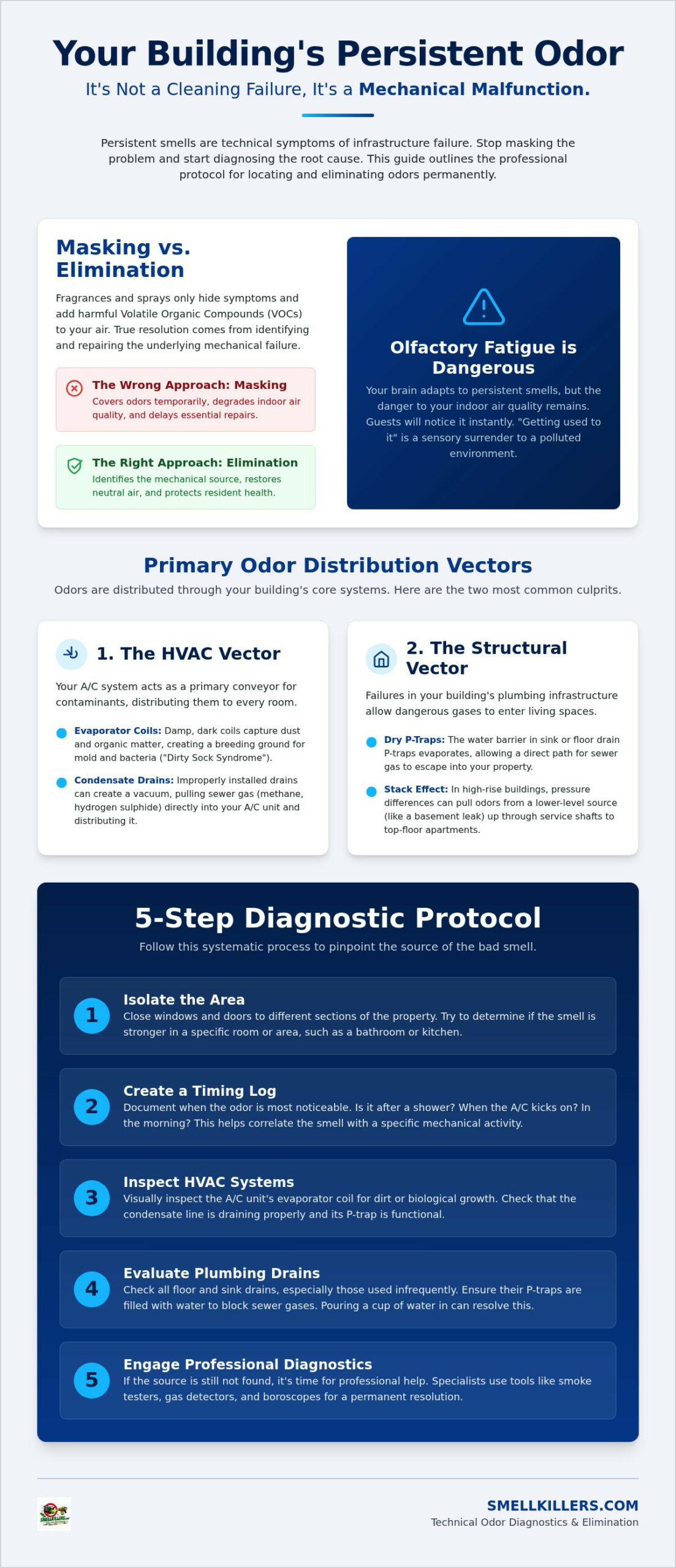
- Step 1: The Isolation Test. Close all doors and windows for at least two hours. Turn off the ventilation. If the odor concentrates in a specific room, the source is local to that area’s plumbing fixtures or A/C branch.
- Step 2: The Timing Log. Document the exact time the smell appears. If it coincides with the A/C turning on, it’s likely a biological issue in the coils. If it appears when a neighbor showers, it’s a sign of a vent stack failure.
- Step 3: The Sniff Test at the Source. Get close to floor drains, sink overflows, and electrical outlets. Sewer gas often travels through wall cavities and exits via conduit boxes.
- Step 4: Pressure Differential Check. Open a single window. If the smell vanishes instantly, your building is likely under negative pressure, pulling gas from the drainage system or wall voids.
- Step 5: Visual Inspection of Voids. Use a high-lumen flashlight to inspect under sinks and behind A/C access panels. Look for standing water, damp insulation, or biological growth on the drain pan.
Mapping the Odour Vector
Create a simple “smell map” by marking locations on a floor plan. Note if the scent is “fixed” in one bathroom or “drifting” through the hallway. Biological scents like mould are usually fixed and earthy. Chemical gases like methane are often drifting and sharp. This map is an essential tool for any specialist you hire. It helps distinguish between a source of bad smell in building infrastructure and a simple hygiene issue. Identifying if the smell is constant or intermittent provides the final clue for a technical diagnosis.
Common DIY Mistakes to Avoid
Don’t pour bleach down your drains. It’s a common UAE myth. Bleach doesn’t fix a dry P-trap; it just creates toxic fumes when mixed with sewer gases and can damage older pipe seals. Avoid lighting candles near suspected gas leaks. Methane is flammable. If the odor persists for 48 hours despite your efforts, stop investigating. You’ve reached the limit of DIY detection. At this stage, a professional property odour assessment is the only way to ensure a permanent resolution. Book a professional on-site inspection to secure your indoor air quality and find a permanent solution.
Professional Diagnosis: When to Call the Smell Specialist
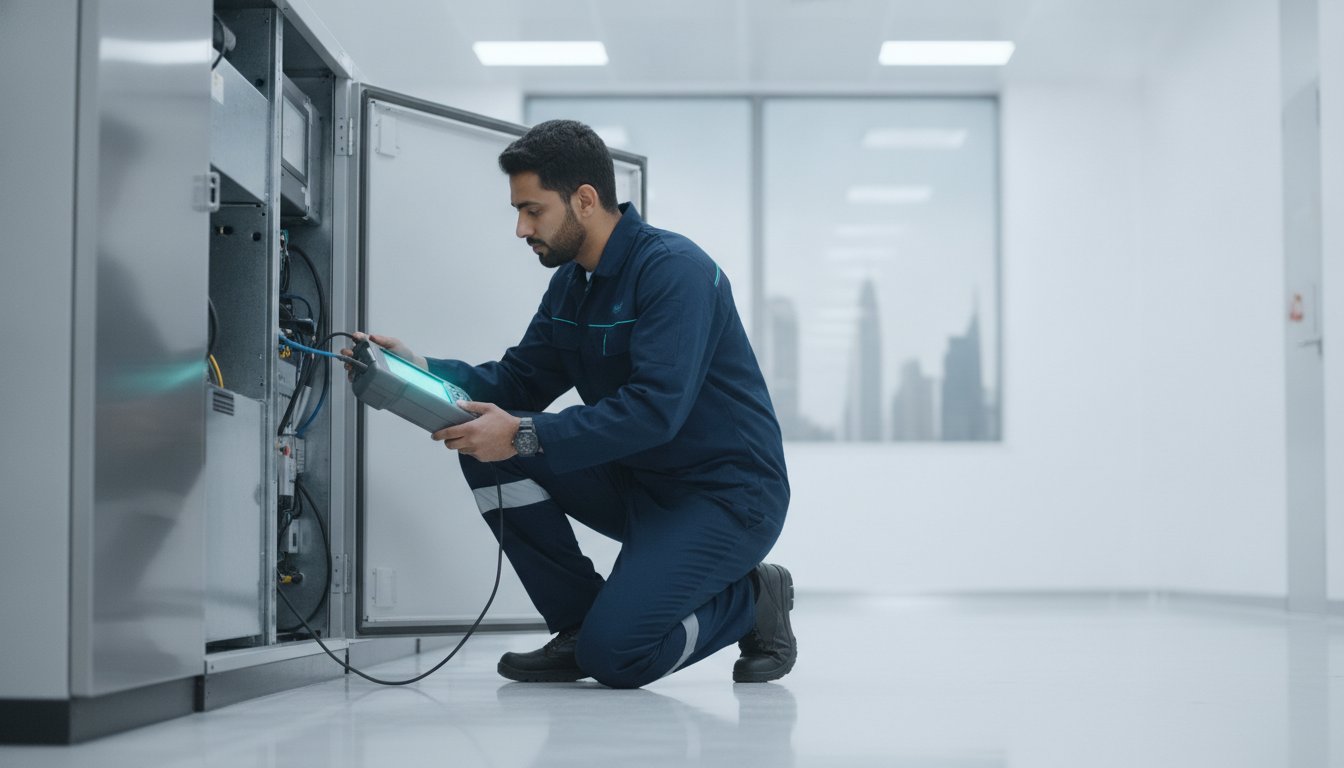
If an odour persists for more than 48 hours despite your best cleaning efforts, the issue is structural. You shouldn’t wait for the problem to resolve itself. Persistent smells indicate a constant supply of contaminants entering your living space. Identifying the source of bad smell in building environments at this stage requires professional-grade sensors. We utilize 2026-standard technology, including high-sensitivity gas sniffers and thermal imaging cameras. These tools detect chemical concentrations and thermal anomalies that the human eye and nose cannot perceive.
For villa owners and building managers, a technical diagnostic report is mandatory for long-term property management. It provides a scientific baseline for air quality and documents the mechanical failures found. Our approach at SMELLKILLERS.COM is rooted in diagnostic accuracy. We don’t just clean; we investigate. We isolate the origin before applying targeted German-style treatment to ensure the biological or chemical root is eradicated. This prevents the recurrence of the issue and protects the long-term value of your asset. Property managers who rely on fragrance systems should understand why masking vs eliminating odour is a false economy that delays proper mechanical remediation.
What Happens During an On-Site Inspection?
Our diagnostic walkthrough is methodical. We start with a baseline air quality reading to establish the severity of the contamination. Then, we use non-invasive methods to probe wall voids, ceiling cavities, and ductwork. This avoids unnecessary demolition. We check for pressure imbalances and seal integrity across all plumbing and HVAC junctions. For larger properties, our villa odour inspection UAE guide details the specific protocols required for expansive floor plans and complex mechanical systems. We don’t guess. We verify.
Ensuring Permanent Results
A standard cleaning service addresses the symptom. An odour elimination specialist addresses the cause. We don’t use masking agents because they interfere with our post-treatment monitoring. Once we neutralize the source of bad smell in building infrastructure, we verify the results with follow-up gas detection readings. This ensures the environment has returned to a neutral, healthy state. If you’re tired of temporary fixes that fail after a few days, it’s time for a clinical intervention. Contact SMELLKILLERS.COM for a clinical property assessment today to restore your building’s integrity and your peace of mind.
Securing Permanent Odour Resolution for Your Property
Persistent odours are technical symptoms of infrastructure failure. They require diagnostic precision rather than superficial masking. Identifying the source of bad smell in building environments is the only path to a permanent solution. You’ve learned that A/C cross-contamination and structural plumbing leaks are often the hidden culprits. These issues won’t resolve with air fresheners; they demand a mechanical fix. By following a systematic isolation protocol, you can determine if your issue is biological or chemical in nature.
We replace mystery with scientific certainty across the UAE. Our team utilizes non-invasive diagnostic technology to find root causes without damaging your property. We combine these findings with clinical German-style AC cleaning protocols to ensure contaminants are eliminated at their origin. Don’t live with the embarrassment and health risks of compromised air quality. Take the final step toward a neutral, healthy environment. Book a Professional Property Odour Assessment Today and restore the technical integrity of your building. A permanent, fragrance-free resolution is within reach.
Frequently Asked Questions
Why does my room smell like sewage even if it’s clean?
Sewage smells in a clean room indicate a mechanical failure within the plumbing infrastructure. The most frequent cause is a dry P-trap that has lost its water seal, allowing sewer gas to bypass the barrier. Faulty wax rings under toilets or cracked vent pipes behind walls are also silent contributors. Surface cleaning cannot address these structural gas leaks; they require mechanical restoration of the plumbing seal.
Can a bad smell in a building make you sick?
Yes, persistent building odours are often indicators of poor indoor air quality that can lead to Sick Building Syndrome. Inhaling biological contaminants like mold spores or chemical gases like hydrogen sulphide causes documented health issues. Common symptoms include chronic headaches, respiratory irritation, and nausea. These odors signal that the air you’re breathing contains particulates or gases that exceed healthy exposure limits.
How do I find the source of a mystery smell in my apartment?
Finding the source of bad smell in building apartments requires a systematic isolation test. Close all internal doors and windows for several hours to see where the scent becomes most concentrated. Check specific transition points like floor drains, A/C vents, and the area under sinks. If the smell persists in a sealed room, the origin is likely local to that room’s mechanical or plumbing fixtures.
Why does my A/C smell like rotten eggs when I turn it on?
A rotten egg scent from your A/C suggests cross-contamination from the building’s drainage system. If the A/C condensate line is connected to a sewer pipe without a functional P-trap, the unit’s internal vacuum pulls in hydrogen sulphide gas. This gas is then distributed through the vents. It can also indicate Dirty Sock Syndrome, where specific bacteria colonize the evaporator coils and release metabolic byproducts.
Is it dangerous to breathe in sewage gas smells indoors?
Breathing sewage gas is hazardous due to the presence of methane and hydrogen sulphide. Hydrogen sulphide is a potent neurotoxin that can cause dizziness and central nervous system distress even at low concentrations. Methane is an odourless, highly flammable gas that creates explosion risks when it accumulates in enclosed wall voids. These gases signify a breach in your building’s waste management system that requires immediate technical intervention.
How much does a professional building odour inspection cost in the UAE?
Professional inspection costs in the UAE are determined by property size and the complexity of the diagnostic tools required. Industry standard service calls for HVAC diagnostics typically range from 250 د.إ to 750 د.إ across the Emirates. Comprehensive property assessments that utilize gas sniffers and thermal imaging may vary. The final investment reflects the technical expertise needed to provide a permanent mechanical resolution rather than a temporary cleaning fix.
Can a dead animal in the wall cause a smell that lasts for months?
A dead animal smell rarely lasts for months; it usually dissipates within two to three weeks as the organic matter dries out. If a foul scent persists longer, it’s almost certainly a structural source of bad smell in building materials, such as ongoing mould growth or a sewage leak. Persistent moisture in wall cavities provides a constant fuel source for biological odours that won’t fade until the leak is sealed.
Why does the smell only appear at night or during specific times?
Intermittent smells are usually triggered by changes in building pressure, ambient temperature, or water usage patterns. At night, cooling temperatures and rising humidity can make certain odours more perceptible. Additionally, when building occupants use more water in the evenings, it can increase pressure in the sewer lines, forcing gas through weak seals or dry traps. These timing patterns are critical clues for a technical diagnosis.