

Article by
Jonathan Bonnett
Australian Air Conditioning Specialist with extensive hands-on experience in AC servicing, deep cleaning, maintenance, and troubleshooting. Focused on high-quality workmanship, reliability, and professional service to UAE standards.
What if the foul odor in your living room isn’t coming from your trash, but from a mechanical failure deep within the building’s infrastructure? Many residents in the UAE find themselves trapped in a cycle of pouring expensive chemicals down drains without results. It’s a common frustration. You’ve scrubbed the surfaces, yet the thick scent of sulfur persists. This isn’t a hygiene issue. It’s a technical one. Finding a permanent apartment sewage smell fix requires looking past the sink and into the complex plumbing and ventilation systems of your multi-unit building.
You deserve a home that feels clinical and safe, not one that triggers health concerns regarding hydrogen sulfide exposure. We understand the difficulty of pinpointing a source when odors travel through shared stacks. This guide explains how to transition from temporary masking to scientific resolution. We’ll outline the diagnostic steps to identify root causes like dry p-traps, failed wax rings, or ventilation pressure imbalances. You’ll learn how a non-invasive property odour assessment provides the clarity needed for a permanent solution. Let’s replace mystery with technical certainty.
Key Takeaways
- Learn to isolate the precise origin of foul odors using a systematic diagnostic protocol that prioritizes source identification over surface cleaning.
- Understand the physics of negative pressure and how malfunctioning HVAC systems can actively draw sewer gases into your apartment’s ductwork.
- Identify specific mechanical failures such as faulty Air Admittance Valves (AAVs) or degraded toilet wax rings to implement a permanent apartment sewage smell fix.
- Recognize the impact of blocked roof vent stacks and atmospheric pressure changes on the integrity of your plumbing seals and p-traps.
- Discover how a clinical property odour assessment utilizes specialized tools to detect microscopic gas leaks that standard inspections often overlook.
Identifying the Origin: A Systematic Diagnostic Protocol
Identifying a permanent apartment sewage smell fix requires a methodical investigation of the building’s mechanical barriers. Odours are not random occurrences. They are symptoms of structural failures or atmospheric pressure changes within the plumbing network. To resolve the issue, you must move beyond surface-level cleaning and adopt a diagnostic mindset that prioritizes source identification.
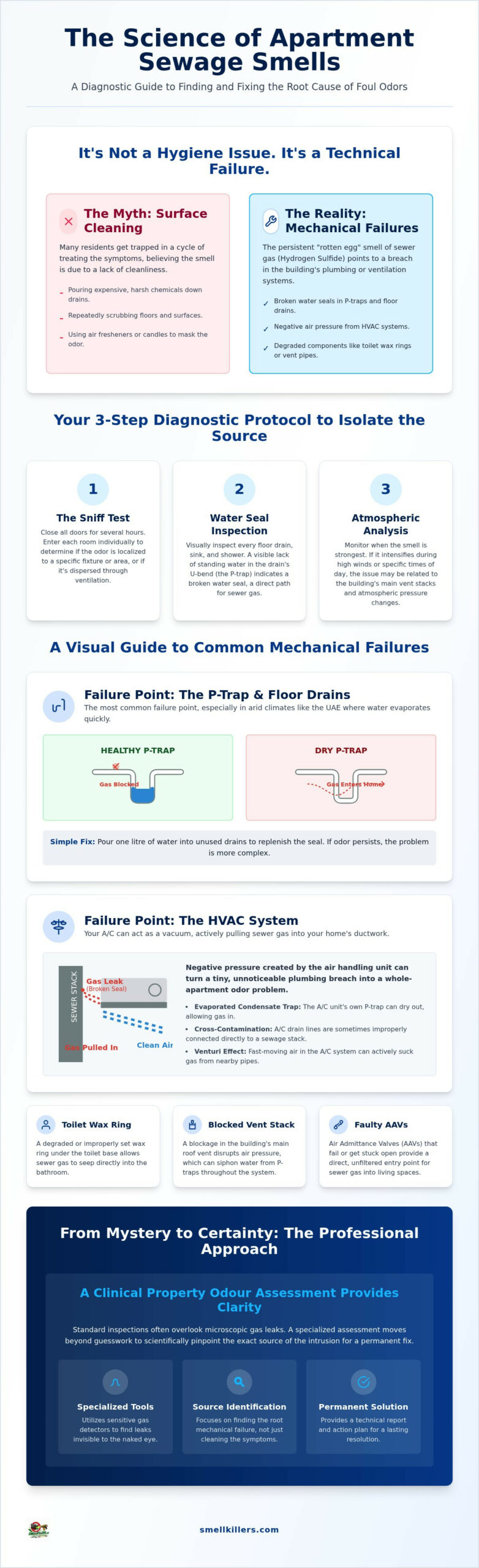
Sewer gas is a complex mixture of inorganic gases. Hydrogen sulfide provides the characteristic “rotten egg” scent, while methane, though often odourless, poses a significant flammability risk. Understanding Sewer gas composition and entry is the first step in protecting your health and property. Follow this systematic protocol to isolate the origin:
- The Sniff Test: Isolate each room. Close bathroom and laundry doors for two hours. Enter each space individually to determine if the odour is localized to a specific fixture or dispersed through the ventilation.
- Water Seal Inspection: Check every floor drain and sink. A visible lack of water in the trap indicates a broken seal.
- Atmospheric Analysis: Monitor the timing of the scent. If the smell intensifies during high winds or specific times of day, the issue likely involves the building’s vent stacks rather than your internal plumbing.
The Role of the P-Trap and Floor Drains
Every plumbing fixture in your UAE apartment relies on a P-trap to maintain a 2-inch water seal. This simple mechanical barrier blocks thousands of cubic feet of gas from entering your living space. In local developments, floor drains in laundry rooms or guest bathrooms are the most common points of failure. They are frequently overlooked during routine cleaning. Many residents fall for the “Deep Clean” myth, but pouring bleach down a drain won’t address the root cause of drain smell if the mechanical water barrier is absent. Without that water seal, gas flows freely into your home regardless of how clean the pipes are.
Ruling Out Dry Seals and Evaporation
Evaporation is a primary cause of odour issues in the arid climate of the Emirates. Unused guest bathrooms or secondary floor drains lose their water seals quickly when the fixtures aren’t used. To resolve a dry trap, simply pour one litre of water into the drain to replenish the seal. If the odour persists after this flush, the diagnosis shifts toward more complex failures. You must then investigate the possibility of a cracked pipe behind the wall or a failed wax ring under the toilet. These issues require technical intervention and specialized diagnostic tools to locate microscopic leaks.
The A/C Connection: How HVAC Systems Transport Sewage Odours
Many residents searching for a permanent apartment sewage smell fix focus exclusively on bathroom floor drains. This is a diagnostic error. In modern UAE high-rises, the HVAC system often functions as the primary delivery mechanism for sewer gases. The air handling unit creates a state of negative pressure within the apartment. If a plumbing seal is breached nearby, this pressure actively draws hydrogen sulfide and methane into the ductwork. A thorough investigation of sewer gas odors often reveals that the air conditioning system isn’t the source, but the transporter.
During the cooler months across the UAE, when A/C usage decreases, the water seal in the cooling unit’s dedicated trap can evaporate. This allows gases from the common building stack to enter the unit. When the fan activates, it distributes these odours throughout every room. A professional on-site inspection is necessary to determine if the trap design is sufficient for the building’s specific pressure environment.
HVAC Drain Line Cross-Contamination
In many local developments, the A/C condensate line is directly connected to a sewage stack without a proper air gap. This creates a mechanical bridge for gases. The ‘venturi effect’-where fast-moving air creates a low-pressure zone-sucks gas from the sewer pipe into the A/C unit’s internal housing. If the smell intensifies only when the cooling is active, this junction is the primary suspect. Achieving lasting aircon odour elimination requires a technical audit of the drain-sewer junction to ensure permanent mechanical separation.
Bacterial Biofilms in the Condensate Pan
It’s vital to distinguish between true sewer gas and ‘dirty sock syndrome.’ Sewer gas smells of rotten eggs, while bacterial biofilms in the condensate pan produce a musty, organic stench. Stagnant water in the drain pan allows these microbial colonies to thrive. Standard chemical sprays fail to penetrate these thick layers. Professional German-style aircon cleaning utilizes high-pressure, clinical-grade protocols to physically remove the biofilm from deep within the cooling coils. Clinical biofilm removal requires the total mechanical disruption and chemical neutralization of microbial layers within the evaporator coil and drain assembly. This methodical approach replaces temporary masking with scientific certainty.
Technical Fixes for Persistent Apartment Odours
Pouring chemical cleaners down a drain is a common response to foul smells. It’s also largely ineffective for long-term resolution. Most residents find that the scent returns within 48 hours because the underlying mechanical failure remains unaddressed. A permanent apartment sewage smell fix requires a shift from superficial cleaning to technical remediation. We prioritize identifying the specific component failure and restoring the mechanical barrier over temporary scent masking.
The difference between mechanical cleaning and chemical pouring is fundamental. Chemicals attempt to dissolve organic matter but cannot repair a physical breach in the plumbing network. Mechanical intervention involves inspecting seals, testing valves, and utilizing high-pressure equipment to clear obstructions that cause pressure fluctuations. This systematic approach is the core of our sewage odour elimination UAE protocol. We focus on restoring the system to its original design specifications.
The Air Admittance Valve (AAV) Solution
Modern apartment buildings often utilize Air Admittance Valves (AAVs) instead of traditional roof vents to manage plumbing pressure. These one-way valves use a sensitive internal diaphragm to allow air into the system while preventing sewer gas from escaping. In the UAE’s high-temperature environment, these rubber components can become brittle or “stuck” in an open position. When the valve fails, it creates a direct path for gas to enter the cabinet space beneath your sink. Check for a localized scent in the vanity area. If the smell is strongest there, the AAV is the primary suspect. Technical resolution involves unscrewing the failed unit and replacing it with a high-performance valve to restore the atmospheric seal.
Toilet Base and Wax Ring Integrity
The wax ring is the hidden seal between your toilet and the drainage pipe. It’s designed to be airtight. However, a wobbly toilet or a slight shift in the floor can compromise this barrier. If the seal is broken, sewer gas leaks directly into the bathroom. You can perform a diagnostic check by applying soapy water to the base of the toilet. If bubbles appear when the toilet is flushed or when the A/C creates negative pressure, the seal has failed. Don’t rely on simple caulking. Implementing a permanent apartment sewage smell fix at the toilet base requires removing the fixture, installing a new reinforced wax ring, and ensuring the base is mechanically secured to the floor to prevent future movement.
Structural Apartment Issues: Vent Stacks and Pressure
Achieving a permanent apartment sewage smell fix often requires looking beyond your own walls. In the vertical environment of UAE high-rises, your plumbing is part of a massive, shared network. When the building’s roof vent stacks become obstructed, the system cannot equalize pressure. This failure turns your plumbing into a series of vacuum chambers. Identifying these structural issues is vital for residents who find that localized repairs offer no relief. If the odor is consistent across multiple units on the same vertical line, the problem is building-wide rather than unit-specific.
Coordinating with building management is the next logical step. A professional inspection of the roof vents can identify blockages from debris or poor architectural design that restricts airflow. These structural failures require industrial-scale solutions that individual tenants cannot perform. However, recognizing the symptoms allows you to provide the technical data management needs to initiate a building-wide repair.
Siphoning and Trap Seal Loss
A blocked vent creates a vacuum effect within the drainage pipes. When a neighbor above you flushes a toilet or drains a bathtub, the falling mass of water pulls air behind it. If the vent stack is clear, air enters from the roof. If it is blocked, the system pulls air from the nearest available source: your P-traps. This vacuum physically sucks the water out of your trap, breaking the seal. Listen for a distinct ‘gurgling’ sound coming from your sinks or floor drains. This is the sound of air being forced through the water seal. You can temporarily restore the seal by refilling the trap with water, but the gas will return the next time a pressure imbalance occurs.
The Stack Effect in High-Rise Buildings
The stack effect is the vertical movement of air through a building’s interior caused by density differences between indoor and outdoor air temperatures. In the UAE, the extreme contrast between the scorching outdoor heat and the chilled, air-conditioned interior intensifies this phenomenon. This pressure differential acts like a giant straw, pulling sewer gases upward or pushing them down depending on your floor level. Top-floor apartments often suffer from negative pressure that siphons traps, while bottom-floor units may experience ‘blowouts’ where positive pressure pushes gas through the water seals. Achieving a resolution in these scenarios requires a property odour assessment to map the pressure zones within your specific unit.
Professional Assessment: The Clinical Approach to Odour Removal
Standard plumbing tools are designed to manage water, not air. A traditional plumber may use a camera to find a physical blockage, but this equipment cannot detect the invisible path of hydrogen sulfide escaping through a micro-fissure in a wall cavity or a failed gasket. Achieving a permanent apartment sewage smell fix requires specialized gas detection instrumentation and a deep understanding of building air pressure. We replace guesswork with a methodical property odour assessment. This clinical approach maps the movement of gases in relation to your specific floor plan, shared ventilation stacks, and HVAC configuration.
Our methodology involves a comprehensive on-site inspection utilizing advanced detection technology. We use calibrated multi-gas sensors and ultrasonic leak detectors to find the exact origin of the odour, even when it is hidden behind masonry or cabinetry. This scientific certainty allows for targeted remediation that minimizes property disruption. Instead of tearing down walls based on a hunch, we provide a precise diagnostic report detailing the mechanical failure. This ensures that the technical intervention is efficient, non-invasive, and effective. We focus entirely on moving your property from a state of discomfort to a state of resolution through data-driven investigation.
When DIY Fails: The Specialist’s Role
Home remedies like vinegar and baking soda are superficial solutions. They’re designed for light organic residue in a sink, not for structural gas leaks or failed mechanical components like Air Admittance Valves. These “hacks” often provide a false sense of security while the underlying risk of sewer gas exposure remains. Technical gas detection identifies leaks that are invisible to the human eye and unreachable by standard plumbing tools. SMELLKILLERS.COM focuses exclusively on source detection over fragrance masking. We don’t use perfumes, ozone generators, or temporary sprays. We identify the mechanical breach and restore the building’s original safety barriers using engineering-led solutions.
Long-Term Prevention Protocols
Once the root cause is eliminated, maintaining the integrity of your apartment’s plumbing and HVAC system is essential. High-rise living in the UAE presents unique environmental challenges, including rapid evaporation and high pressure differentials, that require a structured maintenance schedule. Follow these prevention steps:
- Monthly Trap Maintenance: Flush every floor drain and unused guest fixture with two litres of water every four weeks to prevent water seal evaporation.
- Biofilm Management: Schedule regular professional German-style aircon cleaning to ensure the condensate system remains free from microbial growth and organic blockages.
- Seal Monitoring: Inspect AAVs and toilet bases annually for signs of wear, brittleness, or structural movement.
Permanent remediation is a technical process, not a cleaning task. To ensure your home remains safe and odour-free, Contact SMELLKILLERS.COM for a Professional On-Site Inspection and implement a definitive apartment sewage smell fix today.
Achieve a Permanent State of Resolution
Persistent odors in UAE high-rises indicate a breach in your building’s mechanical barriers. They are symptoms of structural failures. You now understand that a permanent apartment sewage smell fix requires looking beneath the surface. It involves analyzing pressure differentials, inspecting hidden plumbing seals, and auditing HVAC condensate lines. Surface-level cleaning is a temporary distraction. Technical remediation is the only path to a home that is both safe and odor-free. We replace mystery with scientific certainty.
Our investigative process utilizes specialized gas detection technology to find the exact origin of every leak. This is followed by clinical German-style cleaning to neutralize contaminants at the source. We provide a no-masking guarantee because we prioritize source elimination over superficial treatments. Take the first step toward restoring your property’s integrity and protecting your health. Professional clarity is within reach. You can finally reclaim the comfort of your living space with confidence.
Book a Professional Odour Assessment and Fix Your Apartment Smells Today
Frequently Asked Questions
Is it dangerous to breathe sewage smell in my apartment?
Yes, prolonged exposure to sewer gas is hazardous to your health. Hydrogen sulfide is toxic and can cause respiratory irritation, headaches, and nausea. Methane is flammable and displaces oxygen in confined spaces. These gases indicate a mechanical failure that requires immediate technical intervention. Do not rely on temporary masking. Identifying the source is the only way to ensure resident safety and restore a clinical living environment.
Why does the sewage smell only appear when I turn on the A/C?
This occurs because the A/C unit creates negative pressure within the apartment. When the fan activates, it pulls air from the path of least resistance, which is often a common sewage stack. If your condensate line lacks a proper air gap or the A/C trap is dry, gas enters the ductwork directly. This technical cross-contamination requires a specialized audit of the HVAC-drainage junction to achieve a permanent apartment sewage smell fix.
Can I fix a sewage smell by just pouring bleach down the drain?
No, bleach is a superficial treatment that fails to address structural breaches. While it may temporarily neutralize organic matter on the drain surface, it cannot repair a failed wax ring, a brittle AAV, or a cracked vent pipe. Relying on chemicals ignores the underlying mechanical failure. Technical remediation focuses on restoring the physical water seals and air barriers that chemicals simply cannot replace. Avoid these home remedies for lasting results.
What is the most common cause of sewage smells in modern apartments?
Evaporated P-trap seals are the most frequent cause in the UAE. The high ambient temperature and frequent use of air conditioning accelerate water loss in floor drains and guest bathrooms. When the 2-inch water barrier vanishes, sewer gas flows unimpeded into the unit. Failed Air Admittance Valves (AAVs) under sinks are the secondary cause, as their internal diaphragms degrade over time in high-heat environments. These require mechanical replacement, not cleaning.
How do I know if the smell is coming from my apartment or the building’s pipes?
Localize the scent to specific fixtures using the systematic sniff test. If the smell is limited to one bathroom, the issue is likely a failed seal within your unit. If you hear gurgling sounds from your pipes or if the smell intensifies during high winds, the building’s vent stacks are likely blocked. Building-wide issues require coordination with management to inspect roof-level infrastructure. A professional apartment sewage smell fix often involves coordinating these structural repairs.
What happens if a P-trap dries out?
A dry P-trap results in the total loss of the mechanical gas barrier. Without water in the trap, there is nothing to prevent thousands of cubic feet of sewer gas from entering your living space. This is common in guest bathrooms or laundry rooms that are rarely used in UAE apartments. Pouring 1 to 2 litres of water into the drain immediately restores the seal and blocks gas entry. Regular flushing prevents this issue.
How long does a professional odour assessment take?
A comprehensive on-site inspection typically requires 60 to 90 minutes. During this period, specialists utilize multi-gas sensors and ultrasonic detectors to map gas movement throughout your property. We audit your HVAC system, plumbing fixtures, and cabinet spaces to identify the precise origin of the leak. This methodical approach ensures that the resulting remediation plan is based on diagnostic data rather than speculation. Efficiency is prioritized to resolve the discomfort quickly.
Will an air purifier help get rid of the sewage smell?
No, air purifiers are designed to filter particulate matter and cannot stop a continuous gas leak. While high-end carbon filters might temporarily reduce the scent, they do not address the source of the hydrogen sulfide. The gas will continue to enter your apartment as long as the mechanical breach exists. Focus your resources on a technical apartment sewage smell fix rather than superficial air filtration. Source elimination is the only permanent solution.