
Article by
Jonathan Bonnett
Australian Air Conditioning Specialist with extensive hands-on experience in AC servicing, deep cleaning, maintenance, and troubleshooting. Focused on high-quality workmanship, reliability, and professional service to UAE standards.
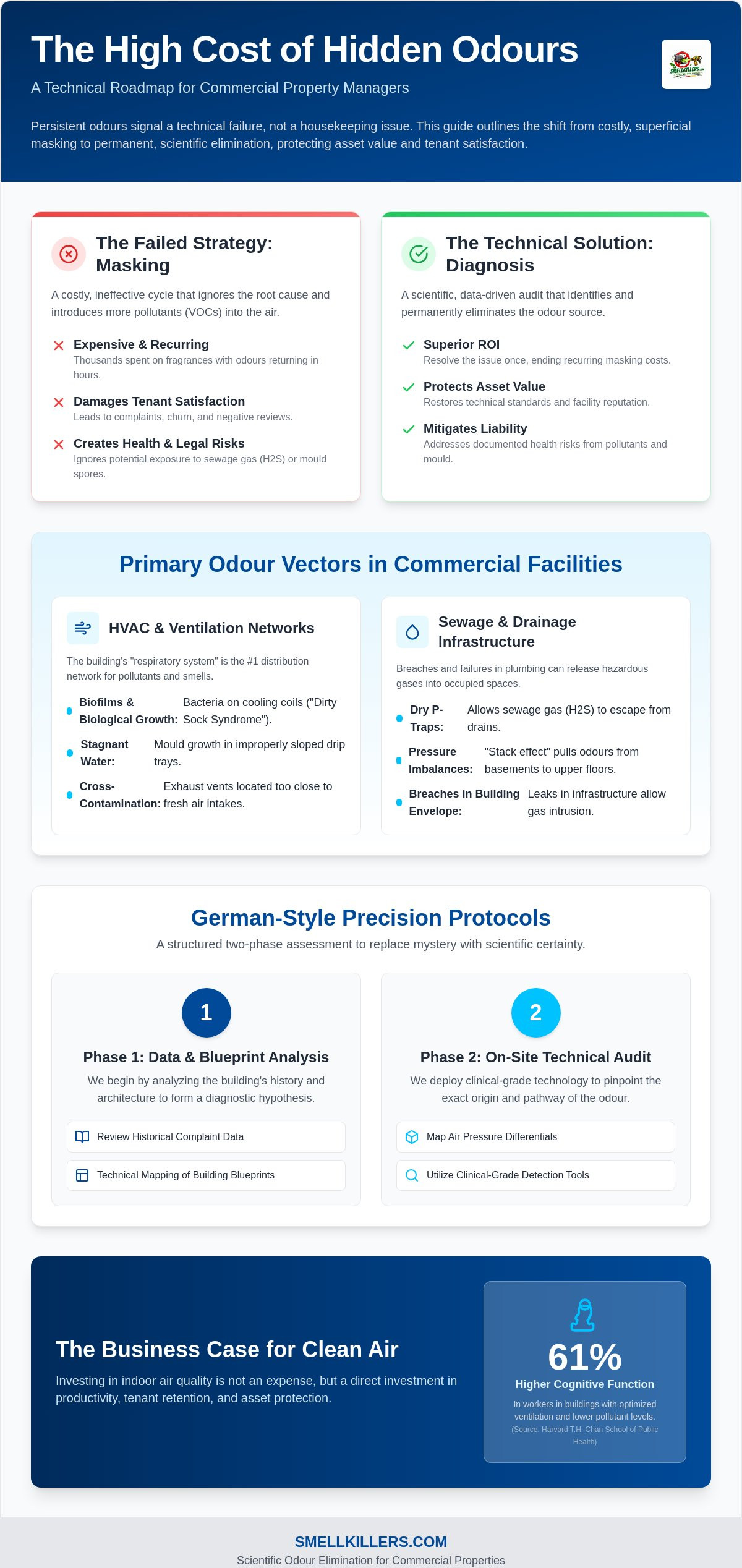
Masking a persistent odour with industrial fragrances is a failed strategy. It’s an expensive cycle that ignores the underlying mechanical or environmental failure. You’ve likely spent thousands of dirhams on superficial aerosols only for the scent to return within hours. This cycle damages tenant satisfaction and raises legitimate concerns about sewage gas exposure or compromised indoor air quality. Standard cleaning cannot fix a structural or mechanical deficit.
A professional commercial property smell inspection moves beyond the surface to identify the exact origin of the problem. We agree that recurring smells are a technical failure, not a housekeeping oversight. This guide provides a technical roadmap for property managers in the UAE to diagnose and permanently eliminate stubborn odours using clinical-grade detection. We’ll show you how to replace mystery with scientific certainty.
The following sections explain how to implement German-style precision protocols to secure your building’s environment. You’ll learn to identify the root causes of HVAC contamination and complex drainage leaks. We’ll detail the transition from a state of occupant discomfort to a state of total resolution through rigorous diagnostic steps and specialized remediation techniques that don’t rely on fragrances.
Key Takeaways
- Define odour remediation as a technical diagnostic audit rather than a superficial cleaning task to prevent tenant churn and asset devaluation.
- Identify HVAC networks and sewage infrastructure as the primary vectors for pollutant distribution within large-scale UAE commercial facilities.
- Utilize a professional commercial property smell inspection to map air pressure and identify the precise origin of smells that standard maintenance cannot find.
- Implement German-style aircon cleaning protocols to target the root cause of biological odours instead of relying on recurring expenditure for masking agents.
- Follow a structured two-phase assessment process that combines historical complaint data with technical mapping of building blueprints.
The Impact of Persistent Odours on Commercial Property Assets
Persistent odours are not just inconveniences; they are indicators of systemic failure. A professional commercial property smell inspection serves as a technical audit of a building’s health. It moves beyond subjective sensory perception to measure specific pollutants affecting Indoor air quality (IAQ). When a facility smells, the asset value is actively depreciating. It’s a signal to tenants and guests that the infrastructure is poorly maintained.
The financial consequences are immediate. Tenant churn in the competitive real estate market is expensive. Replacing a commercial tenant can cost significant sums in vacancy periods and marketing. Beyond financial loss, there are significant liability risks. A “sewage smell” often signals the presence of hydrogen sulfide (H2S). A “musty smell” indicates active mould colonies releasing spores. Both present documented health risks to occupants. Standard facility management contracts typically prioritize visible cleanliness; they are not equipped to diagnose sub-surface mechanical failures or complex cross-contamination issues.
Odour as a Symptom of Structural and Mechanical Failure
Smells are airborne physical particles. They indicate a breach in the building envelope, a dry trap in the plumbing, or biological growth within the HVAC system. We distinguish between “nuisance smells,” like temporary cooking odours, and “structural hazards” that compromise the building’s integrity. Masking agents are counterproductive. Fragrance sprays introduce additional volatile organic compounds (VOCs) into the environment. These chemicals actually decrease indoor air quality while leaving the root cause untreated.
The Business Case for Professional Detection
Accuracy protects reputation. In the luxury hospitality and Grade A office sectors, a single negative review regarding “smell” can trigger a cascade of cancellations. Employee productivity also suffers. Research from the Harvard T.H. Chan School of Public Health found that workers in buildings with optimized ventilation and lower pollutant levels scored 61% higher on cognitive function tests. Permanent elimination offers a superior ROI. You stop the recurring expenditure on chemical masking. You resolve the issue once. You restore the asset’s technical standard.
Maintaining high environmental standards is a key pillar of business success in the UAE; for those looking to establish their foundations in the region, you can discover Sarsan Corporate Services to assist with professional company setup and regulatory compliance.
- Identify the source through clinical-grade detection.
- Eliminate the need for expensive, recurring masking agents.
- Reduce tenant turnover by maintaining high environmental standards.
- Mitigate legal risks associated with gas exposure or mould.
Identifying the Primary Odour Vectors in Commercial Facilities
Odours in commercial buildings don’t exist in isolation. They travel via specific mechanical pathways. A professional commercial property smell inspection must map these vectors to find the root cause. Without understanding how air and gas move through a structure, any attempt at remediation is guesswork. Most commercial facilities in the UAE rely on complex, interconnected systems that can inadvertently distribute pollutants across multiple floors.
Biological reservoirs are a frequent starting point. Biofilms thrive in cooling coils, while stagnant water accumulates in drip trays due to improper drainage slopes. These areas become breeding grounds for bacteria and mould. Additionally, building envelope issues create pressure differentials. These imbalances pull smells from utility chases or elevator shafts into occupied zones. This “stack effect” explains why a basement leak can cause complaints on the upper floors of a high-rise office tower.
A/C and Ventilation Odour Mechanics
The HVAC system is the primary distribution network for indoor pollutants. Standard filter changes are insufficient for eliminating deep-seated odours. One common technical failure is “Dirty Sock Syndrome,” which occurs when bacterial growth colonizes the evaporator coils. These colonies release metabolic byproducts every time the system cycles. Cross-contamination is another mechanical deficit. It happens when exhaust vents are positioned too close to fresh air intakes, drawing foul air back into the building. The EPA’s guide to office air quality highlights how these ventilation failures compromise the entire indoor environment. Professional German-style aircon cleaning is required to reach these internal reservoirs and eliminate the biological source.
Sewage and Plumbing Gas Entry Points
Plumbing failures are often invisible to the naked eye. In low-use commercial bathrooms, P-traps frequently dry out. This evaporates the water seal and allows sewer gases to enter the workspace directly. Cracked vent pipes hidden inside wall cavities are even more problematic. These structural breaches release hydrogen sulfide into the building’s “lungs” without any visible leak. Commercial kitchens also face specific challenges with backflow and grease trap saturation. These systems require precise technical mapping to identify where the seal has failed. If your maintenance team cannot locate the origin of a persistent drain smell, it’s time for a technical property odour assessment to diagnose the specific mechanical failure.
- Inspect P-traps in guest bathrooms and mechanical rooms.
- Check for cracked vent stacks within wall partitions.
- Analyze HVAC pressure to prevent cross-contamination.
- Monitor grease trap levels and backflow preventers.
Diagnostic Technology vs. Superficial Masking: The Science of Detection
Subjective sensory perception is an unreliable metric for asset management. Relying on a “sniff test” to manage large-scale properties is a liability. A professional commercial property smell inspection replaces guesswork with a technical protocol designed to identify specific chemical signatures. Whether the odour presents as sulphur, vinegar, or a musty dampness, each scent has a distinct molecular origin that requires a targeted diagnostic approach. We don’t just ask if it smells; we determine exactly what is smelling and why the building’s systems are allowing it to persist.
The physics of odour travel is governed by air pressure. Smells don’t simply drift; they are pushed and pulled across floors by the stack effect, wind loading, and mechanical ventilation imbalances. In a high-rise office or hotel, a pressure differential of just a few pascals can move sewer gases from a basement riser to a penthouse suite. Our clinical approach categorizes these smells into specific chemical groups. Sulphur indicates hydrogen sulfide from drainage failures. Musty notes point toward fungal VOCs from mould reservoirs. Acrid or vinegar-like scents often signal chemical leaks or electrical overheating. Identifying these signatures is the first step toward a permanent technical solution. Working with a qualified odour expert UAE property managers trust ensures these chemical signatures are correctly interpreted and matched to their precise mechanical origin.
The Failure of Fragrance-Based Remediation
Masking agents are a deceptive expenditure. Fragrance molecules bond with odour particles but don’t neutralize them; they simply create a heavier, more complex chemical cocktail in the air. This often leads to “Olfactory Fatigue,” a biological state where on-site staff stop noticing the smell because their receptors are saturated. Guests and new tenants, however, find the mixture of “lavender and sewage” repulsive. Furthermore, introducing these masking agents increases the concentration of Volatile Organic Compounds (VOCs) in the workspace, which can trigger respiratory complaints and decrease overall indoor air quality standards. Facility managers seeking to move beyond this cycle can follow the structured commercial building odour control diagnostic checklist to identify and eliminate persistent smells at their source rather than masking them.
Technical Tools Used in Odour Inspections
We replace mystery with scientific certainty using a suite of specialized diagnostic equipment. These tools allow us to see what is happening inside the building’s infrastructure without invasive demolition. Our process-driven protocol utilizes:
- Manometers: These measure precise air pressure differentials to identify where “bad air” is being pulled into clean zones.
- Borescopes: High-definition cameras on flexible cables allow for the visual inspection of hidden A/C ducts, wall cavities, and internal plumbing vents.
- Thermal Imaging: Infrared cameras detect hidden moisture plumes and cold spots where condensation and mould reservoirs are likely to form.
- Gas Detection Sensors: These provide quantitative data on parts-per-million (PPM) levels of specific pollutants like methane or H2S.
This German-style precision ensures that the treatment plan is based on data rather than assumptions. Once the source is localized through technical mapping, we can implement a remediation strategy that targets the root cause directly. It’s the difference between a temporary cover-up and a long-term resolution of your property’s air quality issues.
What to Expect During a Professional Property Odour Assessment
A professional commercial property smell inspection is a structured, four-phase operation. It moves from general observation to microscopic source isolation. This methodical approach is necessary because odours in large-scale UAE facilities are rarely caused by a single, visible factor. Instead, they result from complex mechanical failures or biological colonization within the building’s infrastructure. We replace guesswork with technical certainty.
Phase 1: Comprehensive Site Walkthrough and Historical Complaint Analysis. We interview facility managers. We review tenant logs. This data identifies patterns, such as smells that only occur during peak A/C usage or after high-humidity events. Phase 2: Technical Mapping of HVAC and Plumbing Blueprints. Our investigators study the building’s “lungs” and “veins.” We map how air flows between zones and where plumbing vents might be failing inside wall cavities.
Phase 3: Source Isolation Using Non-Invasive Diagnostic Tools. Using borescopes and gas sensors, we pinpoint the exact origin of the pollutant. Phase 4: Detailed Reporting with Specific Remediation Protocols. The final output is a technical document. It doesn’t just list symptoms; it provides a step-by-step roadmap for permanent elimination. If you’re ready to replace mystery with scientific certainty, you should book a professional property odour assessment to secure your facility’s air quality.
The Importance of an On-Site Inspection
Remote quotes for odour issues are technically impossible. A smell is a dynamic physical event influenced by temperature, humidity, and building pressure. We often identify “ghost smells” that appear only at specific times. For example, kitchen exhaust fans can create a vacuum that pulls sewer gas through dry P-traps in distant bathrooms. An on-site presence allows us to evaluate current maintenance standards and A/C cleanliness first-hand. We look for the technical deficits that standard facility management teams miss.
Targeted Treatment Recommendations
Our findings move your facility from “General Cleaning” to “Surgical Remediation.” We don’t recommend cleaning the entire building if the issue is a single cracked vent pipe on the 10th floor. We prioritize high-impact areas for immediate relief. This restores occupant comfort as quickly as possible. Following the initial treatment, we develop a preventative schedule. This ensures that biological reservoirs don’t reform and mechanical seals remain intact. We focus on protecting your asset value for the long term through precise, data-driven maintenance. For hospitality properties where guest complaints directly impact revenue and online ratings, a dedicated hotel odour inspection UAE case study demonstrates how technical source detection resolves chronic room odours that standard HVAC maintenance and masking agents have failed to eliminate.
SMELLKILLERS.COM: Authoritative Odour Elimination Protocols
SMELLKILLERS.COM provides the technical resolution that general maintenance companies cannot achieve. We don’t offer superficial fixes. We provide a transition from a state of occupant discomfort to a state of permanent resolution. Our protocols are designed for the specific challenges of UAE architecture. High-rise buildings and luxury hotels require a level of diagnostic precision that goes beyond standard janitorial services. We target the root cause of every odour, whether it originates in a complex HVAC network or a deep-seated plumbing failure.
A definitive commercial property smell inspection is only as valuable as the protocol that follows it. Our team implements surgical remediation. We neutralize drain gases and sterilize biological reservoirs. We don’t rely on fragrances to hide problems. We use science to eliminate them. This commitment to source-level treatment ensures that your indoor air quality standards are restored and maintained for the long term. Our comprehensive treatment approach includes:
- A/C Coil Sterilization: Removing fungal colonies and bacterial biofilms from evaporator surfaces.
- Drain Gas Neutralization: Identifying and sealing breaches in vent stacks and dry P-traps.
- Pressure Balancing: Correcting mechanical imbalances that pull foul air from utility chases.
- Biofilm Removal: Deep cleaning of condensate trays and stagnant water reservoirs.
German-Style Aircon Cleaning Standards
Our cleaning methodology follows strict German-style precision. We don’t just wash filters. We perform a deep sterilization of evaporator coils, fans, and internal components. We use eco-friendly, technical-grade cleaning agents. These compounds are designed to break down biofilms and eliminate biological odours at the molecular level. This process does more than just purify the air. It restores A/C efficiency. It reduces energy consumption. It extends the life of your mechanical assets by removing the corrosive biological load from your ventilation system.
Your Partner in Commercial Indoor Air Quality
Reliability is built on technical integrity. SMELLKILLERS.COM is operated by PANKOBAU Building Maintenance LLC. This backing provides the professional infrastructure required for large-scale commercial and industrial projects across the UAE. We understand the high stakes of property management. We know that a single odour complaint can impact your bottom line and tenant retention. We offer national coverage and are ready to deploy specialized detection and treatment protocols wherever they are needed. Stop wasting resources on temporary masking agents. Schedule your professional on-site inspection today and secure the health of your commercial property.
Restore Your Asset Value with Technical Precision
Persistent odours are structural failures that demand a technical response. We’ve established that masking agents only increase chemical loads while leaving the root cause intact. A professional commercial property smell inspection is the only method to map mechanical pathways and isolate biological reservoirs. By identifying the specific chemical signature of a pollutant, you move from a cycle of recurring expenditure to a state of permanent resolution. This technical approach protects your reputation and prevents tenant churn in the UAE real estate market.
SMELLKILLERS.COM, operated by PANKOBAU Building Maintenance LLC, applies German-style clinical cleaning standards to every intervention. We utilize specialized source-detection technology to find what general maintenance teams miss. Our commitment to diagnostic accuracy ensures your building’s air quality is restored to its highest technical standard. Don’t let a mechanical mystery compromise your facility’s environment. You can Book a Professional On-Site Odour Inspection to resolve the issue once and for all. We look forward to providing the scientific certainty your property deserves.
Frequently Asked Questions
How long does a commercial property smell inspection take?
A standard commercial property smell inspection typically requires between two and four hours for a single office floor or retail unit. Larger industrial facilities or high-rise hotels require a more extensive technical audit that may span a full business day. We prioritize diagnostic accuracy over speed to ensure every mechanical vector and air pressure imbalance is correctly mapped across the facility.
Can we stay in the building during the odour detection and treatment process?
Occupants can remain in the building during the diagnostic phase. Our detection tools, such as borescopes and gas sensors, are non-invasive and don’t disrupt daily operations or tenant productivity. If a specific treatment requires deep coil sterilization or gas neutralization, we coordinate those phases to minimize impact, often performing the work during low-traffic periods or after business hours.
Why does the sewage smell in our office only appear in the afternoons?
Afternoon smells are usually caused by building pressure differentials and peak usage cycles. As outdoor temperatures rise in the UAE, HVAC systems work harder, creating a vacuum that pulls sewer gases through dry P-traps. Increased water usage in the building during the day also puts more pressure on the plumbing venting system, exposing existing structural breaches that remain dormant at night.
Is professional odour elimination more expensive than standard cleaning?
Technical odour elimination is a specialized diagnostic service that differs fundamentally from recurring janitorial cleaning. While the initial cost of a professional treatment is higher than a standard cleaning visit, it offers a superior ROI by ending the cycle of wasted expenditure on masking agents. You’re investing in a permanent mechanical solution rather than a temporary fragrance that must be reapplied indefinitely.
What is the most common cause of bad smells in UAE commercial buildings?
The most frequent causes are biological growth in HVAC evaporator coils and dry P-traps in low-use plumbing fixtures. High humidity and heat in the UAE accelerate the formation of biofilms within ventilation systems. Additionally, rapid evaporation causes water seals in drains to fail, which allows hydrogen sulfide to enter the workspace directly through the drainage network. For related issues where pest activity may be contributing to biological odours, you can learn more about Mosquito Assassin Pest Control LLC.
Do you provide a report after the property odour assessment?
Every commercial property smell inspection concludes with a comprehensive technical report. This document details the specific origin of the odour, the chemical signature detected, and a step-by-step remediation roadmap. We provide the data you need to make informed decisions about your building’s infrastructure and long-term indoor air quality standards without relying on guesswork.
Can SMELLKILLERS.COM fix smells that have persisted for years?
Yes, we specialize in resolving chronic odour issues that general maintenance teams have failed to address. Persistent smells remain only because the physical source, such as a cracked vent pipe or deep-seated biofilm, has never been identified. By using technical-grade detection tools to isolate the origin, we can implement a treatment that provides a permanent resolution rather than a temporary cover-up.